
Key takeaways
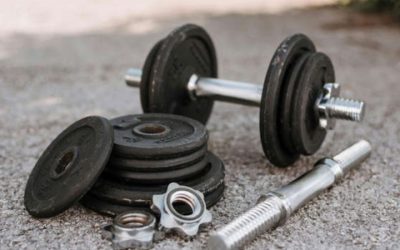
- Set Name: GOIMU Adjustable Dumbbells
- Item Dimensions L x W: 23.62"L x 11.42"W
- Material: Cast Iron
A pair of dumbbells can cover every movement pattern a body needs — push, pull, hinge, squat, carry and rotate — but only if the weight range matches each pattern. That is the part most home setups get wrong. Lateral raises need 5 to 10 lb. Rows and presses want 30 to 50. Goblet squats and hinges want more still. Buy a single fixed pair and you end up doing whichever exercises happen to suit that weight, which is how people end up with a home routine consisting mostly of curls.
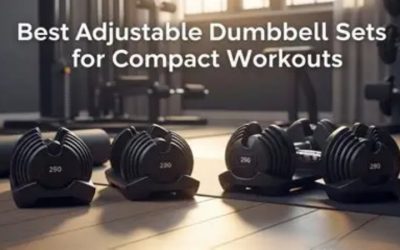
The second problem is where the weights live. A full hex set covering that range is ten pairs and roughly 40 inches of rack width, which is a genuine furniture decision rather than a storage detail. Adjustable dumbbells compress that into a footprint the size of a laundry basket, at the cost of slower weight changes and less robustness. Neither approach is wrong; they suit different rooms. Below are six options spanning both, chosen so that each one covers a coherent set of exercises rather than a single number on a box.
Our top picks


 Adjustable Dumbbells
- Set Name: GOIMU Adjustable Dumbbells
- Item Dimensions L x W: 23.62"L x 11.42"W
- Material: Cast Iron


As an Amazon Associate we earn from qualifying purchases at no extra cost to you.
Quick Comparison
| Product | Best For | Standout Feature | Watch Out For |
|---|---|---|---|
| 25 lb Dial Dumbbell Pair | Isolation and accessory work | Dial change in a second, anti-roll shape | Tops out at 30 lb per hand |
| HANDBODE Hex Set with Rack | Dedicated gym rooms | Full 100-600 lb range on a rack | Needs substantial floor space |
| GOIMU 4-in-1 Adjustable | Compound lifts at home | Reaches 94 lb per hand | Long, unwieldy at heavy settings |
| Adjustable Set with Connector | Widest exercise coverage | Converts to barbell and kettlebell | Connector threads need checking |
| Palace Learning Workout Posters | Exercise variety | Laminated reference for the wall | Reference material, not equipment |
| Amazon Basics Neoprene Weights | Light patterns and warm-ups | Grippy coating, floor-friendly | Too light for compound work |
How to Choose
- Map weight to pattern: Write down the six patterns you want to train and the approximate weight each needs. If a single set cannot cover that spread, you need either adjustables with a wide range or a light fixed pair alongside a heavier adjustable one.
- Measure your storage before your budget: A full hex set with a rack takes roughly the space of a small sideboard. Adjustables take about the space of a milk crate. Decide which your room can genuinely absorb before comparing prices.
- Check dumbbell length at heavy settings: Adjustable dumbbells get physically longer as you add plates, and at 90 lb they can be awkward for close-grip pressing or anything near the torso. Look at the loaded length, not just the weight.
- Favour flat-sided or hex shapes: Round dumbbells roll away on hard floors and are harder to use for renegade rows or push-up positions. Hex and anti-roll designs stay where you put them.
- Budget for a reference: Most people repeat the same five exercises indefinitely. A wall chart or a written programme is the cheapest way to keep the movement variety that makes a dumbbell set worth owning.
Top Picks Reviewed
Best for Accessory Work: 25 lb Dial Adjustable Dumbbell Pair
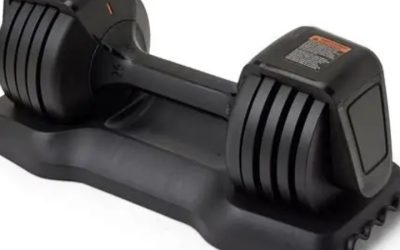
The one-second dial change is what makes this useful: you can run a shoulder circuit through lateral raises, front raises and rear delt flies without stopping to unscrew anything. The octagonal anti-roll shaping also means they stay put on a hard floor between sets.
The ceiling is 30 lb per hand, which covers isolation work comfortably and stops short of rows, presses and squats. Treat these as a complement to something heavier rather than a complete solution.
Best Complete Set: HANDBODE Hex Dumbbell Set with A-Frame Rack
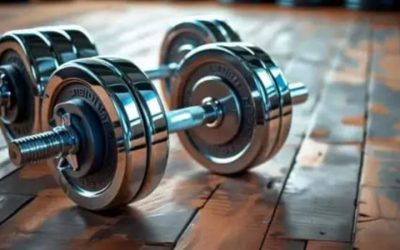
Nothing beats fixed dumbbells for speed and durability. Picking up the next pair takes no time, the rubber coating protects floors, and there is no mechanism to wear out or fail. Configurations from 100 up to 600 lb let you buy the range you actually need.
Space and cost are the barriers. An A-frame rack with a useful spread of weights occupies a serious amount of floor area and costs considerably more than adjustables covering the same range. This is a dedicated-gym-room purchase.
Best for Compound Lifts: GOIMU 4-in-1 Adjustable Dumbbells
Reaching 94 lb per hand puts heavy rows, presses, split squats and hinges genuinely within range, which is where most adjustable sets fall short. The four-in-one configuration also adds barbell and kettlebell options for very little extra hardware.
At the top settings the dumbbells become long. That length interferes with movements where the hands sit close to the body, and it makes them noticeably harder to control at the start of a heavy pressing set.
Best Exercise Coverage: Adjustable Dumbbell Set with Connector
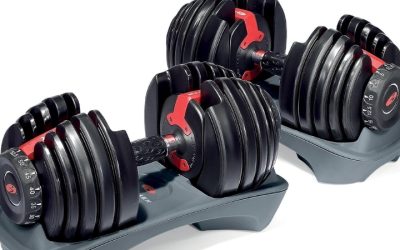
Converting a pair of adjustable dumbbells into a barbell is the single cheapest way to expand what a home setup can do. Barbell rows, floor presses and hinges all become available, and the kettlebell configuration adds swings and carries on top of the 20 to 90 lb dumbbell range.
The threaded connector is the component to watch. It loosens under repeated loading, and a joint that unscrews mid-row is unpleasant. Check it before every barbell set rather than trusting it between sessions.
Best Programming Aid: Palace Learning Dumbbell Workout Posters
The most common failure in home dumbbell training is not equipment, it is repetition — the same four exercises for months. A laminated chart on the wall is a surprisingly effective fix, because the alternatives are visible at the moment you are deciding what to do next.
It is reference material, not equipment. The exercises shown assume a reasonable weight range is available, so it works best alongside a set that actually covers the spread.
Best Light Pair: Amazon Basics Neoprene Hand Weights
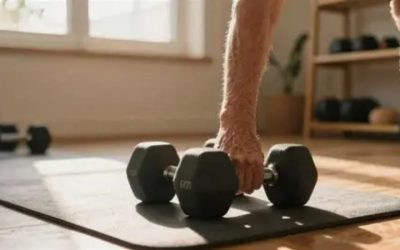
For warm-ups, rehabilitation work, rotator cuff exercises and light unilateral movements, a dedicated light pair is worth having. The neoprene coating grips well with sweaty hands and does not mark flooring when set down.
They only exist in light increments, so they will never handle a row or a press. Buy them as a specific tool for light work rather than expecting them to anchor a programme.
Frequently Asked Questions
How many dumbbell weights do I need to train everything?
Practically, a range from about 5 lb to 50 lb per hand covers every major pattern for most people. The low end handles isolation work and the top end handles rows, presses and lunges. Beyond that you are into specialist strength territory.
Are hex dumbbells better than adjustable ones?
They are faster, more durable and better for floor-based movements like renegade rows. Adjustables win decisively on space and cost per pound. The choice usually comes down to how much room you can dedicate.
Can dumbbells replace a barbell?
For most upper-body work, yes, and unilateral dumbbell training has real advantages for correcting imbalances. Heavy squats and deadlifts are where dumbbells run out of road, which is why connector sets that convert to a barbell are popular.
Do I need a bench to train with dumbbells?
Not to start — floor presses, standing work and split squats cover a lot. A bench meaningfully expands the options, particularly for incline pressing and single-leg work, so it is usually the next purchase after the weights themselves.
Final Thoughts
If space is limited but you want to train everything, the Adjustable Dumbbell Set with Connector covers the widest range of exercises for the smallest footprint. Where the room allows a permanent setup, the HANDBODE Hex Dumbbell Set with A-Frame Rack is faster and more durable than any adjustable design. And whichever you choose, adding a light pair like the Amazon Basics Neoprene Hand Weights fills the gap that heavy sets always leave at the bottom of the range.
Write Your Review
No reviews yet. Be the first to share your experience!