Key takeaways
- Measure depth before width: Ultra-thin units around 5 inches deep drop into standard 2×4 walls without furring strips. Anything deeper means building a bump-out or reframing, which turns a two-hour job into a two-day job with mud and sanding.
- Plan the circuit, not just the outlet: A 1500W heater pulls roughly 12.5 amps. Put it on a shared 15-amp circuit with a TV and lamps and you will be resetting breakers. Run a dedicated line, and place the receptacle inside the recess cavity where the cord can reach without a visible drop.
- Check the bezel overlap: Narrow-bezel models look sharper but leave almost no margin for a sloppy cut. If you are freehanding with a jigsaw, a wider trim flange is forgiving insurance.
- Listen for the blower spec: Fan noise is the most common regret. Look for units marketed on low-noise operation, and remember the flame effect runs silently on its own if you only want ambience.
- Decide on smart control early: Wi-Fi models let you schedule heat and dim flames from your phone. If you are burying the unit high on a wall, app or voice control saves you hunting for a remote in the couch cushions.
What's inside
Framing a linear fireplace into a wall is one of those projects that looks trivial in the showroom photo and gets complicated the moment you open the drywall. Stud bays are 14.5 inches wide, most of them have a wire or two running through, and the unit you fell in love with online might need 6 inches of depth you simply do not have. Add in the question of whether you can run a dedicated 20-amp circuit or you are stuck sharing an existing one, and suddenly the “easy weekend upgrade” needs a plan.
This guide is written from the perspective of someone who has cut the hole, fished the wire, and patched the seam. Below you will find the units worth building into a wall in 2026, judged on real installation depth, blower noise, whether the trim will actually cover a rough opening cut by hand, and how the heater behaves once the novelty wears off. I have also flagged which models play nicely with 2×4 framing versus which ones demand a furred-out wall or 2×6 studs.
As an Amazon Associate we earn from qualifying purchases.




How to Choose a/an Electric Linear Fireplace (2026)
- Measure depth before width: Ultra-thin units around 5 inches deep drop into standard 2×4 walls without furring strips. Anything deeper means building a bump-out or reframing, which turns a two-hour job into a two-day job with mud and sanding.
- Plan the circuit, not just the outlet: A 1500W heater pulls roughly 12.5 amps. Put it on a shared 15-amp circuit with a TV and lamps and you will be resetting breakers. Run a dedicated line, and place the receptacle inside the recess cavity where the cord can reach without a visible drop.
- Check the bezel overlap: Narrow-bezel models look sharper but leave almost no margin for a sloppy cut. If you are freehanding with a jigsaw, a wider trim flange is forgiving insurance.
- Listen for the blower spec: Fan noise is the most common regret. Look for units marketed on low-noise operation, and remember the flame effect runs silently on its own if you only want ambience.
- Decide on smart control early: Wi-Fi models let you schedule heat and dim flames from your phone. If you are burying the unit high on a wall, app or voice control saves you hunting for a remote in the couch cushions.
The Best Electric Linear Fireplace (2026)s Reviewed
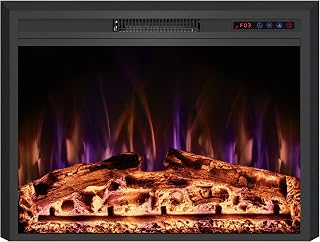
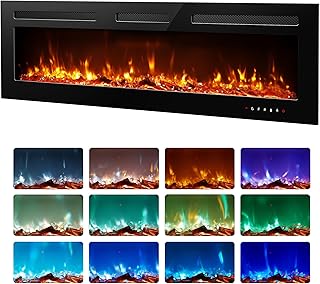
72″ Ultra-Thin Silence Linear Electric Fireplace
This is the one I would pick for a wide feature wall, mainly because it is engineered to fit both 2×4 and 2×6 stud bays without a bump-out, which is rare at this length. The quiet blower and independently adjustable flame color and speed make it usable year-round, not just on cold nights.
Dimplex IgniteXL 60″ (XLF60)
The build quality steps up noticeably here, and the acrylic ember bed throws light with a depth that budget units cannot match. The 240V option is the detail installers care about: wired properly, it delivers 8530 BTU without the amp draw headaches of a 120V heater on a shared circuit.
PuraFlame Bernice 42″
The hidden vent design is the standout feature for anyone tired of seeing a grille slot across the top of an otherwise clean install. Alexa and Google Assistant support is genuinely useful in a recessed application, and the 42-inch width suits bedrooms and offices where a 60-inch unit would overwhelm the wall.
EUHOMY 60″ Recessed Electric Fireplace
The 2026 revision includes both log and crystal media, so you can shift between rustic and modern without buying a second unit. It is a strong value pick for a first-time recessed install where you want a forgiving trim and straightforward remote operation.
Vitesse 72″ Ultra Thin
The narrow bezel gives this one the most built-in, architectural look of the group, though it rewards a careful rough opening. Onboard screen controls plus the remote mean you are not dependent on batteries, and the 8-hour sleep timer is well suited to bedroom use.
Frequently Asked Questions
Can I recess one of these into a 2×4 wall?
Several of these units, including the 72-inch Ultra-Thin and the Electactic 60-inch, are designed for shallow cavities and will sit in a standard 2×4 bay. Always confirm the manufacturer’s rough opening depth against your actual wall before cutting.
Do I need an electrician?
If you are adding a dedicated circuit or hardwiring a 240V model like the IgniteXL, yes. Plugging a 120V unit into an existing, adequately rated receptacle is well within DIY territory.
Can I mount a TV above it?
Usually, provided the unit vents forward or downward rather than straight up, and you respect the stated clearance. Hidden-vent designs are the safer bet here.
How much heat do they actually produce?
A 1500W unit heats roughly 400 square feet as supplemental warmth. Treat it as a comfort boost for the room you are in, not a furnace replacement.
Final Thoughts
For most builds, the 72-inch Ultra-Thin Silence model is the smartest combination of width, shallow depth, and quiet operation. Spend more and the Dimplex IgniteXL XLF60 delivers the most convincing flame and the most flexible wiring options, while the PuraFlame Bernice 42-inch is the pick for smaller rooms where clean venting and voice control matter most.