Key takeaways
- Pro: Excellent chamber temperature retention for engineering filaments
- Pro: Minimal assembly and calibration required
- Con: No included multi-material solution
An enclosed 3D printer solves a very specific set of problems that an open-frame machine simply cannot. Engineering filaments like ABS, ASA, nylon, and polycarbonate warp or crack when their print chambers are exposed to ambient drafts. Fumes and particulates from these materials also make open printing impractical in a shared room. A fully sealed chassis addresses both issues at once, letting you run hotter, more demanding polymers without sacrificing print quality or air safety in your home office or garage.
What separates the best enclosed 3D printer options from mediocre ones in this category comes down to a few concrete factors: how well the chamber holds temperature, whether the mechanical platform sustains rated speeds over hours of printing, noise output during overnight jobs, and how sensibly the price scales with added features like multi-material systems or integrated cameras. Below we compare the eight leading contenders available now, cross-referencing published specifications against the consensus of owner communities and long-term user feedback.
Our top picks




As an Amazon Associate we earn from qualifying purchases at no extra cost to you.
Quick Picks
| Product | Best for | Price |
|---|---|---|
| Bambu Lab P1S | Solid single-filament enclosed printing | $399 |
| FLASHFORGE Adventurer 5M | Lowest entry price in the group | $249 |
| Bambu Lab P1S Combo | Multi-color printing without a big upgrade budget | $549 |
| Bambu Lab P2S Combo | Latest platform with AMS 2 Pro | $769 |
| FLASHFORGE AD5M Pro | Enclosed high-speed printing on a mid-range budget | $378.99 |
| FLASHFORGE AD5M Pro (Bundle) | Quiet operation with camera monitoring | $378.99 |
| Creality K2 Combo (A) | Largest build volume in this lineup | $521 |
| ELEGOO Centauri Carbon 2 Combo | Multi-color carbon-fiber-capable printing | $399.99 |
How We Picked
We filtered these eight machines against four criteria that matter most in the enclosed-printer segment. First, genuine enclosure quality: a rigid, sealed chamber with active or passive temperature management, not merely a cosmetic shell. Second, sustained speed and mechanical rigidity, meaning CoreXY or equivalent platforms that hold their rated throughput without layer-shifting under prolonged prints. Third, acoustic output, because many buyers run jobs overnight near living spaces. Fourth, value relative to bundled extras—multi-material units, cameras, and pre-assembly reduce hidden costs and setup friction that otherwise erode a lower sticker price.
The 8 Best Enclosed 3D Printer in 2026
Bambu Lab P1S
For makers who want a reliable, enclosed single-filament workhorse without paying for a color system they may never use. Owners consistently highlight the sealed chamber’s ability to hold heat through long ABS and PETG jobs and the plug-and-play setup that requires virtually no tuning out of the box. The main trade-off is that multi-color printing demands a separate AMS purchase, pushing total cost closer to combo variants.
- Pro: Excellent chamber temperature retention for engineering filaments
- Pro: Minimal assembly and calibration required
- Con: No included multi-material solution
Skip it if you already know you need multi-color output; the P1S Combo is a better buy at a smaller delta.
FLASHFORGE Adventurer 5M
The most affordable fully enclosed option in this roundup, aimed at budget-conscious buyers who still want a CoreXY frame and auto-leveling. Its 600 mm/s rated speed and 280 °C direct extruder handle common filaments with authority, and the detachable nozzle keeps maintenance simple. Build volume at 220×220×220 mm is adequate for most desktop projects. The enclosure is functional but less refined than pricier rivals, and the overall finish feels one tier down.
- Pro: Lowest price with a fully enclosed CoreXY design
- Pro: Fully automatic bed leveling out of the box
- Con: Build quality and finish trail premium competitors
Skip it if enclosure tightness and long-term ABS warping resistance are critical; the AD5M Pro is a better investment.
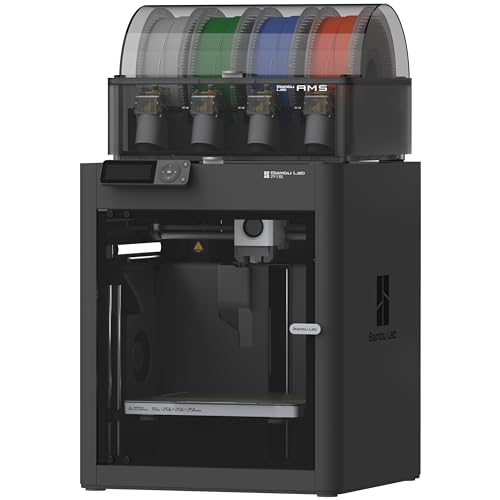
Bambu Lab P1S Combo
The P1S platform paired with Bambu Lab’s AMS system for true multi-color and multi-material prints in one sealed chassis. This is the sweet-spot pick for hobbyists and small studios that want four-spool color capability without the cost or complexity of open-frame conversions. Slicing software integration and filament management are mature and well-documented across forums. The enclosure is identical to the standalone P1S, so chamber performance carries over unchanged.
- Pro: Mature ecosystem with strong software and community support
- Pro: Four-spool AMS included at a modest premium over the base unit
- Con: AMS footprint adds desk-space requirements
Skip it if you only print single-filament parts; the base P1S saves money without sacrificing print quality.
Bambu Lab P2S Combo
The current-generation successor to the P1S Combo, shipping with the AMS 2 Pro for improved material handling. Owner feedback notes meaningful upgrades in print reliability and a refined chamber design over the previous model. It is the priciest entry in this group, and the jump from the P1S Combo is incremental rather than revolutionary. Buyers upgrading from older Bambu Lab machines will appreciate the smoother workflow and broader filament tolerance.
- Pro: Latest hardware and software integration from Bambu Lab
- Pro: AMS 2 Pro handles flexible and high-temp filaments more gracefully
- Con: Premium pricing with diminishing returns over the P1S Combo
Skip it if budget is a hard ceiling and your filament choices are limited to PLA, PETG, and standard ABS.
FLASHFORGE AD5M Pro
A fully enclosed, CoreXY machine that steps up from the base Adventurer 5M with a tighter chamber, dual nozzle options (0.4 and 0.6 mm quick-swap), and auxiliary cooling. Its 600 mm/s rating and 1-click auto leveling make it a strong value at $378.99, undercutting several direct competitors while delivering comparable speed. Print volume matches the 5M at 220×220×220 mm. Assembly is more involved than Bambu Lab equivalents, which may frustrate first-time buyers.
- Pro: Enclosed CoreXY with quick-swap nozzles at a competitive price
- Pro: Auxiliary chamber cooling improves detail on tall prints
- Con: Setup and first-layer calibration require more hands-on tuning
Skip it if you want a near-zero configuration experience; Bambu Lab machines are more turnkey.
FLASHFORGE AD5M Pro (Bundle)
Essentially the same machine as the standalone AD5M Pro but bundled with a camera and a second nozzle set, marketed around quiet operation at or below 50 dB. For users printing near bedrooms or shared offices, the noise specification is a genuine differentiator. The camera enables remote monitoring through the companion app, a feature increasingly treated as essential. Pricing is identical to the non-bundle listing, making this the better default choice if available in your region.
- Pro: ≤50 dB noise rating suits overnight and shared-space printing
- Pro: Integrated camera for remote print monitoring
- Con: Nozzle bundle availability and packaging vary by retailer
Skip it only if you need a larger build plate; the Creality K2 Combo offers more volume for a similar budget tier.
Creality K2 Combo (A)
The largest build volume in this roundup at 260×260×260 mm, paired with Creality’s CFS multi-color system and an AI-assisted camera for first-layer monitoring. It arrives 95 percent pre-assembled, which shortens the setup gap toward Bambu Lab’s near-instant experience. The 600 mm/s rated speed and next-gen direct-drive extruder handle a wide filament palette. Software maturity and community troubleshooting resources still trail Bambu Lab, and the enclosure seal quality receives mixed owner reviews.
- Pro: Biggest build volume and included CFS multi-color unit
- Pro: Smart AI camera for anomaly detection during prints
- Con: Software ecosystem less polished than top competitors
Skip it if you value a tightly integrated slicing-to-print workflow above all else; Bambu Lab combos deliver a smoother end-to-end experience.
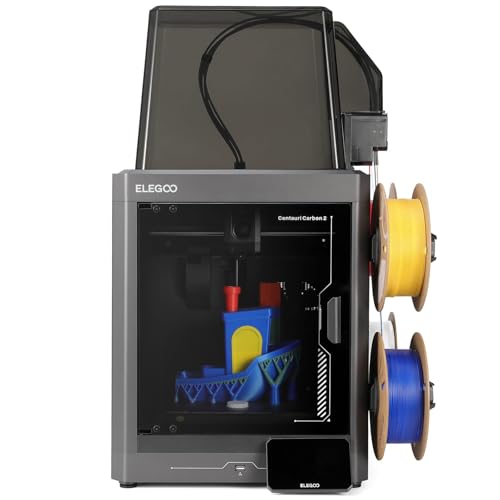
ELEGOO Centauri Carbon 2 Combo
Best known for resin printers, ELEGOO brings an enclosed FDM option with multi-color support at an aggressive $399.99 price. The carbon-fiber-reinforced build platform signals an intent toward engineering-grade materials, and owner reports praise the chamber’s ability to maintain temperature for nylon and carbon blends. As a newer entrant in enclosed FDM, long-term reliability data is thinner, and firmware update frequency lags behind established platforms.
- Pro: Carbon-fiber-capable chamber at a very competitive price
- Pro: Multi-color combo included without a premium markup
- Con: Limited track record and smaller community knowledge base
Skip it if you need guaranteed software support and a large troubleshooting community; the Bambu Lab and Flashforge lines are safer bets.
Buying Guide
Chamber Sealing and Temperature Management
A decorative shell is not an enclosure. Look for a rigid, gasketed chassis that actively retains heat—either through a heated bed warming the chamber passively or through a dedicated heating element. Warping and layer adhesion failures in ABS, ASA, and nylon trace almost always to chamber drafts. Verify that the door seals, cable ports, and ventilation paths include baffles or filters rather than open holes.
Sustained Speed and Mechanical Rigidity
Peak-rated speeds like 600 mm/s mean little if the frame flexes or the extruder under-extrudes at high acceleration. CoreXY kinematics dominate this class because they keep the print head mass low. Check owner threads for reports of ringing, layer shifts at 300+ mm/s, and whether the machine holds tolerances over multi-hour prints. A heavy, all-metal frame (as on the FLASHFORGE and Bambu Lab units) is a better indicator than a spec-sheet number alone.
Noise, Size, and Workflow Integration
Enclosed machines trap fan and motor noise inside the chassis, which helps, but blower fans and stepper drivers still radiate sound. A ≤50 dB rating matters for shared or adjacent spaces. Match build volume to your actual part sizes—most home-office projects fit comfortably in 220 mm cubes, so paying for 260 mm only makes sense if you routinely print large functional parts. Finally, consider whether multi-color, camera monitoring, and app control are features you will use weekly or ones that add cost and complexity without daily benefit.
Our Verdict
The overall top pick is the Bambu Lab P1S Combo at $549. It balances enclosure quality, turnkey setup, multi-material capability, and a mature ecosystem better than any other machine in this group. For the tightest budget, the FLASHFORGE Adventurer 5M at $249 delivers a genuine enclosed CoreXY experience at a price that undercuts every other entry here, provided you accept a slightly rougher finish and more hands-on calibration. If your priority is absolute silence during overnight printing, the FLASHFORGE AD5M Pro Bundle with its ≤50 dB rating and integrated camera is the strongest choice, especially at the same $378.99 price as the non-bundle version.
FAQ
Can an enclosed printer still handle PLA well?
Yes, but PLA benefits less from an enclosure because it does not warp under drafts. The sealed chamber can actually cause PLA to soften mid-print if temperatures climb too high. Most enclosed machines let you open vents or doors for PLA jobs, so you get the best of both worlds from a single printer.
Is multi-color printing worth the price premium?
It depends entirely on your use case. If you regularly produce presentation models, cosplay pieces, or color-coded functional parts, an included multi-material system saves significant time and frustration versus manual filament swaps. For purely functional prototyping in single colors, the premium buys capability you will rarely use.
How loud are enclosed 3D printers in practice?
Most modern enclosed FDM machines sit between 45 and 55 dB during steady-state printing, roughly the level of a quiet conversation. Stepper-driver noise dominates at low speeds, while fan noise rises during high-flow cooling. A 50 dB rating, as advertised on the FLASHFORGE AD5M Pro Bundle, means it will be barely audible in an adjacent room.
Do I need an enclosure if I only print PETG?
PETG occupies a middle ground. It tolerates open-frame printing reasonably well but benefits from mild chamber warmth on tall, thin-walled parts where layer adhesion can suffer from ambient cooling. If PETG is your primary material and you occasionally venture into ABS or nylon, an enclosed machine future-proofs your setup without a second printer.