
Key takeaways
- Recommended Uses For Product: Indoor
- Material: Metal
- Handle Material: Aluminum
The bike that ruins a home workout habit is rarely the one that’s uncomfortable — it’s the one that’s loud. A friction-pad flywheel spinning up at 5:40 a.m. in a one-bedroom apartment carries straight through drywall, and the resistance knob squeal at the top of an interval sounds, to the person asleep on the other side of that wall, like a smoke detector with a grudge. Add pedal creak, a flexing frame, and a fan that kicks on under load, and you have a machine you’ll only ride when the house is empty. Which means: almost never.
So this list ignores the usual ranking logic and sorts six popular home bikes from quietest to loudest, judged on how they behave in the situations that actually matter — a shared wall, a floor above a sleeping kid, a corner of the living room during someone else’s video call. Noise on an exercise bike comes from four places: how resistance is applied, how the drivetrain transmits power, how rigid the frame is, and how much of the vibration your floor absorbs. I’ve flagged which of those is the weak link on each model. Links below are affiliate links.
Our top picks


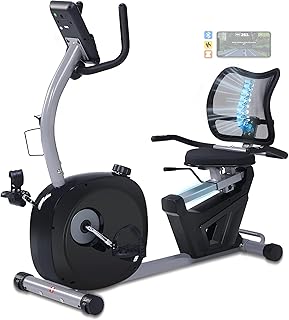
 YOSUDA Exercise Bike
- Recommended Uses For Product: Indoor
- Material: Metal
- Handle Material: Aluminum



As an Amazon Associate we earn from qualifying purchases at no extra cost to you.
As an Amazon Associate we earn from qualifying purchases.

Quick Comparison
| Bike | Resistance & Drive | Noise Character | Feel | Best For |
|---|---|---|---|---|
| Keiser M3i | Magnetic, poly-V belt, rear flywheel | Near-silent; faint air whisper at high cadence | Light, responsive, road-like | Shared walls, early mornings |
| Peloton Bike+ | Magnetic, belt drive | Mechanically quiet; the screen is the loud part | Heavy, planted, smooth | Class-driven riders |
| Schwinn IC4 | Magnetic, belt drive, ~40 lb flywheel | Low hum; occasional frame tick | Weighty and steady | App-agnostic training |
| Sunny SF-B1805 | Magnetic, belt drive, ~30 lb flywheel | Quiet drivetrain, audible rattle when standing | Firm but lighter-built | Budget quiet-ish rides |
| YOSUDA Indoor Cycling Bike (felt-pad) | Friction pad, belt drive | Dry rasp under load; squeak as pad wears | Grinding, heavy resistance | Detached homes, garages |
| Assault Fitness AirBike Classic | Air/fan resistance, chain drive | Loud, escalating whoosh; carries room to room | Brutal, self-limiting | Conditioning, no neighbors |
How to Choose
- Match the resistance type to your living situation. Magnetic resistance never touches the flywheel, so it makes no friction noise at all. Felt or leather pads scrape by design and get louder as they wear. Fan resistance is inherently loud — that’s air being moved, and no maintenance will change it.
- Check where the flywheel sits, not just what it weighs. Rear-mounted flywheels keep sweat off the bearings and typically run quieter for longer. A heavy front flywheel smooths the pedal stroke but puts more rotating mass over the front stabilizer, which is where creaks start.
- Judge the frame by how it feels out of the saddle. Most complaints described as “the bike is noisy” are actually flex — a welded joint working against a bolt, ticking once per revolution. Grab the handlebars and rock the bike before you commit to a spot near a bedroom.
- Decouple it from the floor. A dense rubber mat, not a thin yoga mat, is the single cheapest noise fix available. On upper floors it changes the character of the sound entirely, converting structure-borne thud into airborne hum that a closed door will handle.
- Decide whether you need numbers. Micro-adjust knobs give infinite resistance but no repeatability. Indexed digital levels let you replicate a workout exactly and pair cleanly with training apps. Neither is quieter — but the wrong one will have you fiddling mid-interval instead of riding.
Top Picks Reviewed
1. Keiser M3i — Quietest Overall
The M3i is the bike commercial studios buy when they need forty units running in one room, and that pedigree shows up as silence. Magnetic resistance, a poly-V belt, and a rear-mounted flywheel mean the loudest thing in the room is your breathing. It also has the least intrusive vibration signature of anything here, because the low-slung frame puts mass near the floor instead of over the front foot. The tradeoff is price and aesthetics — no big screen, just a small computer that broadcasts power and cadence to whatever app you prefer. Buy it if quiet is a hard requirement rather than a preference.
2. Peloton Bike+ — Quiet Machine, Loud Ecosystem
Mechanically, this is one of the calmest bikes made: magnetic resistance, a belt, and a genuinely rigid frame that stays planted when you climb out of the saddle. The catch is that nobody rides one quietly. The instructor is loud, the music is louder, and the speakers project into the room by design. Headphones solve it completely, and the auto-follow resistance means you’re not reaching for a knob every thirty seconds. Best for someone who wants the class structure and will accept an ongoing subscription as the real cost of entry.
3. Schwinn IC4 — Best Balance of Quiet and Price
The IC4 lands in the sweet spot: magnetic resistance and a belt drive at roughly a third of a studio bike’s cost, with a heavy flywheel that makes the pedal stroke feel expensive. It runs to a low hum. What separates it from the pick above is long-term tightness — the hardware benefits from a torque check every few months, and skipping that is where the once-per-revolution tick comes from. Indexed resistance levels and dual-sided pedals make it the most flexible bike here for people who bounce between training apps.
4. Sunny Health & Fitness SF-B1805 — Best Budget Magnetic
This is the bike to buy when you want magnetic resistance without spending like it’s a piece of furniture. Seated and spinning, it’s genuinely quiet — the belt and magnets do their job. Push hard out of the saddle and you’ll hear the difference in build: some frame chatter, and stabilizers that need re-tightening more often than the pricier options. Set it on a thick mat, keep the bolts snug, and it holds up well as a first serious bike. Just don’t put it directly above someone’s headboard.
5. YOSUDA Indoor Cycling Bike (Felt-Pad Version) — Loud but Cheap
Enormous value, and the noise is the reason it’s cheap. The felt pad pressing on a heavy flywheel produces a dry rasping sound that rises with resistance, and once the pad dries out it develops a squeak that no amount of tightening fixes — only replacement or lubrication does. In a garage or a detached house, none of that matters and you’ve saved real money. In an apartment, it will make you self-conscious. Note that YOSUDA also sells magnetic models; if you’re apartment-bound, that’s the version to look for.
6. Assault Fitness AirBike Classic — Loudest, and Worth It Anyway
An air bike is a fan you pedal, so the noise scales directly with effort — a gentle whir on warm-up, a jet-engine roar during a sprint that carries into every room on the floor. That’s not a flaw to be engineered away; it’s the physics that makes air resistance infinitely scalable and impossible to cheat. The upper-body drive also puts moving arms and a chain into the mix. Buy it for conditioning work in a space where sound doesn’t matter, and pair it with something quieter for early mornings.
Frequently Asked Questions
Is magnetic resistance always quieter than friction?
For the resistance mechanism itself, yes — nothing physically contacts the flywheel, so there’s no scraping and nothing to wear. But a flimsy magnetic bike on a hard floor can still out-noise a solid friction bike, because frame flex and vibration transfer are separate problems. Magnetic is the better starting point, not a guarantee.
What’s the best surface to put an exercise bike on?
Dense rubber, ideally a half-inch or thicker, over the existing floor. Carpet muffles airborne sound but does almost nothing for the low-frequency thump that travels through joists, which is the part your downstairs neighbor hears. If the bike sits on a hard floor above a living space, the mat matters more than the bike’s price tag.
Why does my bike click once per pedal stroke?
Almost always a loose bolt or a dry interface rather than a failing part. Work through it in order: pedal-to-crank threads, crank arm bolt, seat post and saddle rails, then the stabilizer feet. Grease the pedal threads on reinstallation. A once-per-revolution click that resists all of that usually means a bottom bracket bearing.
Do I need a heavy flywheel for a smooth ride?
Not as much as marketing suggests. Weight helps carry momentum through dead spots in the stroke, but well-engineered magnetic bikes with lighter flywheels can feel smoother than heavy ones with sloppy bearings. Past roughly thirty pounds, bearing quality and frame stiffness do more for ride feel than added mass.
Final Thoughts
If a shared wall or a sleeping household is part of your equation, the decision is simpler than the spec sheets make it look: choose magnetic resistance, a belt drive, and a frame that doesn’t flex when you stand — the Keiser M3i if the budget allows, the Schwinn IC4 if it doesn’t. Reserve friction pads and air bikes for garages and basements, where their honest, ugly noise is a feature rather than a liability. Then spend forty dollars on a proper rubber mat, because the quietest bike in the world still transmits through a bare floor, and the ride you can do at six in the morning without apologizing is the only one you’ll actually keep doing.
Best Magnetic Rowing Machines
The best magnetic rowing machines for most home workouts in 2026 are...

Best Exercise Bike Workout for Weight Loss: 5 Bike Setups
Best exercise bike workout for weight loss planning runs into a hardware...
Best Exercise Bike for Weight Loss: 5 Consoles Compared
Best exercise bike for weight loss listings advertise app connectivity while many...
Best Exercise Bike for Losing Weight: 5 Models Compared
Exercise bike best for losing weight shortlists rarely mention the two things...
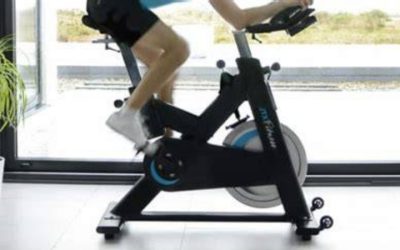
Best Bike Exercise to Lose Weight: 6 Frame Styles Compared
Best bike exercise to lose weight comparisons usually pit models against each...
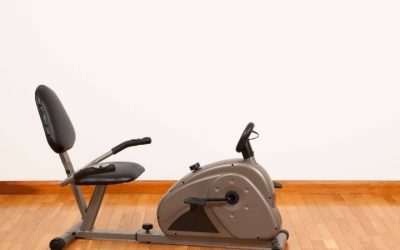
Best Exercise Bike for Fat Loss: 5 Picks by Flywheel Weight
Best exercise bike for fat loss listings compete on features and stay...
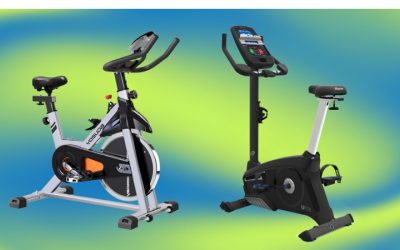
Best Cheapest Exercise Bike: 6 Budget Picks Under Review
Best cheapest exercise bike shopping turns on two numbers most listings bury:...

Best Inexpensive Exercise Bike: 6 Picks by Riding Position
Best inexpensive exercise bike comparisons usually put four completely different machines on...
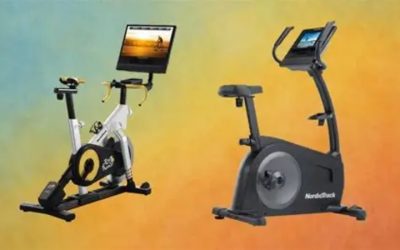
Best Low Price Exercise Bike: 6 Picks and What Fails First
Best low price exercise bike reviews describe how a machine feels in...
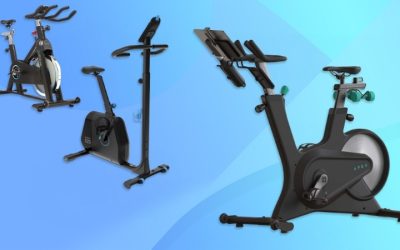
Best Exercise Bike on a Budget: 6 Picks and Total Costs
Best exercise bike on a budget planning goes wrong in two places:...
Write Your Review
No reviews yet. Be the first to share your experience!