Key takeaways
- Blade span before anything else: Ceilings over 10 feet need 65 inches minimum, and rooms above 400 square feet with a vault should start at 72 inches. Bigger blades moving slowly beat small blades screaming.
- Downrod length: Aim for blades 8 to 9 feet off the floor. A 12-foot ceiling wants roughly a 24-inch rod, a 16-foot ceiling closer to 60. Check that the fan’s canopy accepts an extended rod before you buy one separately.
- DC motor for the long haul: DC motors pull around 70% less power, run noticeably quieter, and offer six or more speeds instead of three. On a fan you’ll rarely reach, quiet operation and longevity are worth the premium.
- Sloped ceiling compatibility: Vaulted rooms often exceed the 15-degree limit stock canopies allow. Confirm the maximum slope rating or budget for an adapter, and locate a structural joist — fan-rated boxes only, no exceptions.
- Integrated lighting with CCT control: High ceilings swallow light. A 3CCT LED module that shifts between 3000K and 6000K lets you dial warm evening light or bright task lighting without swapping bulbs from a scaffold.
What's inside
Vaulted ceilings look incredible until you’re standing on a ladder in July wondering why the air twelve feet up refuses to come down. I’ve hung fans in a converted barn, a two-story great room, and a covered patio with an 11-foot peak, and the pattern is always the same: a standard 52-inch fan that works beautifully in a bedroom just stirs the ceiling and leaves you sweating. Height changes the physics. Air needs mass and momentum to travel that distance, which means blade span and torque matter far more than speed settings or app control.
This guide covers the fans I’d actually mount in a high-ceiling room, from 96-inch industrial sweeps for shops and open great rooms down to a caged 48-inch option for smaller vaulted nooks. I’ve focused on DC motors with real downrod flexibility, damp ratings for covered outdoor spaces, and lighting that can carry a room without a separate fixture. Installation notes included, because a 96-inch fan is a two-person job whether the box admits it or not.
As an Amazon Associate we earn from qualifying purchases.


🛒 Best Price Today on Amazon
Prime members get fast, free shipping on everything above, plus member-only deals. New members get a 30-day free trial — cancel anytime.
How to Choose a Fan For High Ceiling (2026)
- Blade span before anything else: Ceilings over 10 feet need 65 inches minimum, and rooms above 400 square feet with a vault should start at 72 inches. Bigger blades moving slowly beat small blades screaming.
- Downrod length: Aim for blades 8 to 9 feet off the floor. A 12-foot ceiling wants roughly a 24-inch rod, a 16-foot ceiling closer to 60. Check that the fan’s canopy accepts an extended rod before you buy one separately.
- DC motor for the long haul: DC motors pull around 70% less power, run noticeably quieter, and offer six or more speeds instead of three. On a fan you’ll rarely reach, quiet operation and longevity are worth the premium.
- Sloped ceiling compatibility: Vaulted rooms often exceed the 15-degree limit stock canopies allow. Confirm the maximum slope rating or budget for an adapter, and locate a structural joist — fan-rated boxes only, no exceptions.
- Integrated lighting with CCT control: High ceilings swallow light. A 3CCT LED module that shifts between 3000K and 6000K lets you dial warm evening light or bright task lighting without swapping bulbs from a scaffold.
The Best Fan For High Ceiling (2026)s Reviewed
ZMISHIBO 72″ Ceiling Fan with Lights
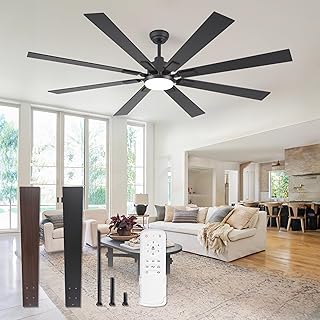
This is my default recommendation for a two-story living room or a generous covered patio: enough sweep to genuinely circulate air at height, a quiet DC motor, and a 24W 3CCT LED that handles ambient lighting on its own. The dual-finish blades and damp rating make it flexible enough for indoor or sheltered outdoor mounting.
ZMISHIBO 96 Inch Industrial Ceiling Fan
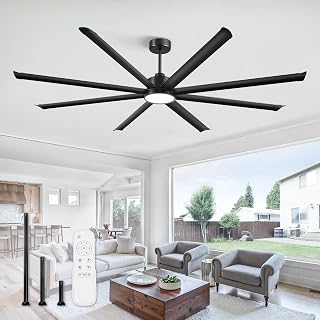
Eight reversible aluminum blades at 96 inches is workshop and warehouse territory, and it shows — this thing moves air across a garage or open great room in a way smaller fans can’t approximate. Plan on a helper and a sturdy ladder for the install, and verify your joist can carry the weight before you commit.
84 Inch Ceiling Fan with Light and Remote
A smart middle ground when 96 inches feels excessive but 72 isn’t quite enough, with the walnut and black finish reading warmer than most fans this size. Timer and memory functions are genuinely useful on a high mount, since you’re not walking over to adjust anything.
Fanbulous 48″ Farmhouse Caged Fan
The outlier here, and deliberately so — a 48-inch caged fan suits smaller vaulted spaces like a bedroom alcove, stairwell landing, or bump-out where a large sweep would overwhelm the room. Six speeds and reversible operation give it year-round usefulness despite the modest span.
ZMISHIBO 65″ Black 8-Blade Ceiling Fan
Eight blades at 65 inches produce a softer, more even airflow than three-blade designs at the same diameter, which suits bedrooms and living rooms where you’re sitting under it for hours. Dimmable 3000K to 6000K lighting and a reversible motor cover both seasons.
Frequently Asked Questions
What size fan do I need for a 14-foot ceiling?
Blade span depends on room square footage, not ceiling height — for most vaulted living rooms that means 72 inches or larger. Height determines your downrod: figure roughly 48 inches to bring the blades into the effective 8-to-9-foot zone.
Can I install a large fan on an existing electrical box?
Only if it’s rated for fan support and anchored to a joist. Standard plastic light boxes cannot handle the dynamic load of a 72-inch fan. Swapping in a fan-rated brace box is straightforward from an attic and worth the extra hour.
Do these fans need a wall switch?
Most run entirely on remote or app control with a constant hot feed, which is convenient for high mounts where pull chains are unreachable. Keep the wall switch wired for a hard cutoff during maintenance.
Which direction should the blades turn in winter?
Clockwise on low speed pulls warm air down from the ceiling without creating a draft. This matters more in high-ceiling rooms than anywhere else, since that’s where your heat is stratifying.
Final Thoughts
For most vaulted living rooms, the ZMISHIBO 72-inch hits the best balance of airflow, lighting, and installation simplicity. Step up to the 96-inch industrial model for garages, shops, or truly cavernous great rooms, and consider the 84-inch walnut option if you want that scale with a warmer finish. All three reward the extra effort of a proper brace box and correctly sized downrod.