Key takeaways
- Go hybrid when you can: Pocketed steel coils recover from compression better than foam alone. A hybrid with a dense foam cap gives you contouring on top and real structural pushback underneath, which is exactly the combination that keeps hips from sinking.
- Mind the height: Anything under 10 inches leaves too little room for a proper support core. Twelve to fourteen inches is the practical sweet spot — enough depth for a thick base layer without turning your fitted sheets into a wrestling match.
- Check the perimeter: Reinforced edges are what let you sit on the side of the bed to tie your shoes without the whole panel collapsing. Firmer coils around the border also make the usable sleep surface wider than it looks.
- Plan for heat: More body mass means more compression, and compressed foam traps warmth. Gel infusions, ventilated cores, and airflow channels in the coil layer all help, though they work best paired with breathable bedding.
- Read the trial and warranty as a pair: A long sleep trial protects you if the feel is wrong. A warranty with a low sagging threshold — an inch or less — protects you if the build is wrong. You want both, plus CertiPUR-US foam and a fiberglass-free construction.
What's inside
Anyone who has ever pulled a sagging mattress off a frame and looked underneath knows the truth: the failure is almost never the cover or the quilting. It’s the support layer giving out. If you weigh 230 pounds or more, that breakdown happens faster and shows up as a dip you can feel with your palm, a shoulder that sits lower than your hip, and a lower back that wakes you at 4 a.m. Standard foam beds are engineered around a much lighter average sleeper, so the coils compress past their working range and the comfort layers bottom out long before the warranty runs out.
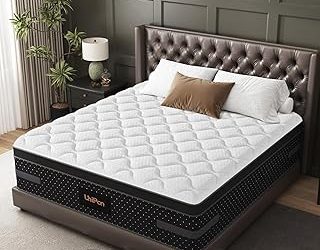
This guide takes a builder’s view of the problem. We look at what’s actually stacked inside these mattresses — coil gauge and count, the density of the base foam, edge reinforcement, and how the layers are bonded — because those are the parts that determine whether a bed holds its shape three years in. Below are six firm and extra-firm options built with heavier sleepers in mind, plus a straightforward checklist you can use to compare any mattress on the shelf.
As an Amazon Associate we earn from qualifying purchases.




🛒 Best Price Today on Amazon
Prime members get fast, free shipping on everything above, plus member-only deals. New members get a 30-day free trial — cancel anytime.
How to Choose a Firm Mattress For Heavy Person (2026)
- Go hybrid when you can: Pocketed steel coils recover from compression better than foam alone. A hybrid with a dense foam cap gives you contouring on top and real structural pushback underneath, which is exactly the combination that keeps hips from sinking.
- Mind the height: Anything under 10 inches leaves too little room for a proper support core. Twelve to fourteen inches is the practical sweet spot — enough depth for a thick base layer without turning your fitted sheets into a wrestling match.
- Check the perimeter: Reinforced edges are what let you sit on the side of the bed to tie your shoes without the whole panel collapsing. Firmer coils around the border also make the usable sleep surface wider than it looks.
- Plan for heat: More body mass means more compression, and compressed foam traps warmth. Gel infusions, ventilated cores, and airflow channels in the coil layer all help, though they work best paired with breathable bedding.
- Read the trial and warranty as a pair: A long sleep trial protects you if the feel is wrong. A warranty with a low sagging threshold — an inch or less — protects you if the build is wrong. You want both, plus CertiPUR-US foam and a fiberglass-free construction.
The Best Firm Mattress For Heavy Person (2026)s Reviewed
SLEEP100 14″ King Extra Firm Memory Foam
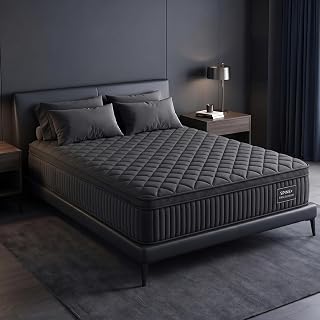
An all-foam build that leans hard into support rather than plush comfort, with gel-infused ventilated layers doing the cooling work that coils would normally handle. It’s the pick for anyone who prefers the quiet, motion-isolating feel of foam but needs a much stiffer core than a typical memory foam bed provides.
BedStory Extra Firm King 14 Inch Hybrid
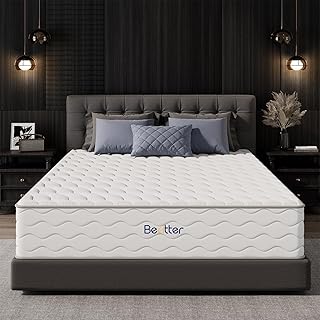
This one targets the lumbar and hip zones specifically, which is where most heavier sleepers feel the first signs of a mattress failing. The 365-night trial is unusually generous, and it’s fiberglass-free with CertiPUR-US certified foams — worth noting if you plan to remove the cover for washing.
King 14 Inch Extra Firm Pressure Relief Hybrid
A balanced extra-firm hybrid that pairs spinal alignment support with enough cooling in the comfort layer to stay tolerable through summer. A sensible middle-ground choice when you want firm without the near-plywood feel of the stiffest options.
12″ Extra Firm Queen Cooling Gel Hybrid
Built explicitly around heavier sleepers and couples, with a breathable gel layer over a supportive coil base. The 12-inch profile keeps it compatible with standard sheet sets and lower bed frames, which is a practical win if you’re not replacing your whole setup.
BedStory 14 Inch King Zoned Lumbar Hybrid
Zoned pocket springs firm up under the midsection and soften slightly at the shoulders, so side sleepers get relief where they need it without losing hip support. The 10-year warranty against sagging is the number to watch here.
Frequently Asked Questions
Does a heavier sleeper really need an extra-firm mattress?
Not always extra-firm, but you do need more support than average. Firmness is about surface feel; support is about what happens six inches down. Aim for a firm surface over a genuinely reinforced core.
Will my existing bed frame handle a hybrid?
Check the center support. Most queen and king frames need a center rail with legs — without it, the slats bow under combined mattress and sleeper weight, and the mattress takes the blame.
How long should one of these last?
Expect six to eight years with a well-built hybrid and proper support underneath. Rotating it head-to-foot every few months evens out the wear considerably.
Are bed-in-a-box mattresses strong enough?
Compression doesn’t damage coils or dense foam. Give it 48 to 72 hours to fully expand before judging the firmness.
Final Thoughts
For most heavier sleepers, the two BedStory hybrids are the strongest starting point — the Extra Firm King 14 Inch for straightforward maximum support, and the Zoned Lumbar version if you sleep on your side and want targeted give at the shoulders. If you’d rather skip coils entirely, the SLEEP100 14″ King delivers foam’s quiet, motion-damping feel on a much stiffer foundation than the category norm.