Key takeaways
- A first aid kit is one of those purchases that feels settled the moment the box arrives.
A first aid kit is one of those purchases that feels settled the moment the box arrives, then gets exposed on the one afternoon a kid scrapes a knee on a camping trip or a coworker slices a finger in the break room. The decision behind the best first aid kits is less about the biggest piece count and more about where the kit will live: a glovebox, a hiking pack, a shop floor, a kitchen drawer, or a school bus. Each location rewards a different size, case and layout.
This guide is for households stocking a home for the first time, drivers adding a kit to the trunk, campers choosing something waterproof, and small business owners who want a larger wall-mounted or shelf-ready case. It compares eight kits for 2026 using only what the listing titles state. A kit is one layer of preparedness, not a replacement for training or professional care, so keep emergency numbers handy, follow the manufacturer’s instructions, and ask a doctor or pharmacist about any medication questions.
Quick Picks
Our top picks


As an Amazon Associate we earn from qualifying purchases at no extra cost to you.
| Product | Best for | Key spec from the title |
|---|---|---|
| 24/7 First Aid 100-Person Kit | Small workplaces | OSHA compliant, 100-person capacity, plastic case |
| Mini First Aid Kit 150 Piece | Pockets and glove boxes | 150 pieces, waterproof EVA hard shell |
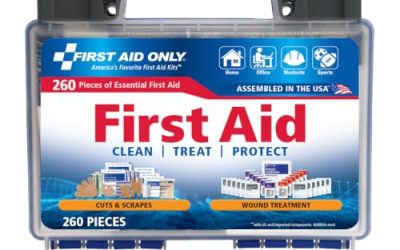
| First Aid Only 260-Piece Family Kit | Home, car and travel | 260 pieces, OSHA compliant, portable case |
| 520 Pieces Premium Kit | Large households and trips | 520 pieces for survival, car, home, camping |
| VRIEXSD 400 Piece Kit | Sports families | 400 pieces, organized layout |
| BAND-AID Travel Ready 80 Piece | Carry-on and day bags | 80 pieces, portable, brand-name basics |
| BAND-AID All-Purpose 160 Piece | Compact home shelf | 160 pieces, adhesive bandages and gauze |
| GEVOKE 410 Piece Kit | Trucks and outdoor use | 410 pieces, waterproof hard shell |
How to Choose
Size the kit to the place and the people
Piece counts are only a rough guide. A mini kit of around 150 pieces fits a glovebox or a bike bag and suits one or two people. Mid-size kits in the 260 to 320 range suit a family home and a car. Kits of 400 pieces and above, or the 100-person workplace case, make sense where several people share the supplies. More pieces also mean a bigger case, so measure the shelf or trunk space before committing.
Look at the case, not just the contents
A waterproof hard shell, like the EVA cases in several of these titles, protects supplies from rain, spills and crushing in a backpack or truck. Soft pouches are lighter but offer less protection. A sliding tray or labeled compartments save time when your hands are shaking. Budget kits tend to cut corners on closures and dividers, so look for a latch that stays shut and a layout that lets you find a bandage without dumping everything out.
Read what is actually inside
Large counts can be padded with dozens of identical adhesive strips. Look for variety: assorted bandage sizes, gauze pads, tape, gloves, scissors, tweezers and a basic guide. Some listings, including the BAND-AID options, also name branded ointment or medication items; check the listing for the exact contents, quantities and expiration dates, and ask a pharmacist about medications and allergies. Ignore vague phrases about being comprehensive without a list to back them up.
Compliance labels and upkeep
Two titles mention OSHA compliance, which matters for workplaces. Confirm on the listing what that label covers and whether it fits your local requirements, since needs vary by industry and location. Whatever you buy, review the kit every six months, replace used or expired items, and keep it where everyone in the household can find it. A well-stocked kit that no one can locate does little good.
The 8 Best Options
24/7 First Aid 100-Person Kit
This is the workplace option. The title states it is OSHA compliant, sized for a 100-person emergency kit, and usable at business, home or in a car, all in a plastic case with an easy-slide feature. It suits an office, shop floor or classroom that needs a dedicated, visible station. Mounting or shelving it somewhere obvious matters as much as the contents, since a kit that employees cannot find in a hurry is not doing its job.
- Strength: built around a large-group capacity, so shared spaces are covered.
- Strength: OSHA compliance is stated in the title, which is useful when a workplace needs documentation.
- Trade-off: a plastic case this size is bulky for travel.
Skip it if you only need a small personal kit, or if your workplace has its own requirements the listing does not address.
Mini First Aid Kit 150 Piece
Compact and waterproof, the mini kit comes in a hard EVA case and targets home, car, travel and camping. It is the kind of kit that rides in a bike pannier or sits in a console without taking over the space. Because the hard shell is described as waterproof, it also suits kayak days and beach bags where a paper box would turn to mush after one splash.
- Strength: small, hard-shell case that resists moisture.
- Strength: 150 pieces is a meaningful starter count for individuals.
- Trade-off: a mini footprint means fewer large supplies, so a family may outgrow it.
Skip it if several people will share it or if you want a kit for a whole household.
First Aid Only 260-Piece Family Kit
The First Aid Only kit sits in the sweet spot for most households. It is described as OSHA compliant, designed for home, car and travel, and housed in a portable everyday case that also suits business or worksite use. Households that want one kit to move between the kitchen, the car and the family vacation will find the balance of size and portability appealing.
- Strength: 260 pieces fit a family without feeling excessive.
- Strength: portable case works for home, vehicle and trips alike.
- Trade-off: it is a generalist, so camping-heavy buyers may want a more waterproof case.
Skip it if you need a hard waterproof shell or the capacity of a larger group.
520 Pieces Premium First Aid Kit
With the highest count in the group, this red kit targets survival, car, home, travel, camping, hiking and school use. It is for people who would rather overstock than hunt for a missing item, such as large families or groups heading out together. School volunteers, scout leaders and road-trip organizers fit the profile too, as long as they have room to store a larger case.
- Strength: a very large inventory for many situations.
- Strength: red case is easy to spot in a cluttered trunk or pantry.
- Trade-off: it is bigger and heavier than compact kits and may not fit tight spaces.
Skip it if you want an ultralight kit for a backpack.
VRIEXSD 400 Piece Large First Aid Kit
The VRIEXSD 400-piece kit is pitched at home, car, travel, camping and sports, with a title that stresses organization. It suits families that spend weekends at fields and trails. Parents who shuttle between practices and tournaments often prefer a single big kit in the back of the vehicle over several small ones scattered across bags.
- Strength: a 400-piece count with an emphasis on organization.
- Strength: sports and camping use cases are named in the title.
- Trade-off: the visible title does not mention a waterproof case, so check the listing.
Skip it if waterproofing is your top priority or you want something pocket-sized.
BAND-AID Travel Ready Portable Kit, 80 Piece
This small kit leans on a familiar brand, with adhesive bandages and branded ointment and medication items named in the title. It is aimed at carry-on bags, school backpacks and short trips. College students and commuters might keep it in a desk drawer, where a small recognizable kit is easy to grab.
- Strength: familiar brand-name basics in a portable format.
- Strength: 80 pieces keep it light for travel.
- Trade-off: a small count limits how many people or incidents it can cover.
Skip it if you need a household stock or plan long outdoor trips. Check expiration dates on any medication items before relying on them.
BAND-AID All-Purpose Compact Kit, 160 Piece
Slightly larger, the 160-piece kit lists adhesive bandages, gauze and other basics in a compact case. It fits a kitchen cabinet or a car console and covers small household mishaps. It is a sensible second kit for a home that already has a larger one in the garage, so there is always something within reach upstairs or in the kitchen.
- Strength: step up in contents while staying compact.
- Strength: brand-name bandages and gauze are named in the title.
- Trade-off: fewer supplies than the large kits for bigger incidents.
Skip it if you need workplace compliance language or a hard waterproof case.
GEVOKE 410 Piece Waterproof Hard Shell Kit
The GEVOKE kit pairs a 410-piece count with a waterproof hard shell in red. The title lists home, car, travel, camping, truck, hiking, sports, office and vehicle use, making it a flexible pick for outdoor-heavy households. The vehicle and truck mentions make it a natural fit for work trucks, ATVs and camper storage compartments.
- Strength: waterproof hard shell protects the contents.
- Strength: 410 pieces cover a family on the move.
- Trade-off: a rigid shell takes up more room than a soft pouch.
Skip it if you want the lightest possible carry kit.
Which One Fits Your Situation
You manage a small office or shop
The 24/7 First Aid 100-Person Kit is the logical choice because it is built around group capacity and states OSHA compliance in the title.
You camp and hike often
Pick the GEVOKE 410 Piece kit for its waterproof hard shell, or the Mini 150 Piece when weight matters.
You want one family kit for the house and car
The First Aid Only 260-Piece kit hits a balanced size and portable case for everyday use.
You need something for travel bags
The BAND-AID Travel Ready 80 Piece kit slips into a carry-on without crowding other items.
Common Mistakes
- Buying by piece count alone and not checking what the pieces are.
- Leaving medication items to expire without checking dates.
- Storing the kit where no one can find it, such as the back of a closet.
- Choosing a large kit for a tiny space or a tiny kit for a large group.
- Relying on a kit as a stand-in for first aid training or a call to emergency services.
Related guides
- Battery Powered Floodlight Camera With Local Storage
- Cordless Drill Brush Attachment For Bathroom Grout
- Rechargeable Emergency Lantern For Power Outages
Frequently Asked Questions
How many pieces should a kit have?
For one or two people, 100 to 150 pieces is typical. A family often does well with 260 to 400, and workplaces may need more or a compliance-oriented kit.
What does OSHA compliant mean on a listing?
It signals the contents were assembled with workplace guidance in mind. Check the listing for the specifics, since requirements vary by industry and location.
How often should a kit be restocked?
Check it every six months and after any use. Replace anything used, damaged or expired, especially medication items.
Should the kit be kept in the car?
Many drivers keep one in the vehicle, but extreme heat and cold can affect some contents. Check manufacturer guidance and rotate items as needed.
More from Amazon
Programs that pair well with the guide above. Offers and eligibility are set by Amazon and may change.
A free business account with business pricing and bulk-buying tools for work, shop or home office.
Create a business accountFree shipping on eligible items, Prime Video and more. Eligible new members can start with a free trial.
Start a Prime free trialAudiobooks and podcasts to listen to on the go. Eligible new members can start with a free trial.
Try Audible freeAd-free music streaming. Eligible new subscribers can start with a free trial.
Try Music Unlimited freeAs an Amazon Associate we earn from qualifying purchases.