Key takeaways
- Slat spacing under 3 inches: This is the single most important number. Pocket coils need continuous contact to distribute load; anything wider lets individual springs push through the gaps and creates soft spots. If your existing frame has wide slats, a bunkie board laid over the top solves it without replacing the bed.
- Total height math: A 13- or 14-inch hybrid on a 9-inch box spring puts your sleep surface above most nightstands. Measure from floor to top of mattress and aim for 24 to 27 inches for easy sit-to-stand. Low-profile bunkie boards are the fix when you want support without altitude.
- Non-skid surface: Hybrids are slick on the bottom and heavy enough to creep toward the foot of the bed over weeks. Silicone grip strips or a textured fabric deck keeps things planted, which matters more on platform beds without a footboard lip.
- Breathability of the deck: Solid plywood traps moisture against the mattress base and shortens foam life. Look for open-frame construction or a breathable fabric cover so vapor can escape downward instead of condensing.
- Assembly and serviceability: Tool-less designs with steel-reinforced centers are worth paying for. Check whether you can disassemble it later without stripped hardware, and confirm center-leg support on queen and larger, since a single unsupported span is where most foundations fail.
What's inside
Hybrid mattresses are heavy, and that weight has to land somewhere. Drop a 14-inch pocket-spring hybrid onto a slat frame with 6-inch gaps and you’ll feel the sag inside a season, usually as a dip right where your hips sit. Most warranty claims on hybrids get denied for exactly this reason: the coil unit was never the problem, the platform under it was. If you’ve ever pulled back the fitted sheet and found a shallow trough in the middle of an otherwise good mattress, you already know the symptom.
This guide breaks down what actually holds a hybrid up — slat spacing, deck rigidity, grip, and airflow — and covers the support options worth your money in 2026. I’ve included bunkie boards and full foundations, plus a few hybrids that ship with support characteristics forgiving enough to sit on a wider variety of decks. Everything here has been evaluated on the criteria that matter to someone who’d rather assemble it right the first time than shim it later with plywood scraps.
As an Amazon Associate we earn from qualifying purchases.


How to Choose a Foundation For Hybrid Mattress (2026)
- Slat spacing under 3 inches: This is the single most important number. Pocket coils need continuous contact to distribute load; anything wider lets individual springs push through the gaps and creates soft spots. If your existing frame has wide slats, a bunkie board laid over the top solves it without replacing the bed.
- Total height math: A 13- or 14-inch hybrid on a 9-inch box spring puts your sleep surface above most nightstands. Measure from floor to top of mattress and aim for 24 to 27 inches for easy sit-to-stand. Low-profile bunkie boards are the fix when you want support without altitude.
- Non-skid surface: Hybrids are slick on the bottom and heavy enough to creep toward the foot of the bed over weeks. Silicone grip strips or a textured fabric deck keeps things planted, which matters more on platform beds without a footboard lip.
- Breathability of the deck: Solid plywood traps moisture against the mattress base and shortens foam life. Look for open-frame construction or a breathable fabric cover so vapor can escape downward instead of condensing.
- Assembly and serviceability: Tool-less designs with steel-reinforced centers are worth paying for. Check whether you can disassemble it later without stripped hardware, and confirm center-leg support on queen and larger, since a single unsupported span is where most foundations fail.
The Best Foundation For Hybrid Mattress (2026)s Reviewed
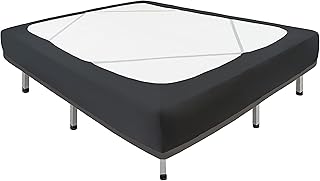
Heavy Duty Bunkie Board, King (76×80)
At a 0.4-inch profile, this is the retrofit answer for anyone with a slat frame that’s too widely spaced. The silicone grip and moisture-resistant construction handle the two failure modes bunkie boards usually have — sliding and mildew — and it adds essentially nothing to your bed height.
Tuft & Needle Mattress Foundation, Queen
Tool-less assembly and honest wood construction make this the low-drama pick if you’re replacing a sagging box spring outright. The non-skid deck holds a hybrid steady, and the 5-year warranty reflects real confidence in the joinery rather than marketing filler.
BedStory Firm 13-Inch Hybrid, Queen
Zoned lumbar support means the coil density varies across the mattress, so it’s less dependent on a perfectly rigid deck than a uniform build would be. Firm enough that back sleepers won’t need to compensate for a marginal foundation, though it still deserves close slat spacing.
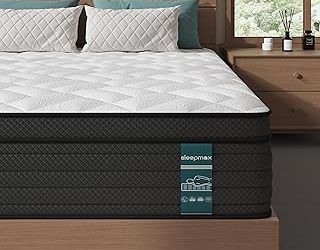
Sleepmax 14-Inch Hybrid, Queen
Fiberglass-free and CertiPUR-US certified, which matters if you’re the type to unzip a cover and inspect what’s inside. The 14-inch build is tall and heavy, so pair it with a proper foundation or bunkie board rather than a bare slat frame.
ailis 14-Inch Hybrid, Queen
The upgraded pocket springs deliver genuinely good motion isolation, and the reinforced perimeter keeps the edges from collapsing when you sit to tie your shoes. Strong edge support also reduces how much the mattress relies on the deck’s corner rigidity.
Frequently Asked Questions
Can I put a hybrid mattress directly on the floor?
Short-term, yes. Long-term, no — the coil unit has no airflow underneath and moisture from your body condenses on the floor side, which invites mold. If floor-level sleeping is the goal, use a low-profile bunkie board with a breathable deck.
Do I need a box spring with a hybrid?
Traditional coil box springs actually work against hybrids because they flex under load. A rigid foundation or platform with closely spaced slats gives better long-term support and is what most hybrid warranties specify.
How do I know if my current frame is adequate?
Measure the gaps between slats and press down between two of them. If you can push more than a quarter inch of give with one hand, the mattress will do the same under 150 pounds of you.
Will a bunkie board fix an already-sagging mattress?
It stops the sag from worsening but won’t reverse compression already set into the foam. Add support early rather than as a repair.
Final Thoughts
For most people the Tuft & Needle Foundation is the cleanest solution — solid wood, tool-less, and sized right for a hybrid’s weight. If you’re keeping your existing bed frame, the Heavy Duty Bunkie Board is the smarter spend, adding proper slat coverage for a fraction of the cost and none of the height. Pair either with the BedStory Firm 13-Inch if you’re also shopping for the mattress itself.