Key takeaways
- Rib count and material: Eight ribs is the practical minimum for a 9-foot canopy, and fiberglass ribs flex back after a gust where aluminum ribs stay bent. Reinforced aluminum with a doubled section at the hub is a good middle ground and usually cheaper to replace.
- Fabric spec, not fabric color: Look for solution-dyed acrylic (Sunbrella and equivalents) or a named engineered fabric with a published fade warranty. GSM weight tells you body — 200 to 260 GSM handles weather far better than the unlabeled 180 GSM stuff.
- Vent design: A single-tier canopy traps air and lifts. Two- or three-tier vented tops let pressure escape, which is the single cheapest wind upgrade you can buy and also drops the temperature under the shade noticeably.
- Pole diameter and base weight: Measure the pole before you order; 1.5 inches is standard and 1.9 inches is stouter. Center-pole umbrellas through a table need 50 pounds of base minimum, freestanding needs 75 to 100, and cantilevers need 200-plus or a bolted plate.
- Tilt mechanism honesty: Push-button tilt is a hinge above the crank and works fine at moderate loads. Auto-tilt built into the crank travel is smoother and has fewer parts to snap off, which matters if you adjust shade several times a day.
What's inside
Anyone who has stood in a backyard at dusk holding two bent umbrella ribs knows the pattern. You buy a shade canopy in spring, it looks great through June, and then one afternoon gust folds it like a cheap tent. By August the fabric has gone from navy to a chalky gray-blue, the crank grinds, and the whole thing gets dragged to the curb. The problem is not bad luck. It is that most patio umbrellas are built to a price point around $60, using thin-wall aluminum, six ribs, and polyester dyed on the surface rather than in the fiber.
A genuinely heavy-duty umbrella is a different piece of hardware. You are paying for solution-dyed or purpose-engineered fabric, eight or more reinforced ribs, thicker tubing, real vent construction, and a crank mechanism with metal internals instead of nylon. This guide walks through what separates those builds from the seasonal stuff, then covers five umbrellas that hold up under wind, sun, and daily use — market-style center pole models plus a couple of cantilever offsets for people who want the pole out of the table.
As an Amazon Associate we earn from qualifying purchases.



🛒 Best Price Today on Amazon
Prime members get fast, free shipping on everything above, plus member-only deals. New members get a 30-day free trial — cancel anytime.
How to Choose a/an Heavy Duty Patio Umbrella (2026)
- Rib count and material: Eight ribs is the practical minimum for a 9-foot canopy, and fiberglass ribs flex back after a gust where aluminum ribs stay bent. Reinforced aluminum with a doubled section at the hub is a good middle ground and usually cheaper to replace.
- Fabric spec, not fabric color: Look for solution-dyed acrylic (Sunbrella and equivalents) or a named engineered fabric with a published fade warranty. GSM weight tells you body — 200 to 260 GSM handles weather far better than the unlabeled 180 GSM stuff.
- Vent design: A single-tier canopy traps air and lifts. Two- or three-tier vented tops let pressure escape, which is the single cheapest wind upgrade you can buy and also drops the temperature under the shade noticeably.
- Pole diameter and base weight: Measure the pole before you order; 1.5 inches is standard and 1.9 inches is stouter. Center-pole umbrellas through a table need 50 pounds of base minimum, freestanding needs 75 to 100, and cantilevers need 200-plus or a bolted plate.
- Tilt mechanism honesty: Push-button tilt is a hinge above the crank and works fine at moderate loads. Auto-tilt built into the crank travel is smoother and has fewer parts to snap off, which matters if you adjust shade several times a day.
The Best Heavy Duty Patio Umbrella (2026)s Reviewed
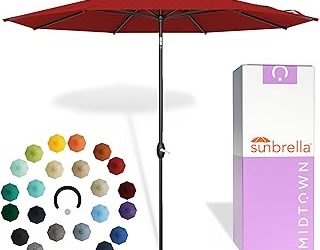
Midtown Umbrellas 9 Ft Auto-Tilt with Terylast Fabric
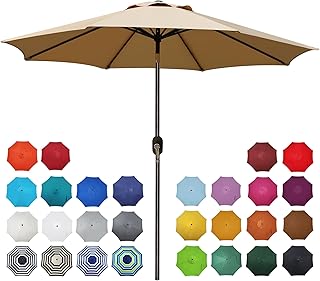
The Terylast canopy carries a ten-year no-fade claim, and paired with eight reinforced ribs on an aluminum frame it is the closest thing here to a set-and-forget center pole umbrella. The auto-tilt integrated into the crank is the detail worth paying for — no separate button to shear off after two seasons.
EliteShade USA 9ft 3-Tier Market Umbrella
Three vent tiers is unusual at this price and it shows in wind, where air bleeds through the stack instead of loading the canopy. Commercial-grade construction, UPF 50+, crank open, and a ten-year non-fading rating make it the value pick for a table umbrella that lives outdoors year round.
Grand Patio 12 FT Sunbrella Cantilever
Genuine Sunbrella fabric on a 12-foot offset arm is a serious amount of shade, enough to cover a full dining set or a lounge pairing without a pole in the middle. It ships with a base, and the tilt adjustment lets you chase the afternoon sun rather than moving furniture.
PURPLE LEAF 10′ x 10′ Square Double Top Cantilever
Rated to 35 MPH with a double-top canopy and a 240 GSM fade-resistant fabric, this is the cantilever for exposed yards where a single-layer top would flap itself apart. Assembly runs about half an hour and the crank-and-pedal operation is genuinely one-handed once it is up.
Tempera Patio Market Umbrella
A straightforward market umbrella done properly: sturdy pole, fade-resistant canopy, push button tilt and crank, and an assembly process you can finish alone in a driveway. It is the sensible replacement when a builder-grade umbrella finally gives out.
Frequently Asked Questions
How much base weight do I actually need?
For a 9-foot umbrella through a patio table, 50 pounds is the floor and 70 is better. Freestanding on open ground, go 75 to 100 pounds. Cantilevers need 200 pounds or more, and most manufacturers publish a specific figure — treat it as a minimum, not a suggestion.
Will a wind-rated umbrella survive a storm if I leave it open?
No. A 35 MPH rating describes gust tolerance while attended, not an unattended storm. Close and crank down any umbrella when you leave, and lay cantilevers flat or remove the canopy before real weather.
Is Sunbrella worth the premium over standard polyester?
If the umbrella gets full sun most of the day, yes. Solution-dyed acrylic has pigment throughout each fiber rather than on the surface, so it fades over years instead of months and cleans without stripping color.
Can I retrofit a heavy-duty canopy onto my existing frame?
Sometimes. Match rib count, rib length, and hub style exactly, and check that the pocket depth fits your rib tips. It is a reasonable repair on a good aluminum frame and a waste of money on a bent one.
Final Thoughts
For most decks and patio tables, the Midtown 9 Ft Auto-Tilt is the build to beat — ten-year fabric, eight reinforced ribs, and a tilt mechanism that will not be the first thing to fail. If you want shade without a pole through your table, the Grand Patio 12 FT Sunbrella Cantilever delivers the largest genuinely durable footprint here, while the PURPLE LEAF Double Top is the pick for windier, more exposed yards.