Key takeaways
- One-way vs. two-way regulation: A wet sponge only adds moisture, so it needs your attention when the weather flips. Two-way systems using saturated salt packets absorb excess humidity as well as release it, which matters if you live somewhere with humid summers and bone-dry winters rather than one consistent extreme.
- Built-in hygrometer: Guessing is the most common mistake. Units that pair the humidifier with a gauge let you see the actual case reading, and analog no-battery gauges avoid the dead-coin-cell surprise six months from now.
- Leak resistance: Anything hanging inside the soundhole sits directly above the top’s bracing. Look for sealed reservoirs, tight caps, and a design you can squeeze dry before installing, because water on bare spruce does more damage than dry air.
- Soundhole fit and clearance: Check that the unit clears your strings and doesn’t rest against the top when the case lid closes. Slimmer profiles suit parlour and 00-size bodies; larger reservoirs make more sense in a dreadnought.
- Refill interval and honest upkeep: Sponge units typically want water every one to two weeks in a dry climate, while packet systems run longer between changes. Choose the schedule you’ll actually keep, and replace worn sponges rather than nursing them along.
What's inside
Anyone who has pulled a guitar out of its case in mid-January knows the feeling: the action has dropped, the frets suddenly feel sharp at the edges, and there’s a faint buzz that wasn’t there in October. That’s not your setup drifting for no reason. It’s the spruce top losing moisture to dry indoor air, shrinking across the grain, and pulling the whole instrument slightly out of shape. Push it far enough and you get a hairline crack beside the fingerboard extension or a bridge that starts lifting, and now you’re paying a luthier instead of a few dollars for a sponge.
The fix is genuinely simple, which is why it’s worth getting right. A guitar humidifier holds a reservoir of water in or near the instrument and lets it evaporate slowly into the enclosed air of the case, keeping relative humidity somewhere in the 45 to 55 percent window most builders target. This guide covers six options that working players and repair techs actually keep in their gig bags, from two-way packet systems that regulate in both directions to soundhole units you can refill in under a minute. I’ve broken down where each one earns its keep, what to watch for in the room you store your instrument in, and the maintenance habits that keep these things from becoming a mold problem instead of a solution.
As an Amazon Associate we earn from qualifying purchases.




How to Choose a Humidifier For Guitars (2026)
- One-way vs. two-way regulation: A wet sponge only adds moisture, so it needs your attention when the weather flips. Two-way systems using saturated salt packets absorb excess humidity as well as release it, which matters if you live somewhere with humid summers and bone-dry winters rather than one consistent extreme.
- Built-in hygrometer: Guessing is the most common mistake. Units that pair the humidifier with a gauge let you see the actual case reading, and analog no-battery gauges avoid the dead-coin-cell surprise six months from now.
- Leak resistance: Anything hanging inside the soundhole sits directly above the top’s bracing. Look for sealed reservoirs, tight caps, and a design you can squeeze dry before installing, because water on bare spruce does more damage than dry air.
- Soundhole fit and clearance: Check that the unit clears your strings and doesn’t rest against the top when the case lid closes. Slimmer profiles suit parlour and 00-size bodies; larger reservoirs make more sense in a dreadnought.
- Refill interval and honest upkeep: Sponge units typically want water every one to two weeks in a dry climate, while packet systems run longer between changes. Choose the schedule you’ll actually keep, and replace worn sponges rather than nursing them along.
The Best Humidifier For Guitars (2026)s Reviewed
D’Addario Humidipak Maintain Kit
The set-it-and-check-it option: three sealed packets sit in fabric pouches at the headstock and soundhole and hold the case at roughly 45 to 50 percent without any water handling on your part. It’s the choice I recommend to anyone who has forgotten a sponge before, since there’s nothing to overfill and nothing to drip.
Oasis OH-1 Soundhole Humidifier
A fabric-sheathed tube filled with water crystals that visibly shrinks as it empties, giving you a refill reminder you can read at a glance. Output is steady and gentle, and the suspended design keeps it clear of the top while still sitting inside the body where you want the moisture.
MusicNomad Humitar ONE (MN311)
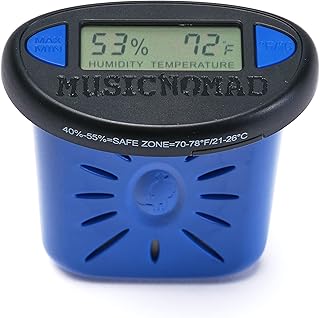
Combines a soundhole sponge holder with a hygrometer clipped onto the same unit, so you’re measuring conditions inside the case instead of hoping. The Humidi-Sponge holds a lot of water for its size and the anti-drip housing gives real peace of mind between refills.
Oasis OH-5 for Acoustic Guitars
A refined take on the OH-1 platform aimed at acoustic players who want a slightly longer runtime and a slimmer profile in the soundhole. Same crystal-based evaporation and same collapse-as-it-empties feedback, with a snug cap that survives being tossed in a gig bag.
GUITTO GHD-01 2-in-1
A clip-on soundhole unit with a refillable sponge and an analog hygrometer that needs no battery, which makes it a sensible low-maintenance pick for a guitar that lives in its case most of the year. Fit is secure across standard soundholes and the sponge chamber is easy to wring out.
Frequently Asked Questions
What humidity level should my guitar sit at?
Aim for 45 to 55 percent relative humidity at moderate room temperature. Brief excursions won’t hurt anything, but weeks below 35 percent is where cracks and lifting bridges start showing up.
Does a case humidifier work if I leave the guitar on a stand?
Not effectively. These units are designed to condition the small sealed volume of a closed case. If your guitar lives on a wall hanger, you need a room humidifier and a hygrometer on the wall nearby instead.
Can I just use a damp sponge in a plastic bag?
People do, and it can work in a pinch, but you lose the drip protection and evaporation control that purpose-built holders provide. The risk is a wet spot on the top or a mold bloom in the case lining.
How often should I refill?
Every one to two weeks for sponge units during heating season, less in mild weather. Two-way packet systems usually run two to five months depending on conditions, and go stiff when spent.
Final Thoughts
For most players, the D’Addario Humidipak Maintain Kit is the safest default because it regulates in both directions and removes the human error from the equation. If you’d rather see and feel what’s happening, the MusicNomad Humitar ONE gives you humidifier and hygrometer in one tidy package, while the Oasis OH-1 remains the classic soundhole unit for anyone who values a clear visual cue that it’s time for a refill.