Key takeaways
- Weave type: Flatweave lies tight and low, which suits doorways and dining chairs. Braided construction gives you a chunkier surface with real dimensional texture, but the ridges catch grit and need a stiffer brush attachment to clear.
- Reversible or backed: A reversible rug doubles its lifespan — flip it when one face gets sun-faded or worn. Latex or canvas backing adds grip but locks you into one side and eventually crumbles. Reversible is the better long-term buy.
- Edge finish: Turn the corner over and look at how the perimeter is closed. Hand-stitched or bound edges resist fraying far better than a heat-sealed or loosely tucked border, which is the first failure point on cheap jute.
- Size versus furniture footprint: Measure your seating arrangement, not your room. A 6×9 works for a loveseat and chair; an 8×10 is what you want under a full sofa with front legs on the rug. Undersized rugs make a space read smaller.
- Moisture tolerance: Jute is a cellulose fiber and it drinks. Keep it out of bathrooms, off damp basement slabs, and away from anywhere a spill can sit. Covered porches are fine; open patios are not.
What's inside
Anyone who has knelt on a subfloor with a chalk line and a utility knife knows that a rug is structural, not decorative. It anchors a seating group, hides a patch job, and quiets a room full of hard surfaces. Jute does all three, which is exactly why it keeps showing up in workshops and living rooms alike. The trouble is that “natural fiber” covers a huge range of build quality, and the differences don’t photograph. Two rugs can look identical in a listing while one holds its shape for a decade and the other unravels at the edge binding within a season.
I’ve spent enough time flipping rugs over, prodding at weft loops, and checking whether a braid was actually stitched or just glued to a backing to have opinions. This guide sorts the current crop of jute rugs by construction method, size availability, and how they handle real traffic — kids, dogs, chair legs, the works. Below you’ll find the picks worth your money, followed by a practical buying framework and answers to the questions that come up after the rug is already unrolled.
As an Amazon Associate we earn from qualifying purchases.


🛒 Best Price Today on Amazon
Prime members get fast, free shipping on everything above, plus member-only deals. New members get a 30-day free trial — cancel anytime.
How to Choose a/an Jute Rug (2026)
- Weave type: Flatweave lies tight and low, which suits doorways and dining chairs. Braided construction gives you a chunkier surface with real dimensional texture, but the ridges catch grit and need a stiffer brush attachment to clear.
- Reversible or backed: A reversible rug doubles its lifespan — flip it when one face gets sun-faded or worn. Latex or canvas backing adds grip but locks you into one side and eventually crumbles. Reversible is the better long-term buy.
- Edge finish: Turn the corner over and look at how the perimeter is closed. Hand-stitched or bound edges resist fraying far better than a heat-sealed or loosely tucked border, which is the first failure point on cheap jute.
- Size versus furniture footprint: Measure your seating arrangement, not your room. A 6×9 works for a loveseat and chair; an 8×10 is what you want under a full sofa with front legs on the rug. Undersized rugs make a space read smaller.
- Moisture tolerance: Jute is a cellulose fiber and it drinks. Keep it out of bathrooms, off damp basement slabs, and away from anywhere a spill can sit. Covered porches are fine; open patios are not.
The Best Jute Rug (2026)s Reviewed
nuLOOM Rigo Flatweave, 6′ x 9′
The Rigo is the one I recommend when someone needs a rug that disappears underfoot — the flatweave profile is thin enough to clear a door swing and won’t trip up a rolling chair. Color is a warm mid-tone natural that plays well with both oak and painted trim.
Hand Woven Braided Jute Rug, 6′ x 9′
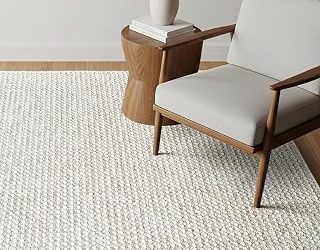
A genuinely handcrafted braid with visible variation in the coils, which is the honest tell that no machine was involved. Fully reversible and rated for covered outdoor use, so it earns its keep on a screened porch or in a mudroom entry.
Handwoven Natural Jute Area Rug, 6′ x 9′
Leans more boho than farmhouse thanks to a looser, more irregular weave that reads handmade from across the room. Good pick for a bedroom where softness matters more than resistance to chair-leg abuse.
FRELISH DECOR Hand Woven Jute Rug, 8′ x 10′
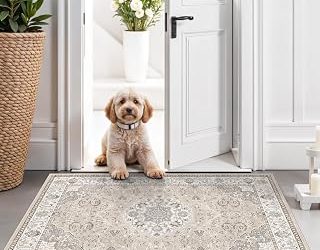
The geometric pattern here is woven in rather than printed, so it won’t wear off the high spots the way a surface-applied design does. At 8×10 it’s the right footprint for a full sofa-and-chairs layout, and the density is noticeably better than budget rugs at the same dimensions.
COTTON CRAFT Braided Jute Door Mat, 22″ x 34″
Small, dense, and reversible — this is the mat I keep just inside a shop door to knock debris off boots before it reaches the finished floor. It’s substantial enough not to skate around, though a thin pad underneath doesn’t hurt.
Frequently Asked Questions
Do jute rugs shed?
Yes, especially in the first few weeks. Loose fiber ends work free as the weave settles. Vacuum with the beater bar off, both sides, and shedding tapers off substantially within a month.
Can I use a jute rug over radiant heat or in a basement?
Radiant floors are fine. Basements depend entirely on moisture — if your slab ever feels cool and damp, jute will mildew from underneath. Test with a taped-down plastic square for 24 hours first.
Is a rug pad necessary?
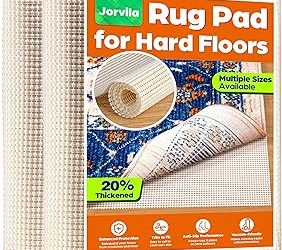
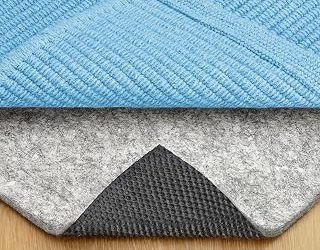
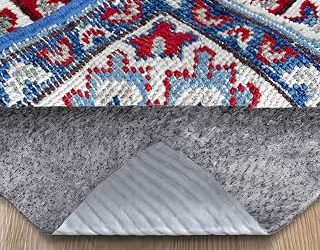
Strongly recommended. A felt or felt-and-rubber pad prevents the rug from abrading hardwood finish, adds cushion, and stops the corners from curling. Skip thin foam pads, which compress flat and do nothing.
How do I clean a spill?
Blot immediately, never rub, and use as little liquid as possible. Water rings are the main risk with jute, so follow with a dry towel and a fan. Deep stains are usually better addressed by flipping a reversible rug.
Final Thoughts
For most rooms, the nuLOOM Rigo flatweave is the safest all-around buy — low profile, neutral tone, easy to live with. If you want visible craft and reversibility, the Hand Woven Braided 6×9 delivers both, and anyone furnishing a larger seating area should size up to the FRELISH DECOR 8’x10′ for its woven-in geometric detail and better overall density.