Key takeaways
- Weave type: Braided construction gives you thickness and a reversible surface, which effectively doubles the lifespan. Flatweave and handwoven panel styles sit lower and slide under doors and low-clearance sofas without binding.
- Fiber blend: Pure jute has a coarse, ropey hand feel that softens with use. Blends with cotton or wool feel gentler underfoot right out of the wrap and tend to shed less during the first month.
- Backing: Latex-backed rugs grip the floor but can trap moisture and yellow hardwood finishes over time. Unbacked rugs breathe better; pair them with a separate felt or rubber pad and you get grip without the risk.
- Size discipline: Measure your seating zone, not your room. The front legs of every major piece should land on the rug at minimum, which usually means going one size larger than instinct suggests. An 8×10 covers most standard living rooms.
- Moisture tolerance: Jute is a cellulose fiber, so it absorbs and stains rather than repels. Skip it in basements, entryways with direct exterior access, or any room where drinks regularly hit the floor unattended.
What's inside
Anyone who has spent a Saturday afternoon on their hands and knees with a tape measure knows the frustration: jute rugs photograph beautifully but feel wildly different in person. One arrives stiff as a doormat, another sheds fibers into the vacuum canister for weeks, and a third turns out to be so thin that every seam in the subfloor telegraphs through. Living rooms are the hardest test case too, since they absorb foot traffic, furniture legs, spilled coffee, and whatever the dog tracks in.
This guide comes from a builder’s perspective rather than a stylist’s. I’ve looked at weave construction, pile height, backing material, and how each rug behaves once it’s actually flattened out and loaded with furniture. Below you’ll find the models worth your money in 2026, plus a practical breakdown of what separates a rug that lasts a decade from one you’ll be dragging to the curb next spring.
As an Amazon Associate we earn from qualifying purchases.


🛒 Best Price Today on Amazon
Prime members get fast, free shipping on everything above, plus member-only deals. New members get a 30-day free trial — cancel anytime.
How to Choose a Jute Rug For Living Room (2026)
- Weave type: Braided construction gives you thickness and a reversible surface, which effectively doubles the lifespan. Flatweave and handwoven panel styles sit lower and slide under doors and low-clearance sofas without binding.
- Fiber blend: Pure jute has a coarse, ropey hand feel that softens with use. Blends with cotton or wool feel gentler underfoot right out of the wrap and tend to shed less during the first month.
- Backing: Latex-backed rugs grip the floor but can trap moisture and yellow hardwood finishes over time. Unbacked rugs breathe better; pair them with a separate felt or rubber pad and you get grip without the risk.
- Size discipline: Measure your seating zone, not your room. The front legs of every major piece should land on the rug at minimum, which usually means going one size larger than instinct suggests. An 8×10 covers most standard living rooms.
- Moisture tolerance: Jute is a cellulose fiber, so it absorbs and stains rather than repels. Skip it in basements, entryways with direct exterior access, or any room where drinks regularly hit the floor unattended.
The Best Jute Rug For Living Room (2026)s Reviewed
KEMA Jute Braided Area Rug, 5×7
The tight braid here gives it real substance underfoot, and because it’s fully reversible you can flip it once the traffic lanes start to show. At 5×7 it’s best suited to smaller seating groups or as a layer over broadloom carpet rather than a primary living room anchor.
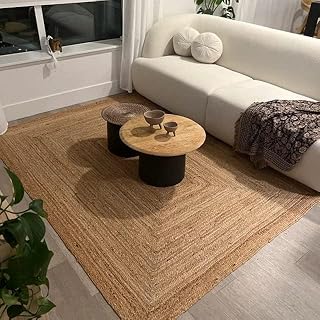
Natural Hand Braided 8’x10′ Jute Rug
This is the workhorse of the group, with hefty braided coils that hold their shape even under a loaded sectional. Expect noticeable shedding for the first two or three weeks; run a vacuum without the beater bar and it settles down.
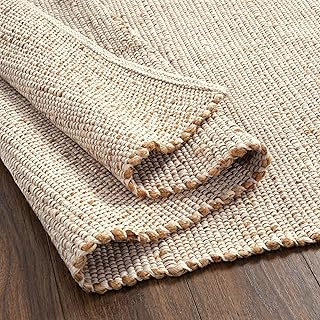
nuLOOM Ashli Natural Solid Handwoven
A clean, even handwoven surface with none of the visual busyness that some jute weaves bring, which makes it the easiest of the bunch to pair with patterned upholstery. It lies flat quickly and the low profile keeps door clearance a non-issue.
SAFAVIEH Natural Fiber 6′ x 9′ Tassel Jute
Safavieh’s construction is consistent batch to batch, and the tasseled ends give it a finished look without needing a binding tape. The 6×9 footprint is an awkward size for large rooms but fits narrow or transitional spaces well.
8×10 Natural Jute & Wool Mini Check
The wool content softens the hand feel considerably, and the 4″ border plus subtle check pattern hides crumbs and pet hair better than a flat natural weave. At 0.6″ pile it threads the needle between cushion and low clearance.
Frequently Asked Questions
Do jute rugs need a pad underneath?
Yes, and not just for grip. A felt pad adds cushion, reduces abrasion on the underside of the weave, and lets air circulate so trapped humidity doesn’t discolor your flooring.
How do I clean a jute rug?
Vacuum with suction only, blot spills immediately with a dry cloth, and treat spots with minimal moisture. Never saturate jute or steam clean it; the fibers swell, ripple, and can develop brown watermarks that don’t come out.
Will a jute rug shed forever?
No. Loose fiber ends work themselves free during the break-in period, typically two to four weeks with regular vacuuming, then output drops off sharply.
Is jute comfortable enough for a family room?
Straight jute is firm and textured, which some people find pleasant and others find scratchy. If you sit on the floor often, choose a wool or cotton blend, or layer a soft rug on top.
Final Thoughts
For most living rooms, the Natural Hand Braided 8’x10′ delivers the best combination of durability and coverage, with the reversible braid buying you years of extra service. If you want something softer underfoot, the Jute & Wool Mini Check is the clear choice, while the nuLOOM Ashli is the safest bet for anyone who wants a quiet, flat neutral that disappears into the room.