Key takeaways
- Verify the hide, not the label: Full-grain and top-grain aren’t interchangeable. Run your palm across the seat and look for visible pores, subtle tone shifts, and the occasional stretch mark. A perfectly uniform surface means heavy pigment, which means the finish will wear off before the leather does.
- Check leather coverage: Plenty of sofas use real hide on the seats and vinyl or split leather on the sides and back. Ask for the coverage spec, or check the outside back panel yourself — same suppleness, same smell, or it’s a mixed build.
- Look for kiln-dried hardwood: Kiln-dried frames resist twisting as indoor humidity swings. Plywood and MDF corners loosen with seasonal movement, and once a stapled joint racks, there’s no clean way to pull it tight again.
- Understand aniline finishes: Aniline dye penetrates the hide instead of sitting on top, so it develops patina beautifully and shows water spots and oils just as readily. Conditioning twice a year fixes most of that. If you want spill-proof, aniline is the wrong pick.
- Weigh cushion fill honestly: Feather-down over a foam core gives that broken-in slouch, but it requires fluffing every week or two. All-foam holds shape with zero maintenance and reads firmer. Pick based on how much upkeep you’ll actually do.
What's inside
Flip a sofa over and you learn more in thirty seconds than an hour of showroom talk will teach you. I do it habitually — same instinct that makes me tap a board to hear whether it’s solid or veneered. What you’re hoping to find underneath is kiln-dried hardwood, corner blocks that were glued and screwed rather than stapled, and hide that wraps the frame instead of being tacked over foam like upholstery fabric. What you find instead, on most sofas wearing a “genuine leather” tag, is engineered lumber, a bonded-leather back panel, and a split hide sprayed with pigment thick enough to hide the grain entirely. That coating is the tell. Full-grain leather keeps the outermost layer of the hide, pores and healed scars and all, which is exactly why it darkens and softens instead of flaking off in sheets around year four.
This guide covers six full-grain and full-Nappa leather sofas that hold up to that kind of inspection — Italian-tanned aniline hides, solid wood frames, feather-down blends over foam cores. I’ve noted what each one does well, where the construction shortcuts appear, and which frames are actually worth re-webbing or re-cushioning a decade out rather than hauling to the curb. Sizes run from an 80-inch Chesterfield suited to apartments up to a 93-inch three-seater, so there’s a fit for most rooms.
As an Amazon Associate we earn from qualifying purchases.


🛒 Best Price Today on Amazon
Prime members get fast, free shipping on everything above, plus member-only deals. New members get a 30-day free trial — cancel anytime.
How to Choose a Full-Grain Leather Sofa (2026)
- Verify the hide, not the label: Full-grain and top-grain aren’t interchangeable. Run your palm across the seat and look for visible pores, subtle tone shifts, and the occasional stretch mark. A perfectly uniform surface means heavy pigment, which means the finish will wear off before the leather does.
- Check leather coverage: Plenty of sofas use real hide on the seats and vinyl or split leather on the sides and back. Ask for the coverage spec, or check the outside back panel yourself — same suppleness, same smell, or it’s a mixed build.
- Look for kiln-dried hardwood: Kiln-dried frames resist twisting as indoor humidity swings. Plywood and MDF corners loosen with seasonal movement, and once a stapled joint racks, there’s no clean way to pull it tight again.
- Understand aniline finishes: Aniline dye penetrates the hide instead of sitting on top, so it develops patina beautifully and shows water spots and oils just as readily. Conditioning twice a year fixes most of that. If you want spill-proof, aniline is the wrong pick.
- Weigh cushion fill honestly: Feather-down over a foam core gives that broken-in slouch, but it requires fluffing every week or two. All-foam holds shape with zero maintenance and reads firmer. Pick based on how much upkeep you’ll actually do.
The Best Full-Grain Leather Sofas (2026) Reviewed
Poly & Bark Napa 88.5″
The Napa is the most balanced build here: full-grain Italian-tanned aniline hide, feather-down cushions, and a solid wood frame on walnut legs that unbolt for tight doorways. The cognac tan lightens noticeably at the seat crowns within a year, which is the patina working as intended.
Valencia Artisan 88″
Full Italian Nappa gives this one the softest hand of the group — closer to a well-worn jacket than furniture leather. The seats sit deep and low, so it rewards lounging over upright conversation, and the solid wood accents are proper joinery rather than applied trim.
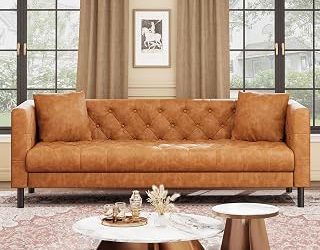
80″ Full-Grain Chesterfield in Caramel
Hand-tufting is where cheap Chesterfields fall apart, and this one gets the button pull right without puckering the surrounding hide. At 80 inches with a deep seat and feather-down fill, it’s the best option for apartments where a 90-inch frame simply won’t turn the corner.
Poly & Bark Essex 89″
The Essex trades the Napa’s clean back for a tufted one, and the cocoa brown reads warmer and less orange in low light. Same full-grain Italian hide and hardwood frame underneath, so you’re choosing on silhouette rather than quality.
MCombo VE701 88″
100% full-grain Napa leather in black, on a solid wood frame, at the most approachable price in this lineup. The arms are boxier and the cushions firmer than the Poly & Bark builds, which suits offices and high-traffic rooms where you’d rather not fluff cushions weekly.
Frequently Asked Questions
Is full-grain leather worth the premium over top-grain?
Yes, if you plan to keep the sofa past a decade. Top-grain has the surface sanded away and a finish sprayed on, so wear removes the coating and exposes raw corium underneath. Full-grain wears into the hide itself and looks better for it.
How do I keep aniline leather from drying out?
Condition every six months with a pH-neutral cream, worked in thin with a microfiber cloth and buffed after twenty minutes. Keep the sofa a few feet off radiators and out of direct afternoon sun, which does more damage than any spill.
Can I reupholster or repair these frames later?
Solid hardwood frames take new webbing, new foam, and even a full re-cover — a competent upholsterer will quote it without hesitation. That’s the real argument for buying construction over finish.
Will pets ruin a full-grain sofa?
Claws leave marks, but on full-grain aniline most surface scratches buff out with a fingertip or a dab of conditioner because the color runs through the hide. Pigmented leather can’t do that.
Final Thoughts
The Poly & Bark Napa is the pick I’d make for most rooms — honest full-grain hide, a frame worth refurbishing, and legs that come off when the stairwell gets tight. Choose the Valencia Artisan if you want the softest Nappa hand available at this price, or the 80″ Caramel Chesterfield if your floor plan sets the terms before your taste does.