Key takeaways
- Hybrid or all-foam: Pocketed coils give you push-back, better airflow, and firmer edges — worth it if you’re over 200 lbs, sleep hot, or sit on the edge of the bed daily. All-foam wins on motion isolation and costs less, which matters more on a king where surface area is huge and every inch of foam adds to the price.
- Height versus your existing frame: A 16-inch mattress on a 14-inch platform plus a headboard sized for a 10-inch bed looks wrong and makes fitted sheets fight you. Measure your frame deck to headboard top, then subtract; if you land under 4 inches of visible headboard, size down to a 12- or 14-inch build.
- Slat spacing and support: Most foam and hybrid kings void warranty coverage over slats wider than 3 inches apart, and a king needs a center rail with legs. If your frame doesn’t have one, a $30 support bar plus a sheet of ¼-inch plywood is a 20-minute fix that prevents a sag down the middle seam.
- Firmness against your sleep position: Side sleepers want medium to medium-plush so hips and shoulders sink; back and stomach sleepers need medium-firm to keep the lumbar curve from collapsing. On a king with two people, split the difference toward firmer — you can always add a topper, but you can’t remove foam.
- Trial window and cover access: Foam takes two to three weeks to stop feeling foreign, so a 100-night minimum is table stakes and a 365-night trial is a real advantage. A zippered, washable cover is the quiet feature that determines whether this mattress looks decent in year five.
What's inside
A king mattress is the largest single purchase most people make for a bedroom, and it arrives compressed into a box roughly the size of a water heater. That’s the part nobody warns you about: 100-plus pounds of vacuum-sealed foam that has to get up your stairs, through a doorway, and onto a frame before you cut a single strap. Meanwhile the listings all blur together with the same vocabulary — gel-infused, zoned support, CertiPUR-US — and it’s genuinely hard to tell which specs change how you sleep and which ones just fill out a bullet list.
I’ve unboxed, measured, and lived on enough of these to know where the real differences hide: coil versus all-foam construction, how much usable loft you get after the first week of expansion, and whether the edges hold up when you sit down to lace your boots. This guide breaks down the king mattresses worth your money on Amazon right now, what to check before you click buy, and how to set one up without wrecking your back or your baseboards.
As an Amazon Associate we earn from qualifying purchases.




🛒 Best Price Today on Amazon
Prime members get fast, free shipping on everything above, plus member-only deals. New members get a 30-day free trial — cancel anytime.
How to Choose a King Mattress On Amazon (2026)
- Hybrid or all-foam: Pocketed coils give you push-back, better airflow, and firmer edges — worth it if you’re over 200 lbs, sleep hot, or sit on the edge of the bed daily. All-foam wins on motion isolation and costs less, which matters more on a king where surface area is huge and every inch of foam adds to the price.
- Height versus your existing frame: A 16-inch mattress on a 14-inch platform plus a headboard sized for a 10-inch bed looks wrong and makes fitted sheets fight you. Measure your frame deck to headboard top, then subtract; if you land under 4 inches of visible headboard, size down to a 12- or 14-inch build.
- Slat spacing and support: Most foam and hybrid kings void warranty coverage over slats wider than 3 inches apart, and a king needs a center rail with legs. If your frame doesn’t have one, a $30 support bar plus a sheet of ¼-inch plywood is a 20-minute fix that prevents a sag down the middle seam.
- Firmness against your sleep position: Side sleepers want medium to medium-plush so hips and shoulders sink; back and stomach sleepers need medium-firm to keep the lumbar curve from collapsing. On a king with two people, split the difference toward firmer — you can always add a topper, but you can’t remove foam.
- Trial window and cover access: Foam takes two to three weeks to stop feeling foreign, so a 100-night minimum is table stakes and a 365-night trial is a real advantage. A zippered, washable cover is the quiet feature that determines whether this mattress looks decent in year five.
The Best King Mattress On Amazon (2026)s Reviewed
16 Inch Luxury Hybrid King Mattress in a Box
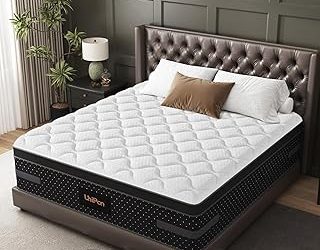
This is the most substantial build here — 16 inches of hybrid construction with 7-zone support, which translates to noticeably firmer coils under the hips and softer ones at the shoulders. The 365-night trial is unusually generous, and the extra loft means a genuinely hotel-thick profile, so confirm your headboard and sheet depth before committing.
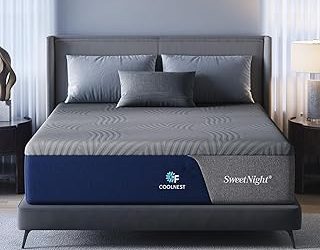
Sweetnight CoolNest 14 Inch King
An all-foam pick that takes cooling seriously, pairing an open-cell top layer with 5-zone ergonomic support underneath for pressure relief across the hips and lower back. The medium feel is the safest choice for couples with mismatched preferences, and motion transfer is essentially nonexistent — worth noting if one of you is up at 5 a.m.
Novilla King Gel Memory Foam 14 Inch
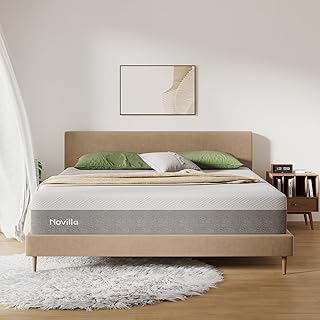
Novilla’s 14-inch gel foam king is the value benchmark on Amazon: full loft, CertiPUR-US certified foams, and the deep motion isolation that all-foam does better than any coil system. Expect a slower response than a hybrid, which side sleepers tend to prefer and stomach sleepers usually don’t.
Novilla Bliss 12 Inch Gel Memory Foam King
The Bliss runs medium-plush over a firmer support core, so you get contouring at the surface without the sink-and-stay feeling of older memory foam. At 12 inches it’s the best fit for standard headboards and older bed frames, and it’s the pick I’d hand someone furnishing a guest room on a budget.
Novilla 12 Inch Hybrid King with Smart Coils
A pocketed-coil hybrid at a foam price, with hypoallergenic covering, fiberglass-free construction, and no box spring required — just a solid slatted deck. The coil layer gives it better edge support and airflow than the all-foam Novillas, which makes it the smarter buy for heavier sleepers or anyone who runs warm.
Frequently Asked Questions
How long does a boxed king mattress take to expand?
Most reach usable shape in 24 to 48 hours and full loft in about 72. Hybrids with coils bounce back fastest; dense all-foam in a cold room can take the full three days, so run the heat a little warmer and leave it uncovered.
Do I need a box spring?
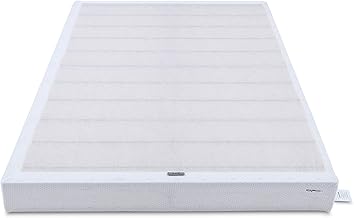
No. Foam and hybrid kings need a flat, rigid surface — a platform frame, slats spaced 3 inches or less, or a bunkie board. A traditional box spring is too springy and can cause premature sagging.
Can one person set up a king mattress alone?
Technically yes, but don’t. The box weighs 90 to 130 pounds and the mattress is unwieldy once it starts inflating. Get the box onto the frame before cutting the plastic, use a utility knife with minimal blade exposure, and have a second set of hands for the flip into position.
Why does my new mattress smell?
That’s off-gassing from compressed foam, and it’s normal. Ventilate the room for two to three days and it dissipates. CertiPUR-US certification means the foams have been tested for VOC emissions and prohibited flame retardants.
Final Thoughts
If you want the most mattress for your money and your frame can handle the height, the 16 Inch Luxury Hybrid with its 7-zone coil system and 365-night trial is the strongest overall pick. For cooler all-foam sleep with excellent motion isolation, the Sweetnight CoolNest 14 Inch is the one I’d choose, and the Novilla 12 Inch Hybrid with Smart Coils is the best low-profile option for older bed frames and tighter budgets.