Key takeaways
- Foam vs. hybrid: All-foam sleeps quieter and costs less, but pocketed coils give you edge support and airflow that foam can’t fake. If you sit on the perimeter to put on boots, go hybrid.
- Read the foam certification: CertiPUR-US means the foam was tested for VOCs, formaldehyde, and heavy metals. It is the single cheapest signal of quality control in this price bracket, and there is no reason to buy without it.
- Check for fiberglass: Some budget covers use fiberglass as a flame barrier. It works, but if that cover ever tears you have a genuine cleanup problem. Look for “fiberglass-free” stated outright.
- Measure your frame first: A standard king is 76″ x 80″. A 16″ mattress in a low-profile DIY platform sits beautifully; the same mattress on a tall traditional frame puts your sheets out of reach and your bedside table at knee height.
- Slat spacing matters more than you think: Foam and hybrid mattresses need support gaps of 3″ or less. Wider than that and the mattress sags between slats, which no warranty will cover. Add a center rail if you’re building your own.
What's inside
Building a bed frame is the easy part. You cut the pine, sand the edges, drive the lag bolts, and stand back feeling pretty good about yourself. Then you go shopping for a king mattress to drop into it and discover that most of them cost more than every tool in your garage combined. A king is 6,080 square inches of sleep surface, and manufacturers price it accordingly, which leaves anyone working with a real-world budget staring at a very short list of options.
The good news: compressed shipping changed the math. Cutting out the showroom, the delivery truck, and the sales commission means a genuinely well-built king can land under $500. The catch is that the sub-$500 shelf is also where corner-cutting hides best, so this guide walks through what actually matters in the build, then reviews six kings that hold up to hands-on scrutiny.
As an Amazon Associate we earn from qualifying purchases.


How to Choose a King Mattress Under 500 (2026)
- Foam vs. hybrid: All-foam sleeps quieter and costs less, but pocketed coils give you edge support and airflow that foam can’t fake. If you sit on the perimeter to put on boots, go hybrid.
- Read the foam certification: CertiPUR-US means the foam was tested for VOCs, formaldehyde, and heavy metals. It is the single cheapest signal of quality control in this price bracket, and there is no reason to buy without it.
- Check for fiberglass: Some budget covers use fiberglass as a flame barrier. It works, but if that cover ever tears you have a genuine cleanup problem. Look for “fiberglass-free” stated outright.
- Measure your frame first: A standard king is 76″ x 80″. A 16″ mattress in a low-profile DIY platform sits beautifully; the same mattress on a tall traditional frame puts your sheets out of reach and your bedside table at knee height.
- Slat spacing matters more than you think: Foam and hybrid mattresses need support gaps of 3″ or less. Wider than that and the mattress sags between slats, which no warranty will cover. Add a center rail if you’re building your own.
The Best King Mattresses Under 500 (2026) Reviewed
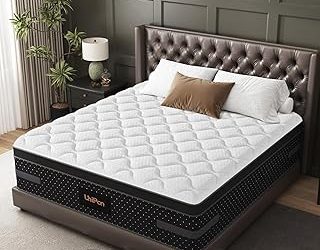
16 Inch Luxury Hybrid King with 7-Zone Support
At 16 inches this is the tallest option here, with zoned pocket coils that firm up under the lumbar and soften at the shoulders — the kind of engineering usually reserved for the $1,200 tier. Expect a two-person unboxing and a genuinely plush medium-firm feel once it decompresses; the 365-night trial gives you a full season cycle to judge it.
COOL GEL Memory Foam 10-Inch King
The most straightforward build on the list: three layers of CertiPUR-US foam, gel-infused on top, no coils to complicate things. It’s the practical pick for a guest room, a bunkie board setup, or any frame where you want low profile and low cost without gambling on foam quality.
EGOHOME 12 Inch Green Tea Memory Foam
Green tea extract and cooling gel are worked into the comfort layer, and EGOHOME states fiberglass-free outright — a detail worth paying for. The 12-inch height hits the sweet spot for most platform frames, and the medium-firm response gives noticeably better hip support than thinner all-foam kings.
14 Inch Hybrid with Individual Pocket Springs
Individually wrapped coils under a memory foam comfort layer means one sleeper can roll over without launching the other — the motion isolation here is legitimately good. The zoned back support is the standout, keeping the spine neutral for side and back sleepers alike.
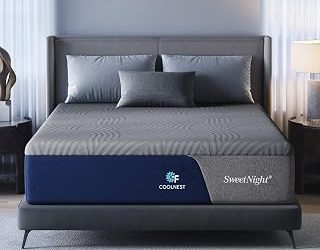
Sweetnight CoolNest 14 Inch King
Sweetnight built this one around airflow, with open-cell foam and a 5-zone ergonomic core that reads medium rather than firm. It’s the pick if you sleep hot and would rather not deal with coils, and the CertiPUR-US certification covers the foam you’re breathing all night.
LETMOON 12 Inch Hotel-Level Hybrid
Gel memory foam over 7-zone pocketed springs, fiberglass-free, with a 365-night trial — spec for spec, it’s the closest thing here to a hotel mattress feel. Reviewers with chronic hip and lower back complaints tend to land on this one.
Frequently Asked Questions
How long does a mattress in a box take to expand?
Most reach usable shape within a few hours and full loft in 24 to 72 hours. Unroll it on the frame it will live on, keep the room warm, and resist the urge to judge firmness on night one.
Do I need a box spring?
No. Foam and hybrid mattresses want a solid or closely slatted platform. A traditional box spring flexes too much and can void the warranty.
Will a 10-inch mattress feel too thin for a king?
For sleepers under roughly 200 pounds, no. Heavier sleepers or couples generally get better support and edge stability from 12 inches or more.
Can I build my own frame for these?
Absolutely, and it’s a great weekend project. Keep slats 3 inches apart or closer, run a center support beam with legs, and size the interior to 76″ x 80″ plus about a quarter inch of clearance.
Final Thoughts
If you want maximum mattress for the money, the 16 Inch Luxury Hybrid delivers zoned coil support that undercuts its own price class. The LETMOON 12 Inch Hybrid is the balanced everyday choice — hotel feel, fiberglass-free, backed by a year-long trial — while the COOL GEL 10-Inch keeps things simple and affordable for guest rooms and second beds. Any of the three will outlast the frame you build for it, provided you space those slats properly.