Key takeaways
- Measure your sheet depth first: Add topper thickness to mattress height and compare against your fitted sheet’s pocket. A 4-inch topper on a 12-inch mattress needs 16-inch pockets minimum, or the corners pop off nightly. Cheaper fix than you’d think, but plan for it.
- Match the fill to the failure: Sagging support calls for dense memory foam that redistributes load. A mattress that’s merely too firm needs a plush pillow-top or down-alternative layer for surface cushioning. They solve different problems and swapping them makes things worse.
- Check how it anchors: Skirted pillow-tops with deep elastic pockets stay put. Slab foam needs either a fitted cover or a genuinely grippy base, especially on adjustable bases and platform frames with wide slat gaps.
- Read cooling claims skeptically: Gel infusion helps at the margins. Perforation, channeling, and open-cell structure move more air. Cotton and down-alternative fills breathe passively without any marketing tech at all.
- Budget for break-in and off-gassing: Compressed foam wants 48 to 72 hours flat and unsheeted to reach full loft. Air it on a garage rack or spare frame if you’re sensitive to new-foam smell, and look for CertiPUR-US or Oeko-Tex certification.
What's inside
You can build a headboard from reclaimed oak, sand it to 220 grit, and hang it perfectly plumb, and none of that matters at 2 a.m. when the mattress underneath you has gone flat in the hip zone. That’s the frustrating part of bedroom projects: the one component you can’t easily rebuild is the one doing all the work. Replacing a mattress outright is a four-figure decision, and most of them are still structurally fine — the support core holds, the comfort layer has just given up.
A topper is the retrofit. Done right, it rebuilds the top two to four inches of your sleep surface for a fraction of a new bed, and you can swap it out later without dismantling anything. Done wrong, it slides around on your slats, cooks you at night, or turns your fitted sheets into a wrestling match. This guide covers what actually separates a luxury topper from a padded afterthought, then walks through five options worth putting on the bed.
As an Amazon Associate we earn from qualifying purchases.




How to Choose a Luxury Mattress Topper (2026)
- Measure your sheet depth first: Add topper thickness to mattress height and compare against your fitted sheet’s pocket. A 4-inch topper on a 12-inch mattress needs 16-inch pockets minimum, or the corners pop off nightly. Cheaper fix than you’d think, but plan for it.
- Match the fill to the failure: Sagging support calls for dense memory foam that redistributes load. A mattress that’s merely too firm needs a plush pillow-top or down-alternative layer for surface cushioning. They solve different problems and swapping them makes things worse.
- Check how it anchors: Skirted pillow-tops with deep elastic pockets stay put. Slab foam needs either a fitted cover or a genuinely grippy base, especially on adjustable bases and platform frames with wide slat gaps.
- Read cooling claims skeptically: Gel infusion helps at the margins. Perforation, channeling, and open-cell structure move more air. Cotton and down-alternative fills breathe passively without any marketing tech at all.
- Budget for break-in and off-gassing: Compressed foam wants 48 to 72 hours flat and unsheeted to reach full loft. Air it on a garage rack or spare frame if you’re sensitive to new-foam smell, and look for CertiPUR-US or Oeko-Tex certification.
The Best Luxury Mattress Topper (2026)s Reviewed
TEMPUR-Adapt Supreme 3″ Memory Foam Topper
This is the reference standard, and the price reflects it — the TEMPUR material has a slower, denser response than generic viscoelastic foam, so it cradles pressure points without the sinking-in-quicksand feeling. If you’re rescuing a good mattress that’s lost its comfort layer, this is the closest you’ll get to a factory rebuild.
JSELF 3″ Gel Memory Foam Topper
The dual-layer build is the smart part here: a wave-textured relief layer over a firmer base, wrapped in a Bekaert fabric cover with a non-slip underside. It’s the best-engineered option in the mid-tier, and the CertiPUR-US plus Oeko-Tex certification pairing is reassuring for anyone who cares what’s off-gassing six inches from their face.
Lucid 4″ Gel Memory Foam Topper
Four inches is a lot of foam, which makes this the pick for genuinely worn-out mattresses and rock-hard dorm or guest-room setups. The ventilated design keeps it from becoming a heat trap, though be honest with yourself about sheet depth before ordering.
Cotton Extra Thick Pillow Top Mattress Pad
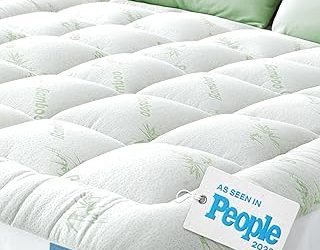
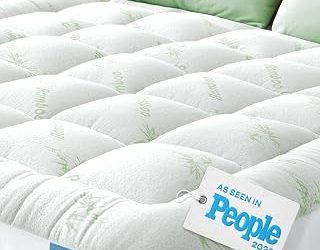
A different philosophy entirely — 100% cotton top with a skirted, fitted design that grips the mattress instead of floating on it. Hot sleepers who bounce off memory foam should start here; it adds real surface plushness and passive breathability without any thermal mass.
Hospitology Down Alternative Pillow Top Topper
Overstuffed, hypoallergenic, deep-pocketed, and unmistakably hotel-bed in feel. It’s the softest option on this list and the least corrective, so treat it as a comfort upgrade to a mattress that’s already supporting you properly.
Frequently Asked Questions
Will a topper fix a sagging mattress?
It masks a shallow dip but can’t restore lost support. If you can see a visible valley or feel the springs, the core has failed and foam on top will just conform to the sag.
How thick should I go?
Two inches for a light comfort tweak, three inches for meaningful pressure relief, four inches when the mattress is too firm or noticeably worn. Thicker isn’t automatically better — it raises the bed and dulls the mattress underneath.
Do I need new sheets?
Usually yes for anything over two inches. Standard 14-inch pockets won’t clear a 3-inch topper on a modern mattress.
How do I clean one?
Foam slabs are spot-clean only; use a washable protector over the top. Cotton and down-alternative pads are typically machine washable on cold — check the tag before committing.
Final Thoughts
If budget allows, the TEMPUR-Adapt Supreme is the topper that most convincingly rebuilds a tired mattress. The JSELF 3-inch gel model delivers most of that performance for considerably less and handles slip better than its price suggests, while hot sleepers and anyone chasing that hotel-bed surface should go with the cotton extra-thick pillow top instead.