Key takeaways
- Firmness that matches your sleep position: Back and stomach sleepers generally need medium-firm to firm so the lumbar curve stays supported. Side sleepers do better with medium, which lets the shoulder and hip settle in without twisting the spine out of line.
- Zoned support over uniform foam: A single slab of foam compresses evenly, which means your heaviest region (the hips) sinks deepest. Five-zone or coil-reinforced designs firm up under the lumbar and pelvis specifically, which is what keeps your spine neutral.
- Hybrid versus all-foam: Pocketed coils push back harder and last longer under heavier bodies, and they breathe better. All-foam contours more precisely and isolates motion almost completely. Over roughly 230 lbs, a hybrid is usually the safer bet.
- Heat management is a back issue too: Sleeping hot makes you toss, and every position change reloads your spine. Copper gel, graphene covers, and open-cell structures aren’t just comfort features; they help you stay put long enough for muscles to actually release.
- Certifications and trial length: Look for CertiPUR-US foam and explicitly fiberglass-free construction. Then check the trial window. Your back needs three to four weeks to adapt, so anything under 100 nights doesn’t give you a real answer.
What's inside
Waking up with a lower back that feels like it spent the night in a vise is rarely about how many hours you slept. It’s usually about what happened to your spine while you were down there. A mattress that’s too soft lets your hips sink below your shoulders, kinking the lumbar curve for seven straight hours. Too firm, and your pelvis and shoulders take all the load while the small of your back hovers over an unsupported gap. Either way, the muscles around your spine spend the night bracing instead of recovering, and you pay for it before your feet hit the floor.
I’ve torn down enough foam beds in my garage to know that the marketing copy on the box rarely matches what’s inside it. This guide cuts through that. Below are six mattresses that hold up to actual scrutiny for back pain relief, followed by the specs that genuinely matter, honest notes on each pick, and answers to the questions that come up most when someone’s shopping with a sore spine and a limited budget.
As an Amazon Associate we earn from qualifying purchases.


How to Choose a Mattress For Back Aches (2026)
- Firmness that matches your sleep position: Back and stomach sleepers generally need medium-firm to firm so the lumbar curve stays supported. Side sleepers do better with medium, which lets the shoulder and hip settle in without twisting the spine out of line.
- Zoned support over uniform foam: A single slab of foam compresses evenly, which means your heaviest region (the hips) sinks deepest. Five-zone or coil-reinforced designs firm up under the lumbar and pelvis specifically, which is what keeps your spine neutral.
- Hybrid versus all-foam: Pocketed coils push back harder and last longer under heavier bodies, and they breathe better. All-foam contours more precisely and isolates motion almost completely. Over roughly 230 lbs, a hybrid is usually the safer bet.
- Heat management is a back issue too: Sleeping hot makes you toss, and every position change reloads your spine. Copper gel, graphene covers, and open-cell structures aren’t just comfort features; they help you stay put long enough for muscles to actually release.
- Certifications and trial length: Look for CertiPUR-US foam and explicitly fiberglass-free construction. Then check the trial window. Your back needs three to four weeks to adapt, so anything under 100 nights doesn’t give you a real answer.
The Best Mattress For Back Aches (2026)s Reviewed
EGOHOME 14″ Memory Foam Mattress
This is the one I’d hand to someone whose pain is specifically lumbar. The copper gel infusion pulls heat off the surface while the 14-inch build gives enough depth for real progressive support instead of the bottom-out you get from thinner foam. ICA endorsement and fiberglass-free construction make it easy to recommend without caveats.
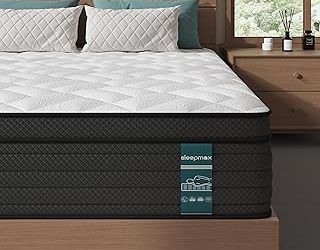
Sleepmax 14″ Hybrid
A genuine hybrid at a price that usually buys you all-foam, with coils that hold the hips up rather than letting them sag. The 365-night trial is the standout here, since it gives your back an entire year of seasons to weigh in before you commit.
Sealy Dreamlife 14″ Hybrid
Sealy’s encased coil system is the most refined support layer on this list, responding independently under the lumbar without transmitting movement across the bed. The gel memory foam comfort layer keeps pressure off the shoulders, which suits combination sleepers who shift between back and side.
Nectar 12″ Memory Foam
The medium-firm feel lands right in the sweet spot for spinal alignment, and the full year-long trial removes essentially all the risk from an online purchase. If you want proven memory foam without hunting for the catch, this is the straightforward answer.
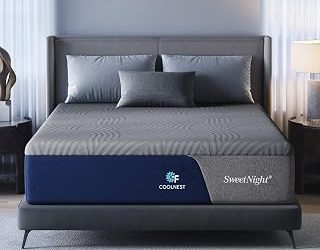
Sweetnight CoolNest 14″ King
The five-zone ergonomic layout does exactly what zoning should, firming up under the pelvis while easing off at the shoulders and calves. In king size it’s a strong option for couples who don’t share the same firmness preference.
Frequently Asked Questions
Is a firm mattress always better for back pain?
No. Research consistently points to medium-firm as the sweet spot for chronic low back pain. Very firm surfaces create pressure at the shoulders and hips while leaving the lumbar curve unsupported, which often makes morning stiffness worse.
How long before my back adjusts to a new mattress?
Give it 21 to 30 nights. Your body has adapted to your old sleeping surface, and the transition can feel worse before it feels better. Judge the mattress at the four-week mark, not the fourth night.
Can a mattress topper fix my current bed instead?
Sometimes. A topper can add cushioning to a bed that’s too firm, but it cannot restore support to a mattress that’s already sagging. Lay a straightedge across the surface; if you see a dip over half an inch, the core is done and a topper only masks it.
Does mattress thickness actually matter?
It matters as a proxy for layer count. Anything under 10 inches usually can’t fit a proper transition layer between comfort foam and the base, so you feel the firm support core through the top. Twelve to 14 inches gives designers room to build real progressive support.
Final Thoughts
If your pain is concentrated in the lower back, the EGOHOME 14″ is the pick I’d start with for its depth and cooling tech. Heavier sleepers or anyone who wants coil support should look at the Sealy Dreamlife for its encased coil system, while the Sleepmax hybrid delivers the best value with a 365-night trial that lets your spine cast the deciding vote. Any of the three will keep you aligned better than the bed that’s currently waking you up.