Key takeaways
- Slat gap tolerance: Measure the space between your existing slats before you buy. Foam mattresses need gaps of 3 inches or less to avoid the washboard effect; hybrids with pocket coils tolerate slightly more but still perform better on tight spacing. If your gaps are wider, a sheet of half-inch plywood or a bunkie board fixes it for under thirty dollars.
- Profile height versus frame height: Add your mattress thickness to your frame deck height and aim for a total sleeping surface around 24 to 25 inches for easy sit-to-stand. A 14-inch mattress on a tall platform can put you uncomfortably high; an 8-inch model on a low frame can feel like a floor futon.
- Center support requirement: Queen and larger mattresses need a center leg or center rail, no exceptions. Most warranties are void without it, and you’ll feel the dip within months. If you’re building your own frame, run a 2×4 down the centerline with legs every 24 inches.
- Foam density and edge behavior: Without a box spring absorbing load, the mattress itself handles all the flex. Higher-density base foam and reinforced perimeters keep the edges from collapsing when you sit down to lace your boots.
- Certifications and airflow: Look for CertiPUR-US foam and fiberglass-free construction, and give some thought to ventilation. A mattress sitting on a solid deck breathes less than one on slats, so gel infusions and open-cell foam matter more in that setup.
What's inside
If you’ve ever hauled a box spring up a narrow staircase, you already know the problem. That hollow wooden frame was designed for coil mattresses from a different era, and it does almost nothing for the foam and hybrid beds most of us sleep on now. Worse, it adds eight to nine inches of height, which turns a platform bed into a climbing wall and makes fitted sheets fight you every laundry day. The modern answer is simpler: a mattress engineered to sit directly on a slatted platform, a bunkie board, or a plywood deck you cut yourself.
This guide is written from the workshop side of things. I’ve built bed frames out of 2×6 pine and reclaimed pallet stock, retrofitted metal frames with center supports, and learned the hard way which mattresses sag between slats and which ones don’t. Below are six beds that genuinely work without a box spring, plus a breakdown of what to look for in the specs and what to check on your own frame before anything gets unboxed.
As an Amazon Associate we earn from qualifying purchases.


🛒 Best Price Today on Amazon
Prime members get fast, free shipping on everything above, plus member-only deals. New members get a 30-day free trial — cancel anytime.
How to Choose a/an Mattresses Without Box Spring (2026)
- Slat gap tolerance: Measure the space between your existing slats before you buy. Foam mattresses need gaps of 3 inches or less to avoid the washboard effect; hybrids with pocket coils tolerate slightly more but still perform better on tight spacing. If your gaps are wider, a sheet of half-inch plywood or a bunkie board fixes it for under thirty dollars.
- Profile height versus frame height: Add your mattress thickness to your frame deck height and aim for a total sleeping surface around 24 to 25 inches for easy sit-to-stand. A 14-inch mattress on a tall platform can put you uncomfortably high; an 8-inch model on a low frame can feel like a floor futon.
- Center support requirement: Queen and larger mattresses need a center leg or center rail, no exceptions. Most warranties are void without it, and you’ll feel the dip within months. If you’re building your own frame, run a 2×4 down the centerline with legs every 24 inches.
- Foam density and edge behavior: Without a box spring absorbing load, the mattress itself handles all the flex. Higher-density base foam and reinforced perimeters keep the edges from collapsing when you sit down to lace your boots.
- Certifications and airflow: Look for CertiPUR-US foam and fiberglass-free construction, and give some thought to ventilation. A mattress sitting on a solid deck breathes less than one on slats, so gel infusions and open-cell foam matter more in that setup.
The Best Mattresses Without Box Spring (2026)s Reviewed
Nectar 12″ Memory Foam Mattress
The most predictable performer in this group, with a dense base layer that spans slats without telegraphing them and a medium-firm feel that suits most builds. The year-long trial gives you real time to test it on a DIY frame before committing.
Sleepmax 14 Inch Hybrid Mattress
Pocket springs over foam make this the best pick if your frame has slightly wider slat gaps, since the coil unit distributes load more forgivingly than solid foam. The 365-night trial and fiberglass-free build are a strong combination at this price.
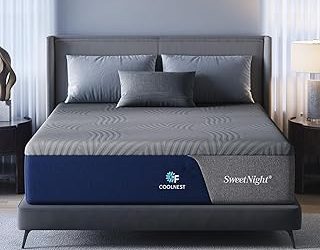
Sweetnight CoolNest 14 Inch Queen
The five-zone layout puts firmer support under the hips and softer foam at the shoulders, which side sleepers notice immediately. Breathability is a genuine strength, making it a smart choice if you’re placing it on a solid plywood deck.
Novilla 14 Inch Gel Memory Foam
Strong motion isolation and a plush-leaning medium feel for couples, with gel infusion that keeps the surface from turning into a heat trap. It wants tight slat spacing, so check your frame first.
EGOHOME 8 Inch Full, Green Tea
The right call for guest rooms, bunk builds, and daybeds where a thick mattress would look wrong or sit too high. At 8 inches it needs a well-supported deck, but it compresses into a manageable box and expands fast.
Frequently Asked Questions
Can I put a mattress directly on the floor?
Short term, yes. Long term, moisture gets trapped underneath and mold becomes a real risk. Build a simple slatted riser to get two or three inches of airflow.
Is a bunkie board the same as a box spring?
No. A bunkie board is a thin solid or slatted panel, typically 1 to 3 inches thick, that creates a flat surface without adding height. It’s the ideal companion for foam mattresses on wide-slat frames.
Will skipping the box spring void my warranty?
Not with these mattresses, but nearly every manufacturer specifies maximum slat spacing and center support for queen and up. Read the spec sheet and photograph your frame setup in case you need it later.
How long until a boxed mattress fully expands?
Most reach usable firmness in 24 to 48 hours and full loft within a week. Cooler rooms slow the process, so bump the thermostat if it feels stiff.
Final Thoughts
For most people building or upgrading a platform bed, the Nectar 12″ is the safest bet thanks to its dense base and generous trial window. If your slats are spaced wider than you’d like, the Sleepmax 14 Inch Hybrid handles that geometry better, and side sleepers who run warm should look hard at the Sweetnight CoolNest for its zoned support and airflow.