Key takeaways
- Check your slats before you buy: Pocket-coil hybrids need support every 3 inches or less. Wider gaps let coils sag between slats and void most warranties. Ripping a few extra 1x4s is a 20-minute fix and cheaper than a replacement mattress.
- Height changes the whole feel: A 16-inch build stacks more transition foam, so it reads softer on contact even when the coils underneath are firm. A 12-inch model puts you closer to the spring unit and feels more supportive right away.
- Coil gauge over coil count: Marketing loves big coil numbers, but thicker wire (lower gauge) and individually encased springs matter more for edge support and motion isolation. Sit on the perimeter and see if it collapses.
- Cooling is airflow, not gel: Gel-infused foam helps at the surface. What actually moves heat is the open coil layer plus a breathable knit cover — one reason hybrids run cooler than all-foam beds of the same thickness.
- Use the trial period properly: Foam needs 30 days to break in and your body needs about as long to adapt. A 100-night window is the minimum; a 365-night trial gives you room to test across seasons.
What's inside
Anyone who has ever built a bed frame from scratch knows the frustration: you spend a weekend cutting, sanding, and finishing something square and solid, then drop a mattress on it that either swallows you whole or feels like a workbench. Medium hybrids are supposed to solve that — coils for structure, foam for the give — but the label gets slapped on everything from a 10-inch budget slab to a 16-inch pillow-top tower. Firmness ratings are unregulated, so two mattresses both marked “medium firm” can feel a full point apart on the same frame.
This guide approaches the problem the way you’d approach a build: look at the materials, the joinery, and how it holds up under load. Below are the medium hybrids worth your money in 2026, plus the specs that actually predict comfort — coil count and gauge, transition layer thickness, cover breathability — and the slat-spacing detail that quietly ruins more mattresses than any manufacturing defect.
As an Amazon Associate we earn from qualifying purchases.


How to Choose a Medium Hybrid Mattress (2026)
- Check your slats before you buy: Pocket-coil hybrids need support every 3 inches or less. Wider gaps let coils sag between slats and void most warranties. Ripping a few extra 1x4s is a 20-minute fix and cheaper than a replacement mattress.
- Height changes the whole feel: A 16-inch build stacks more transition foam, so it reads softer on contact even when the coils underneath are firm. A 12-inch model puts you closer to the spring unit and feels more supportive right away.
- Coil gauge over coil count: Marketing loves big coil numbers, but thicker wire (lower gauge) and individually encased springs matter more for edge support and motion isolation. Sit on the perimeter and see if it collapses.
- Cooling is airflow, not gel: Gel-infused foam helps at the surface. What actually moves heat is the open coil layer plus a breathable knit cover — one reason hybrids run cooler than all-foam beds of the same thickness.
- Use the trial period properly: Foam needs 30 days to break in and your body needs about as long to adapt. A 100-night window is the minimum; a 365-night trial gives you room to test across seasons.
The Best Medium Hybrid Mattresses (2026) Reviewed
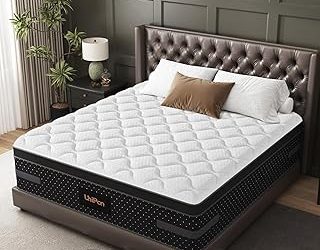
16 Inch Luxury Hybrid Queen with 7-Zone Support
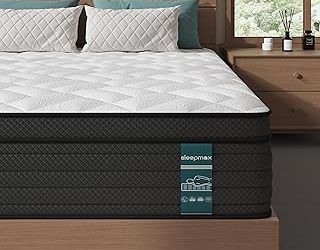
The tallest option here, and the 7-zone coil layout is the real differentiator — firmer springs under the lumbar region, softer ones at the shoulders, which keeps side sleepers aligned without the hip-dip. The 365-night trial is unusually generous, and at 16 inches you’ll want deep-pocket sheets and a lower frame height.
Novilla Queen Mattress 12 Inch
Novilla’s upgraded coil unit paired with gel memory foam lands squarely in medium territory, and it’s the pick I’d hand someone furnishing a guest room on a budget. Motion isolation is strong for the price, though the edges soften faster than the center over a couple of years.
BedStory 12 Inch Hybrid
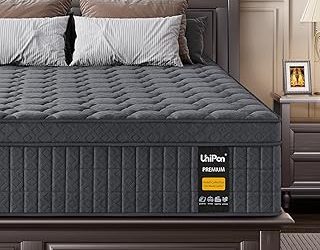
Marketed as firm, this one sits at the upper edge of medium, which makes it the best choice here for back sleepers and anyone managing lower-back pain. Advanced pocket springs keep motion transfer low, and it’s CertiPUR-US certified with no fiberglass in the fire barrier.
Sealy Dreamlife 12″ Hybrid
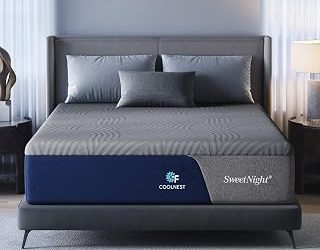
The most conventionally engineered mattress on the list — SealyResponsive encased coils, gel memory foam comfort layer, and Surface-Guard treatment on the cover. It’s the safe pick if you want a familiar mainstream feel rather than a boxed-brand experiment.
Tuft & Needle New Mint Medium Plush
Technically all-foam rather than hybrid, but worth including as the softer end of medium for lighter sleepers and side sleepers who find coils intrusive. Enhanced cooling makes it competitive with hybrids on heat, and the 10-year warranty is backed by a company that actually honors it.
Frequently Asked Questions
Do I need a box spring with a hybrid mattress?
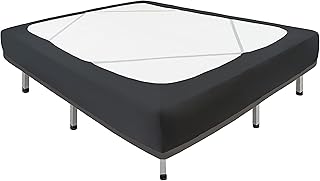
No. Hybrids work on a platform frame, slatted base, or adjustable base. What they need is continuous support — slats spaced 3 inches or less, or a solid plywood deck if you’re building your own.
How long does off-gassing take?
Usually 24 to 72 hours in a ventilated room. Unbox it in an open space, cut the plastic carefully so you don’t nick the cover, and let it expand fully before putting sheets on.
Is a medium hybrid good for side sleepers?
Generally yes, especially zoned models like the 16-inch option above. Side sleepers under roughly 130 pounds may prefer something plusher, such as the Tuft & Needle.
Can I put a hybrid on a DIY bed frame?
Absolutely, and it’s often better than store-bought. Build for the mattress weight — a queen hybrid runs 90 to 130 pounds — with a center support beam and legs, plus tight slat spacing.
Final Thoughts
For most buyers the 16 Inch Luxury Hybrid with 7-zone support is the strongest overall value, largely because that 365-night trial removes the guesswork from an unregulated firmness scale. Choose the BedStory 12 Inch if your back wants a firmer platform, or the Sealy Dreamlife if you’d rather trust a legacy name with a proven coil unit.