Key takeaways
- Best mid-size all-rounder: Cub Cadet XT1 Enduro LT46, a 46-inch deck with a 22 hp class engine and hydrostatic drive.
- Best for 1 to 2 acres: Cub Cadet XT1 Enduro LT50, a 50-inch deck with a 24 hp twin-cylinder engine.
- Best for small-to-mid lawns with attachment needs: John Deere S100, a 42-inch rider with a manufacturer mulch kit and a wide attachment lineup.
- Best step-up from the S100 class: John Deere S130, in the same family with a higher-tier build.
- Best value for larger yards: Husqvarna YTH18542, a 42-inch lawn tractor.
- Best entry-level option: Troy-Bilt Pony 42, a 17.5 hp class tractor with a 42-inch deck.
- Best power per dollar for a bigger deck: Husqvarna TS 148X, a 48-inch class deck with a 24 hp class engine.
- Most compact Cub Cadet option: Cub Cadet XT1 Enduro LT42, a 42-inch deck that accepts a dedicated mulch kit.
The Cub Cadet XT1 Enduro LT46, Cub Cadet XT1 Enduro LT50 and John Deere S100 are the strongest mulching-capable riding mowers for most home lawns, with the Husqvarna YTH18542, Troy-Bilt Pony 42 and Husqvarna TS 148X as sensible alternatives. Each one either ships with, or has a manufacturer-made kit for, a mulching setup, and each pairs it with an engine class big enough to chop clippings finely instead of just pushing them around.
Mulching means cutting grass into tiny pieces that fall into the turf, where they break down and return nitrogen and moisture to the soil. Done well, it replaces some of a lawn’s fertilizer needs, saves the time of bagging and keeps clippings out of the waste stream. Done badly, it leaves clumps that smother grass. The difference comes down to deck design, blade type, engine power and how you mow. This guide compares eight riding mowers by the specs that drive mulching quality, then explains when to mulch, when to bag and how to avoid the common mistakes.
Our top picks



As an Amazon Associate we earn from qualifying purchases at no extra cost to you.
Quick answer: which riding mower for which lawn
- Best mid-size all-rounder: Cub Cadet XT1 Enduro LT46, a 46-inch deck with a 22 hp class engine and hydrostatic drive.
- Best for 1 to 2 acres: Cub Cadet XT1 Enduro LT50, a 50-inch deck with a 24 hp twin-cylinder engine.
- Best for small-to-mid lawns with attachment needs: John Deere S100, a 42-inch rider with a manufacturer mulch kit and a wide attachment lineup.
- Best step-up from the S100 class: John Deere S130, in the same family with a higher-tier build.
- Best value for larger yards: Husqvarna YTH18542, a 42-inch lawn tractor.
- Best entry-level option: Troy-Bilt Pony 42, a 17.5 hp class tractor with a 42-inch deck.
- Best power per dollar for a bigger deck: Husqvarna TS 148X, a 48-inch class deck with a 24 hp class engine.
- Most compact Cub Cadet option: Cub Cadet XT1 Enduro LT42, a 42-inch deck that accepts a dedicated mulch kit.
How we chose
This is a research-based guide. We compared manufacturer specifications, published model information and the buying criteria that apply to mulching on a riding mower. No machine was run in our own yards for this article, so there are no performance claims here. We ranked models on deck width, engine class, transmission type, availability of a manufacturer mulch kit, and the practical features that influence mulching quality, such as cutting height range and deck construction. Where a spec varies by model year or retailer, we describe the class and tell you to confirm the number. A table below flags those points.
How mulching on a riding mower works
Built-in mulching decks versus mulch kits
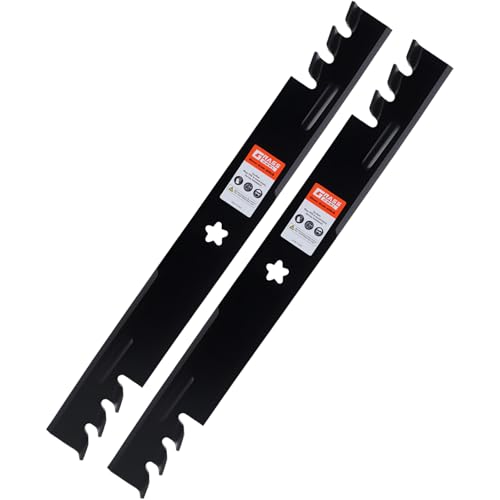
Most riding mowers sold in the entry and mid-range tiers are designed as side-discharge decks. They are capable of mulching, but only once a mulch kit is installed. A kit typically includes special blades with curved lifting surfaces, and a baffle or plug that closes the discharge chute so clippings stay under the deck for repeated cuts. Some premium decks, especially fabricated ones, are designed around mulching from the start and may include a plug in the base package.
- Mulch kit: Lower initial cost, easy to switch back to side discharge, but a bolt-on solution that must match your deck size exactly.
- Built-in or dedicated mulching deck: Often better airflow design and less fiddling, though choices are fewer and the price is higher.
Engine power and fine clippings
Mulching blades spin clippings through multiple cuts, which takes more power than discharging them. As a rule, a 42-inch deck wants at least 17 horsepower class output, a 46 to 50-inch deck wants 22 to 24 horsepower class output, and a twin-cylinder engine runs smoother under the sustained load of mulching tall or thick grass. Underpowered engines slow down in heavy grass, the blade tip speed drops and clippings come out coarse and clumpy.
Blade tip speed, airflow and ground speed
Mulching quality depends on how long clippings stay in the cutting chamber. Slowing your ground speed gives the blades more passes at each piece of grass. Hydrostatic transmissions make this easier because you can adjust speed smoothly with the pedal, while manual or basic automatic drives may require a gear change to slow down.
Deck construction
Stamped steel decks are common and sufficient for most home lawns. Fabricated (welded) decks use thicker steel and resist flexing and denting, which helps maintain consistent blade-to-deck clearance and airflow over time. Mulch kits work on both, but a sturdier deck keeps performance consistent for longer.
Mulch versus bag: how to decide
| Situation | Mulch | Bag |
|---|---|---|
| Regular mowing, grass cut about one third or less | Yes: clippings are small and decompose quickly | Unnecessary |
| Overgrown lawn, more than one third removed | Not on the first pass; clumps form | Yes, or mow twice at different heights |
| Wet grass | Poor; clumps and clogs | Also poor; use side discharge or wait |
| Disease on the lawn (visible fungal patches) | No; spreads spores | Yes, and dispose of clippings |
| Heavy weed seed heads | No; spreads seeds | Yes |
| Fall leaves on lawn | Yes, in light layers; shreds leaves into the turf | Yes, if leaf layer is thick |
| Weekly cuts in the growing season | Yes | Not needed |
Comparison table
| Model | Deck | Engine class | Transmission | Mulch option | Verify before buying |
|---|---|---|---|---|---|
| Cub Cadet XT1 Enduro LT42 | 42-inch stamped | Single-cylinder class | Check model year | Cub Cadet 42-inch kit, part 19A30046100 | Engine hp, transmission |
| Cub Cadet XT1 Enduro LT46 | 46-inch stamped | 22 hp Kohler 7000 Series | Hydrostatic | Cub Cadet 46-inch kit, part 19A30047100 | Engine hp by year |
| Cub Cadet XT1 Enduro LT50 | 50-inch | 24 hp Kohler twin-cylinder | Hydrostatic | Compatible 50-inch kits | Deck type and kit part number |
| John Deere S100 | 42-inch | Single-cylinder class | Check model year | Deere mulch kit with cover | Engine hp, warranty terms |
| John Deere S130 | 42-inch class | Higher-output class than S100 | Check model year | Deere mulch kit | Deck width, engine hp |
| Husqvarna YTH18542 | 42-inch | Single-cylinder class | Check model year | Confirm model-specific kit | Mulch kit part number |
| Troy-Bilt Pony 42 | 42-inch | 17.5 hp class | Sources differ; verify | Compatible 42-inch kit | Transmission type |
| Husqvarna TS 148X | 48-inch class | 24 hp class | Check model year | Confirm model-specific kit | Deck width, kit part number |
The eight mowers in detail
Cub Cadet XT1 Enduro LT46
Specs: 46-inch deck · 22 hp Kohler 7000 Series engine · hydrostatic transmission · accepts the Cub Cadet 46-inch mulch kit
Best for: Half-acre to one-acre lawns where you want a good balance of deck width and engine power for mulching.
Skip if: Your yard has tight gates or narrow passages; a 46-inch deck is wide for small spaces.
- Pros: Engine class is well matched to the deck for mulching, hydrostatic drive lets you slow down smoothly in thick grass, and a manufacturer kit exists for the deck.
- Cons: The mulch kit is a separate purchase, and the stamped deck is not as stiff as a fabricated one.
Cub Cadet XT1 Enduro LT50
Specs: 50-inch deck · 24 hp Kohler twin-cylinder engine · hydrostatic transmission · 16-inch turning radius · 3-gallon fuel tank · 12 cutting heights
Best for: One-to-two-acre lawns where a twin-cylinder engine and wide deck cut mowing time.
Skip if: Your lawn is under half an acre; the extra width adds cost without much time saved.
- Pros: The twin-cylinder engine holds speed under sustained mulching load, the turning radius is tight for its size, and the wide height range suits different seasons.
- Cons: Heavier and costlier than the 42 and 46-inch models, and you must match the kit to the 50-inch deck.
Cub Cadet XT1 Enduro LT42
Specs: 42-inch deck · single-cylinder class engine · accepts the Cub Cadet 42-inch Xtreme mulch kit (part 19A30046100)
Best for: Quarter-acre to three-quarter-acre lawns with a few obstacles.
Skip if: Your grass grows thick and fast; a single-cylinder engine may bog in dense growth with a mulch kit.
- Pros: Compact deck for tight spots, and a documented manufacturer kit that includes two mulching blades and a plug.
- Cons: Less engine reserve than the larger XT1 models, so you will need to slow down when mulching.
John Deere S100
Specs: 42-inch deck · gas engine · solid steel frame · mulch kit with cover available · wide attachment range · 2-year or 120-hour warranty
Best for: Owners who want brand support and the option to add attachments like carts or spreaders later.
Skip if: You want the largest deck for the lowest price, or you are sensitive to reports of deck-drive belt wear.
- Pros: A sturdy frame, a manufacturer mulch kit with a cover that closes the discharge, and an extensive dealer network.
- Cons: Some owners report belt wear on the deck drive, and the 42-inch deck is narrower than competitors at a similar price point.
John Deere S130
Specs: 42-inch class deck · gas engine · same family as the S100 with a higher-tier build · Deere mulch kit family
Best for: Buyers who like the S100 but want more engine and build quality.
Skip if: You do not need the step up; the S100 handles typical home mulching.
- Pros: The same attachment ecosystem and dealer support as the S100, with more capability.
- Cons: Higher price, and you should confirm the deck width and engine output for your model year.
Husqvarna YTH18542
Specs: 42-inch deck · gas engine · lawn tractor layout
Best for: Larger yards where value matters and you plan to install a mulch kit.
Skip if: You need a confirmed model-specific mulch kit; check Husqvarna parts for 42-inch deck compatibility first.
- Pros: Sensible value for the deck size, and a recognized brand with broad parts availability.
- Cons: We could not confirm the exact mulch kit part number, so verify compatibility before purchase.
Troy-Bilt Pony 42
Specs: 42-inch deck · 17.5 hp class engine · 1.36-gallon fuel tank · 18-inch turning radius · 5.5 mph top speed · five cutting positions
Best for: Lawns up to about one and a half acres on a tight budget.
Skip if: You mow thick grass regularly and want a larger engine reserve, or you need a confirmed hydrostatic drive.
- Pros: An entry-level price tier, small footprint and a tight turning radius.
- Cons: Published sources disagree on the transmission type, so confirm it, and the engine class is at the low end for sustained mulching.
Husqvarna TS 148X
Specs: 48-inch class deck · 24 hp class engine · lawn tractor layout
Best for: One-acre-plus lawns where you want a wide deck and a strong engine for mulching.
Skip if: You need a mulch kit that is documented for this exact model; confirm before buying.
- Pros: Good power for the deck width, which supports finer mulching in thicker grass.
- Cons: Larger and heavier, and you should confirm deck width and kit part number for your model year.
Decision matrix: match the mower to your yard
| Lawn size and type | Pick | Reason |
|---|---|---|
| Up to half an acre, obstacles | Cub Cadet XT1 Enduro LT42 or John Deere S100 | Compact 42-inch deck, kits available |
| Half to one acre | Cub Cadet XT1 Enduro LT46 or Husqvarna YTH18542 | Wider deck, adequate power |
| One to two acres, thick grass | Cub Cadet XT1 Enduro LT50 or Husqvarna TS 148X | Twin-cylinder or 24 hp class engine |
| Attachments such as cart or spreader planned | John Deere S100 or S130 | Large attachment range |
| Tight budget | Troy-Bilt Pony 42 | Entry-level price tier |
| Frequent mowing of tall, fast-growing grass | LT50 or TS 148X | More engine reserve for mulching |
Worked example: how much clipping material are you mulching?
Suppose your lawn is 20,000 square feet, you let the grass grow to 4.5 inches and you mow it to 3 inches. You are removing 1.5 inches, which is one third of the blade height, the usual upper limit for mulching. A lawn that size sheds clippings at roughly a quarter-pound of dry material per 1,000 square feet per cut, so your lawn produces about 5 pounds of dry clippings per mow. Mulched properly, that returns a meaningful amount of organic matter without a bag in sight.
Now consider a lawn left to 6 inches and cut to 3 inches. You are removing half the blade, so the amount of clippings roughly doubles to about 10 pounds, and a single pass is likely to leave visible clumps. The fix is to mow twice: first at 4.5 inches, then at 3 inches, or to raise the deck for one cut and lower it for the next. The extra pass costs time but protects the grass from smothering.
These numbers are estimates meant to show the logic of the one-third rule, not measured yields. Actual clipping weight depends on species, moisture and season.
Step-by-step: installing and using a mulch kit
- Confirm the kit matches your exact deck width and model. A 42-inch kit will not fit a 46 or 50-inch deck.
- Park on level ground, turn off the engine, remove the key and disconnect the spark plug wire.
- Remove the existing blades and install the mulching blades in the orientation shown in the instructions, tightening bolts to the torque listed in your manual.
- Install the discharge plug or cover so the chute is fully closed.
- Reconnect the spark plug wire and check blade clearance by turning the blades by hand.
- Mow when the grass is dry, taking off no more than one third of the blade height.
- Slow your ground speed in thick areas, and overlap passes by a few inches.
- Check for clumps after the first few passes and adjust speed or cutting height if you see them.
Safety essentials for riding mowers
- Slopes: Check your owner manual for the maximum slope rating. Mow up and down slopes on a tractor, not across them, and avoid slopes that feel unstable. Rollover is the leading serious hazard on riding mowers.
- Blade service: Always shut off the engine, remove the key and disconnect the spark plug wire before touching a blade or the underside of the deck.
- Discharge: Never remove a discharge cover or run the mower with the chute open when people, pets or windows are nearby. Mulching plugs reduce thrown debris, but check for stones before every mow.
- Children and pets: Keep them out of the mowing area. Do not carry passengers, and stop the blades before reversing unless your model is designed to mow in reverse.
- Fuel: Let the engine cool before refueling and refuel outdoors away from sparks or flames.
- Hearing and eyes: Wear hearing protection and eye protection on long mowing sessions.
Keeping the mulched lawn healthy
Mulching works best on a lawn that is mowed often enough that clippings are short. During fast spring growth you may need to mow every five days. Keep blades sharp, since a dull blade shreds rather than cuts and leaves brown tips. Water the lawn deeply and less frequently so clippings can decompose. If thatch builds up beyond about half an inch, core aeration will help, because thatch and unincorporated clippings can compound each other.
When not to mulch
Skip mulching when the grass is wet, when it is more than a third taller than your cutting height, when there is lawn disease, or when weeds have gone to seed. In those cases use side discharge or a bagger, or mow twice. Also avoid mulching thick leaf layers in a single pass; light layers can be shredded into the turf, but heavy mats will smother it.
Frequently asked questions
Do riding mowers mulch?
Yes, most can once a mulch kit or mulching plug is installed, and some models include one. The kit closes the discharge chute and adds mulching blades so clippings are cut multiple times.
Always buy a kit made for your deck width and model, because kits are not interchangeable between 42, 46, 50 and 54-inch decks.
Is mulching better than bagging?
For most healthy lawns mowed regularly, mulching is better because it returns nutrients and saves time. Bagging is better for overgrown, diseased or weedy lawns.
Mulching works best when you remove no more than one third of the blade height each mow.
How much horsepower do I need for mulching?
Aim for roughly 17 horsepower class output for a 42-inch deck and 22 to 24 for a 46 to 50-inch deck. A twin-cylinder engine holds speed better under heavy mulching load.
More power matters most if your grass is thick or fast growing, because mulching puts a heavier load on the engine than discharging.
Can I mulch wet grass with a riding mower?
It is not recommended. Wet clippings clump and clog the deck, and they smother the lawn. Wait until the grass is dry, or use side discharge if you must mow.
Raising the cutting height for a first pass also reduces clumping in damp conditions.
Does mulching cause thatch?
No, not on its own. Thatch comes mainly from stems and roots, not clippings, which are mostly water and break down quickly. Overfertilizing and overwatering contribute more.
If your lawn already has heavy thatch, core aeration is the usual remedy.
What is the one-third rule?
The one-third rule says never cut more than a third of the grass blade height in one mowing. It keeps the plant healthy and produces clippings small enough to mulch.
If the grass is too tall, mow in two stages a few days apart, lowering the deck each time.
Do I need special blades to mulch?
Yes, for best results. Mulching blades have curved or segmented surfaces that keep clippings circulating under the deck, and they usually come with the mulch kit.
Standard blades can mulch lightly but tend to leave larger pieces and clumps, especially in thicker grass.
How often should I sharpen mulching blades?
Check them at least once a season, and sharpen or replace them if the edges look dull, chipped or bent. Plan on more frequent checks if you mow gravelly or sandy areas.
Sharp blades produce finer clippings and a cleaner cut, which helps the lawn recover quickly.