Key takeaways
- Measure the mattress, not the bed frame: Put a tape measure at the floor and read to the top of your made mattress. Aim for a nightstand within two inches of that number, either direction. Frame height and headboard specs are irrelevant here.
- Go taller if you’re between sizes: A surface slightly above the mattress keeps a glass from getting elbowed off during the night and puts your lamp switch at hand level. Too low and everything on top disappears from view when you’re lying down.
- Check drawer clearance against the mattress edge: A 24-inch nightstand with a top drawer at 20 inches is fine. The same cabinet pushed against a bed with a thick pillow-top can mean the drawer face is partially blocked. Look at drawer positions, not just total height.
- Plan the outlet path before assembly: Rear-facing ports need a couple inches of standoff from the wall. Bottom-mounted power blocks need cord clearance under the case. Decide which side of the bed each unit lands on so the cord run isn’t fighting the baseboard.
- Know your adjustment options: Furniture risers, threaded leveling feet, or a shop-cut hardwood platform can add one to four inches cheaply. Adjustable-column designs skip that step entirely. Either beats living with a mismatch.
What's inside
Here’s the measurement nobody takes before buying: the distance from the floor to the top of your mattress, with sheets on and a body’s worth of compression accounted for. Most people guess, order a nightstand that looked right in a photo, and end up reaching down into a drawer at knee level or knocking a water glass off a surface that towers over the pillow. Pillow-top mattresses and thick foundations have pushed sleep surfaces to 25 or 26 inches in a lot of bedrooms, while the average nightstand still ships at 22 inches. That gap is why your phone keeps ending up on the floor.
This guide sorts out the numbers first, then the furniture. I’ve included the rule of thumb worth trusting, a few shop-tested fixes for when you’re an inch or two off, and six current nightstands that either adjust, sit tall on purpose, or stack shelves upward so you’re not stuck with a single fixed surface. Every pick below handles charging, because a nightstand without an outlet in 2026 is just a small table.
As an Amazon Associate we earn from qualifying purchases.


🛒 Best Price Today on Amazon
Prime members get fast, free shipping on everything above, plus member-only deals. New members get a 30-day free trial — cancel anytime.
How to Choose a Nightstand Height (2026)
- Measure the mattress, not the bed frame: Put a tape measure at the floor and read to the top of your made mattress. Aim for a nightstand within two inches of that number, either direction. Frame height and headboard specs are irrelevant here.
- Go taller if you’re between sizes: A surface slightly above the mattress keeps a glass from getting elbowed off during the night and puts your lamp switch at hand level. Too low and everything on top disappears from view when you’re lying down.
- Check drawer clearance against the mattress edge: A 24-inch nightstand with a top drawer at 20 inches is fine. The same cabinet pushed against a bed with a thick pillow-top can mean the drawer face is partially blocked. Look at drawer positions, not just total height.
- Plan the outlet path before assembly: Rear-facing ports need a couple inches of standoff from the wall. Bottom-mounted power blocks need cord clearance under the case. Decide which side of the bed each unit lands on so the cord run isn’t fighting the baseboard.
- Know your adjustment options: Furniture risers, threaded leveling feet, or a shop-cut hardwood platform can add one to four inches cheaply. Adjustable-column designs skip that step entirely. Either beats living with a mismatch.
The Best Nightstand Height (2026)s Reviewed
Adjustable Height Bedside Table with Wheels
This is the honest answer for anyone who doesn’t know their target number yet, since the column adjusts and the casters let you slide it over a low platform bed or tuck it beside a taller frame. The black-brown finish reads neutral in most rooms, and the built-in charging station means you’re not running an extension cord to make it useful.
WLIVE Tall Nightstand with 3 Drawers
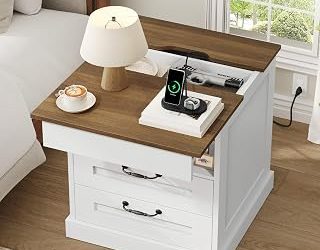
At full tall-cabinet proportions with three real drawers, this is the pick for pillow-top mattresses where a standard 22-inch unit disappears below the sleep surface. Two AC outlets plus two USB ports handle a phone, a watch, and a lamp without a power strip, and the drawer boxes go together cleanly with basic hand tools.
4-Tier Shelf Nightstand with LED Lights and 2 Fabric Drawers
The open-shelf construction is what makes the height work in your favor — you get storage at multiple levels instead of one useful surface and a lot of dead cabinet. Black oak with integrated LED accent lighting suits a modern room, and the fabric drawers keep the frame light enough to reposition solo.
LED Tall Nightstand with 4 Fabric Drawers
Four fabric drawers across four tiers is the most storage-per-footprint on this list, useful in a small bedroom or dorm where the nightstand doubles as a dresser. The USB charging is placed for easy reach, and the tall stance puts the top shelf comfortably above thicker mattresses.
Lazzanto Nightstand with Rear Charging Station
The raised back guard is the detail worth paying for here — it stops a phone or book from sliding off the back edge, which matters more the closer your nightstand sits to mattress height. Industrial styling, two drawers, and rear-mounted USB-A plus AC outlets keep the cords out of sight.
Frequently Asked Questions
What is the ideal nightstand height?
Match the top of your mattress, plus or minus two inches. For most beds that lands between 24 and 28 inches. The old 22-inch standard only works with thinner mattresses and low platform frames.
Should a nightstand be taller or shorter than the bed?
Slightly taller, if you have to choose. It keeps items visible and reachable from a lying position and reduces knocked-over glasses. Shorter than the mattress by more than three inches gets frustrating fast.
Can I raise a nightstand I already own?
Yes. Screw-in furniture risers or leveling feet add one to two inches. For more, cut a plywood or hardwood base slightly smaller than the footprint so it reads as a plinth rather than a block, and glue felt pads underneath.
Do taller nightstands feel out of proportion?
Not if the width stays modest. A narrow, tall unit reads intentional next to a high bed; a wide, tall one starts looking like a dresser. Keep width at or under the nightstand’s height for balance.
Final Thoughts
If you haven’t measured yet, the Adjustable Height Bedside Table with Wheels removes the guesswork entirely and rolls where you need it. For a thick mattress and real drawer storage, the WLIVE Tall Nightstand is the straightforward choice, and the Lazzanto Nightstand earns its spot on the back guard alone if your nightstand sits flush with the sleep surface.