Key takeaways
- Material chemistry: Natural rubber and needle-punched felt are the safest bets on polyurethane finishes. Avoid anything labeled PVC, vinyl, or “adhesive plasticizer” — those compounds can migrate into the sealant and leave a cloudy, sticky ghost of your rug outline.
- Full pad vs. corner gripper: Full-coverage pads stop sliding and add cushion under the whole rug. Corner grippers only solve curling and are best paired with a heavy rug that already stays put on its own.
- Thickness for door clearance: A 1/4″ felt-rubber pad feels great underfoot but can bind a door that already scrapes. Measure your swing clearance before committing to anything over 1/8″.
- Trimmability: Felt and rubber composites cut cleanly with a utility knife and a straightedge. Plan to trim your pad about an inch shorter than the rug on each side so no edge peeks out.
- Reusability and cleaning: Grippers that rinse clean and re-tack are worth a premium. Tack dies from dust, not age, so a washable gripper outlasts a disposable one several times over.
What's inside
Anyone who has spent a weekend refinishing floorboards knows the sinking feeling of watching a rug creep sideways across that fresh satin poly. Hardwood is unforgiving: it’s slick, it’s sealed, and the wrong gripper leaves behind a gummy residue that takes mineral spirits and a lot of regret to remove. Meanwhile the rug itself keeps bunching at the corners, curling into a trip hazard, and grinding grit into the finish every time someone walks across it.
I’ve pulled up more rug pads than I care to count while testing floor finishes, and the differences between them are bigger than the marketing suggests. This guide breaks down what actually holds on a sealed hardwood surface, what materials to keep away from your floors entirely, and which pads and grippers are worth the money in 2026 — from small corner anchors to full-coverage felt-and-rubber cushioning.
As an Amazon Associate we earn from qualifying purchases.


🛒 Best Price Today on Amazon
Prime members get fast, free shipping on everything above, plus member-only deals. New members get a 30-day free trial — cancel anytime.
How to Choose a Non Slip Rug Pad For Hardwood Floors (2026)
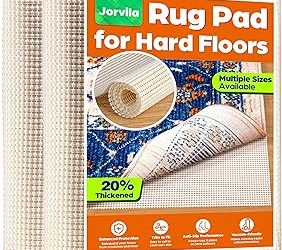
- Material chemistry: Natural rubber and needle-punched felt are the safest bets on polyurethane finishes. Avoid anything labeled PVC, vinyl, or “adhesive plasticizer” — those compounds can migrate into the sealant and leave a cloudy, sticky ghost of your rug outline.
- Full pad vs. corner gripper: Full-coverage pads stop sliding and add cushion under the whole rug. Corner grippers only solve curling and are best paired with a heavy rug that already stays put on its own.
- Thickness for door clearance: A 1/4″ felt-rubber pad feels great underfoot but can bind a door that already scrapes. Measure your swing clearance before committing to anything over 1/8″.
- Trimmability: Felt and rubber composites cut cleanly with a utility knife and a straightedge. Plan to trim your pad about an inch shorter than the rug on each side so no edge peeks out.
- Reusability and cleaning: Grippers that rinse clean and re-tack are worth a premium. Tack dies from dust, not age, so a washable gripper outlasts a disposable one several times over.
The Best Non Slip Rug Pad For Hardwood Floors (2026)s Reviewed
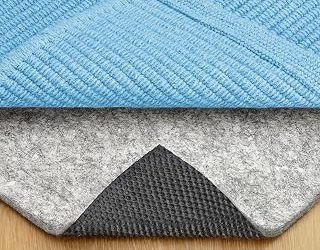
RUGPADUSA Dual Surface Felt + Rubber
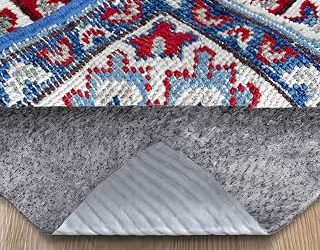
This is the pad I’d install under a living room rug I plan to keep for a decade — dense felt for cushion and acoustic damping, natural rubber on the floor side for grip without plasticizers. The 1/4″ build cuts cleanly with a fresh blade, and it’s the only option here that meaningfully protects the finish from foot traffic abrasion.
Gorilla Grip Strong Rug Pad Gripper
The 2×3 size makes this an easy solution for entry mats and kitchen runners where a full pad is overkill. Grip strength on sealed oak is genuinely strong, though give the floor a wipe with a damp cloth and let it dry fully before laying it down — residual dust is what kills the tack.
Songrey Non-Slip Rug Pad 8×10
A solid mid-tier choice for bedrooms where cushioning matters more than heavy-traffic durability. The extra thickness softens a thin flatweave noticeably, and at this size it’s meaningfully cheaper than a felt-rubber equivalent.
Home Techpro Vacuum Tech Rug Pad Gripper
These use a microsuction-style surface rather than adhesive, which means no residue risk on freshly finished boards — a real advantage if your floors are new. They flatten stubborn corners well, though they need a genuinely smooth surface to work, so skip them on wire-brushed or heavily textured planks.
Veken Rug Gripper Pad
A thicker take on the 2×3 corner gripper with enough body to double as a small area pad under a runner. Grip holds up well through repeated repositioning, which is handy if you’re still deciding on furniture layout.
Frequently Asked Questions
Will a rug pad damage my hardwood floor finish?
A natural rubber or felt pad won’t. The culprits are PVC and vinyl pads containing plasticizers, which react with polyurethane over time and leave a hazy, tacky residue. Check the material spec, not just the “safe for hardwood” claim on the packaging.
Should I size the pad to match my rug exactly?
Cut it about one inch smaller on every side. That keeps the pad invisible and lets the rug edge lie flat against the floor instead of riding up over a lip.
How do I restore grip when a gripper stops sticking?
Rinse the tacky side under warm water, work it gently with your fingers to lift embedded dust, then air dry completely. Most reusable grippers come back to near-original strength this way.
Do I need a pad if my rug is heavy?
For sliding, maybe not. For floor protection, yes — grit trapped under a rug acts like sandpaper against the finish under foot traffic, and a pad is far cheaper than a refinish.
Final Thoughts
If you’re outfitting a main living space and want one decision you won’t revisit, the RUGPADUSA Dual Surface pad is the clear pick for its rubber-and-felt construction and genuine floor protection. For smaller rugs and entryways, the Gorilla Grip gripper delivers reliable hold at a fraction of the cost, and the Home Techpro vacuum-tech grippers are the safest choice if your floors are freshly finished and you want zero adhesive contact.