Key takeaways
- Fin count and surface area: Every one of these units draws the same 1500W at maximum, so heat output is fixed. What changes is how fast that heat leaves the metal. Seven to eleven fins spread the same energy across more surface, which means gentler surface temperatures and steadier room heat rather than a hot spot next to the unit.
- Thermostat type: Mechanical knobs are dead simple and nearly unbreakable, but they swing a few degrees either side of your setting. Digital thermostats hold tighter, display an actual number, and pair with ECO modes that step wattage down instead of cycling fully off. If you are heating a bedroom, tighter control is worth the premium.
- Circuit math before anything else: 1500W on 120V pulls about 12.5 amps. A standard 15-amp branch circuit gives you roughly 1800W total, so that heater plus a space heater elsewhere on the same run will trip. Trace which outlets share a breaker, plug directly into the wall, and skip extension cords and power strips entirely.
- Safety hardware: Look for tip-over cutoff, thermal overload protection, and an ETL or UL listing on the plate, not just in the bullet points. Child lock matters in shared spaces since the fins do get hot enough to warrant respect, even if they will not burn you instantly the way a coil grille does.
- Conveniences that earn their keep: Locking caster wheels, a recessed cord wrap, a 24-hour timer, and a remote all sound like fluff until you are moving the unit between a shop bench and a spare bedroom weekly. Weight is the tradeoff: more fins means more oil, and most of these land in the 15 to 25 pound range.
What's inside
Anyone who has spent a January evening chasing cold spots with a fan-forced heater knows the drill: a roar of hot air, a scorched-dust smell, dry sinuses by morning, and a breaker that pops the moment the coffee maker kicks on. Oil-filled radiators solve most of that by working the opposite way. Instead of blasting air across a glowing element, they warm a sealed reservoir of thermal fluid, and the steel fins bleed that heat into the room slowly and quietly. No fan noise, no airborne dust getting cooked, and a body that stays warm for a good while after the thermostat clicks off.
This guide is written from the perspective of someone who measures rooms, checks panel labels, and would rather fix a draft than throw watts at it. Below you will find the oil-filled radiators worth buying in 2026, plus the selection criteria that actually matter once the box is open: fin count, thermostat type, circuit headroom, and the safety hardware that lets you leave a heater running in a home office without hovering over it.
As an Amazon Associate we earn from qualifying purchases.




How to Choose an Oil Space Heater (2026)
- Fin count and surface area: Every one of these units draws the same 1500W at maximum, so heat output is fixed. What changes is how fast that heat leaves the metal. Seven to eleven fins spread the same energy across more surface, which means gentler surface temperatures and steadier room heat rather than a hot spot next to the unit.
- Thermostat type: Mechanical knobs are dead simple and nearly unbreakable, but they swing a few degrees either side of your setting. Digital thermostats hold tighter, display an actual number, and pair with ECO modes that step wattage down instead of cycling fully off. If you are heating a bedroom, tighter control is worth the premium.
- Circuit math before anything else: 1500W on 120V pulls about 12.5 amps. A standard 15-amp branch circuit gives you roughly 1800W total, so that heater plus a space heater elsewhere on the same run will trip. Trace which outlets share a breaker, plug directly into the wall, and skip extension cords and power strips entirely.
- Safety hardware: Look for tip-over cutoff, thermal overload protection, and an ETL or UL listing on the plate, not just in the bullet points. Child lock matters in shared spaces since the fins do get hot enough to warrant respect, even if they will not burn you instantly the way a coil grille does.
- Conveniences that earn their keep: Locking caster wheels, a recessed cord wrap, a 24-hour timer, and a remote all sound like fluff until you are moving the unit between a shop bench and a spare bedroom weekly. Weight is the tradeoff: more fins means more oil, and most of these land in the 15 to 25 pound range.
The Best Oil Space Heaters of 2026, Reviewed
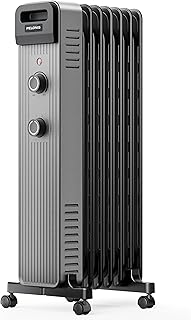
PELONIS Radiator Heater for Large Space, 1500W
Two knobs, three heat modes, and nothing to learn. This is the unit I recommend to anyone who wants heat in a large room without a menu system, and the mechanical thermostat keeps working long after digital boards give up.
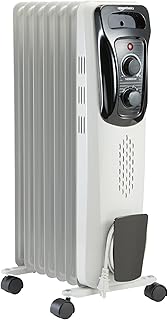
Amazon Basics Portable Oil Space Heater, 7 Fins
A no-frills seven-fin radiator with an adjustable thermostat and both tip-over and overheat cutoffs, which covers the essentials for a bedroom or small office. The black finish hides dust better than white housings, a small thing that matters on a unit you rarely dust.
Amazon Basics Portable Oil Radiator Heater, White
Mechanically the same seven-fin platform in a lighter colorway, with published dimensions of roughly 11 by 14.8 by 25.2 inches, which makes clearance planning easy before you buy. Good pick when the heater has to disappear against pale trim and walls.
Pelonis 2025 Upgraded Oil Filled Radiator Heater
The upgraded chassis adds smoother caster travel and better-finished fin edges over earlier Pelonis units, while keeping the quiet radiant output and adjustable thermostat. A strong middle-ground choice for open living areas where fan noise would be intrusive.
DREO Oil Filled Radiator Heater with Remote
The most capable unit here: digital thermostat, ECO mode, four heat settings, 24-hour timer, child lock, and remote control. If you want a heater that holds a set temperature overnight and ramps down on its own instead of cycling hard, this is the one.
Frequently Asked Questions
Do oil-filled heaters need refilling?
No. The thermal fluid is sealed at the factory and never burns off or circulates out. There is nothing to top up, and a unit that leaks needs replacement rather than service.
What do they cost to run?
At full 1500W output, roughly 1.5 kWh per hour, so multiply by your local rate. Real-world cost lands well below that because the thermostat cycles the element off once the fins are saturated.
How large a room can one heat?
Plan on 150 to 300 square feet for supplemental heat, assuming reasonable insulation and eight-foot ceilings. Sealing gaps around windows and door sweeps buys you more comfort than upgrading the heater.
Are they safe to run overnight?
Generally yes, with a caveat: use an ETL-listed unit with tip-over and overheat protection, keep three feet of clearance on all sides, plug straight into a wall receptacle, and never run one on carpet pile deep enough to block airflow underneath.
Final Thoughts
For most homes, the DREO with its digital thermostat, timer, and child lock is the best all-around oil radiator of 2026 and the one to buy if you want set-and-forget overnight heat. If you would rather have knobs than a keypad, the PELONIS 1500W large-space model and the upgraded 2025 Pelonis both deliver the same quiet warmth with far less to go wrong, while either Amazon Basics seven-fin unit is the sensible budget pick for a spare room.