Key takeaways
- Match the frame to your climate: Extruded aluminum with a quality powder coat shrugs off coastal salt, freeze-thaw cycles, and UV without annual maintenance. Cedar looks warmer and ages beautifully, but budget for a sealer coat every two to three seasons if you want to keep the color rather than let it silver out.
- Read the wind rating, not the marketing: A published number like 70 mph tells you the engineering was tested. No number at all usually means it wasn’t. Just remember the rating assumes correct anchoring, so it’s void if you skip the concrete or use the wrong fasteners for your deck framing.
- Check where the water goes: Integrated gutters and hidden internal downspouts keep runoff off your seating area and away from post bases. Open-edge roofs dump a curtain of water exactly where you walk, which gets old fast.
- Decide how much shade control you need: Independent louver zones let you shade a dining table while keeping planters in sun. Single-bank louvers are simpler and cheaper but move as one unit, so it’s all or nothing.
- Plan your anchoring before you order: Concrete slabs need wedge anchors and a hammer drill. Decks need blocking under the joists and through-bolts. Bare soil needs poured footings below your frost line. Sort this out first, because it’s the step that determines whether the structure survives its first real storm.
What's inside
Standing in your backyard with a tape measure and a browser full of tabs, the pergola market looks deceptively simple: four posts, a roof, done. Then you start reading spec sheets and the picture fractures. Wind ratings that range from unstated to 70 mph. Louvers that pivot as one slab versus louvers you can zone independently. Drainage systems that route water into your post cavities versus ones that dump it at your feet. And anchoring hardware that either matches your substrate or doesn’t, which is the single biggest reason DIY installs fail in year two.
I’ve assembled, re-leveled, and occasionally re-anchored enough of these to know what separates a weekend project from a three-weekend ordeal. This guide covers the brands worth your money in 2026, split between powder-coated aluminum louvered systems and solid cedar trellis kits, with an honest read on assembly difficulty, hardware quality, and what each one actually delivers once it’s bolted down. Every pick below is one I’d be comfortable setting up on my own slab.
As an Amazon Associate we earn from qualifying purchases.




🛒 Best Price Today on Amazon
Prime members get fast, free shipping on everything above, plus member-only deals. New members get a 30-day free trial — cancel anytime.
How to Choose a Pergola Brand (2026)
- Match the frame to your climate: Extruded aluminum with a quality powder coat shrugs off coastal salt, freeze-thaw cycles, and UV without annual maintenance. Cedar looks warmer and ages beautifully, but budget for a sealer coat every two to three seasons if you want to keep the color rather than let it silver out.
- Read the wind rating, not the marketing: A published number like 70 mph tells you the engineering was tested. No number at all usually means it wasn’t. Just remember the rating assumes correct anchoring, so it’s void if you skip the concrete or use the wrong fasteners for your deck framing.
- Check where the water goes: Integrated gutters and hidden internal downspouts keep runoff off your seating area and away from post bases. Open-edge roofs dump a curtain of water exactly where you walk, which gets old fast.
- Decide how much shade control you need: Independent louver zones let you shade a dining table while keeping planters in sun. Single-bank louvers are simpler and cheaper but move as one unit, so it’s all or nothing.
- Plan your anchoring before you order: Concrete slabs need wedge anchors and a hammer drill. Decks need blocking under the joists and through-bolts. Bare soil needs poured footings below your frost line. Sort this out first, because it’s the step that determines whether the structure survives its first real storm.
The Best Pergola Brands (2026) Reviewed
12′ x 16′ Aluminum Louvered Pergola with Curtains & Netting
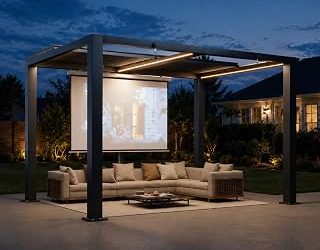
At 192 square feet with adjustable louvers, integrated gutters, and both curtains and bug netting included, this is the most complete package here for anyone covering a full outdoor dining and lounge zone. Recruit a second person for the roof section: the beams are long enough that solo lifting invites a bent flange.
PURPLE LEAF Louvered Pergola 10′ x 14′
The independent roof design and reinforced beams put this in a different structural class from budget kits, and the 70 mph rating is backed by genuinely thick post walls you can feel when you handle them. Hidden drainage routes water down through the posts, which keeps the perimeter clear and the concrete beneath it from staining.
Heavy Duty Aluminum Louvered Pergola 10′ x 13′
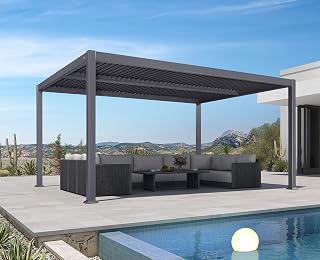
A well-proportioned mid-size option in gray with a heavy-duty aluminum frame and smooth-operating adjustable louvers. It hits the sweet spot for a standard patio or deck section without the freight-handling challenge of the 16-footers.
Aoxun Cedar Wood Pergola 10′ x 12′
Solid cedar with a multi-level trellis roof, and the pre-cut joinery genuinely does go together quickly if you stage the parts in assembly order first. The high-wind rating is reassuring for a wood kit, and the layered roof throws a nicer dappled shade pattern than a flat lattice.
Backyard Discovery Beaumont 12′ x 10′ Cedar Pergola
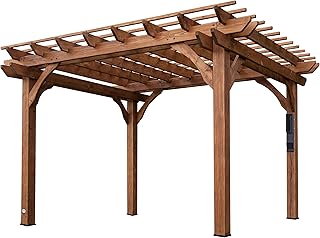
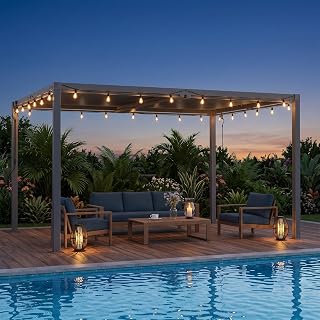
Backyard Discovery has been building outdoor structures long enough to get the small details right, and the built-in PowerPort is the standout: running string lights or a fan no longer means an extension cord snaking across your lawn. Traditional trellis styling makes it the best fit for established garden settings.
Frequently Asked Questions
Can I install a pergola by myself?
Most kits here are two-person jobs, primarily during the roof and beam stage where you’re holding weight overhead while aligning bolt holes. Everything else, including post setting and louver installation, is manageable solo with a good drill, a level, and a stepladder.
Do louvered pergolas actually keep rain out?
Closed louvers shed rain effectively, and models with integrated gutters channel it away rather than letting it sheet off the edges. Expect some spray in wind-driven rain, since the louver seams aren’t a sealed roof.
Does a pergola need a permit?
It depends on your municipality, but freestanding structures over a certain footprint or height commonly require one, and attaching to your house almost always does. One call to your local building department saves a lot of grief later.
Cedar or aluminum for low maintenance?
Aluminum, without much debate. Powder-coated frames need an occasional wash and nothing more, while cedar needs periodic sealing to hold its color and resist checking.
Final Thoughts
For the best combination of engineering and everyday usability, the PURPLE LEAF Louvered Pergola 10′ x 14′ is my top pick thanks to its reinforced beams, independent louver control, and hidden drainage. If you need to cover a large entertaining area in one shot, the 12′ x 16′ aluminum model with curtains and netting delivers the most finished space per dollar. And for anyone who wants natural wood with a genuinely thoughtful feature set, the Backyard Discovery Beaumont and its integrated PowerPort is the cedar kit I’d put in my own yard.