Key takeaways
- Center the unit, not the corner: Dehumidifiers work by circulating room air across a cold coil. Tuck one against a wall and it starts re-inhaling its own dry exhaust. Aim for a spot with at least 12 inches of clearance on the intake and exhaust sides — mid-room or a hallway junction beats a tidy corner every time.
- Follow the moisture source: Put the machine near where water enters, not where the smell ends up. That means the base of basement stairs, beside the sump pit, outside the bathroom door, or next to the washer. Intercepting humid air before it migrates into your furniture saves the compressor real runtime.
- Elevate in basements: Cold slab floors sit several degrees below room temperature, and coil frosting starts there. A scrap plywood platform or an old shelf raises intake into warmer air and improves extraction noticeably. If you’re placing on a slab, prioritize a model with auto-defrost.
- Plan the drain before you plan the spot: Any unit you’ll run continuously belongs within gravity reach of a floor drain, utility sink, or sump. Continuous drainage turns a daily chore into a set-and-forget appliance. Tank-only units are fine upstairs where you’ll walk past them anyway.
- Match capacity to enclosed square footage: Coverage ratings assume open airflow. Closed doors, finished partitions, and storage clutter cut effective range hard. Size up a tier if the space is chopped into rooms, and skip the idea of one unit covering two floors.
What's inside
Damp air doesn’t announce itself. You notice it sideways: a dresser drawer that sticks in July, a musty breath when you open the closet under the stairs, white bloom creeping along the back of a bookcase you pushed flush to an exterior wall. I’ve pulled apart enough water-damaged furniture in my own shop to know the pattern — the moisture was there for months before the finish started lifting. And nine times out of ten, the homeowner already owned a dehumidifier. It was just sitting in the wrong spot.
Placement is the variable almost nobody optimizes. A unit shoved in a corner behind a laundry basket will pull half the water it’s rated for, run louder, and ice up faster. This guide covers where to actually put a dehumidifier room by room, what specs matter once you’ve picked the spot, and six machines I’d trust in a real house — from compact 95oz tank units for a bedroom nightstand to 80-pint basement workhorses you can plumb to a floor drain and forget about.
As an Amazon Associate we earn from qualifying purchases.


How to Choose a Place To Place A Dehumidifier (2026)
- Center the unit, not the corner: Dehumidifiers work by circulating room air across a cold coil. Tuck one against a wall and it starts re-inhaling its own dry exhaust. Aim for a spot with at least 12 inches of clearance on the intake and exhaust sides — mid-room or a hallway junction beats a tidy corner every time.
- Follow the moisture source: Put the machine near where water enters, not where the smell ends up. That means the base of basement stairs, beside the sump pit, outside the bathroom door, or next to the washer. Intercepting humid air before it migrates into your furniture saves the compressor real runtime.
- Elevate in basements: Cold slab floors sit several degrees below room temperature, and coil frosting starts there. A scrap plywood platform or an old shelf raises intake into warmer air and improves extraction noticeably. If you’re placing on a slab, prioritize a model with auto-defrost.
- Plan the drain before you plan the spot: Any unit you’ll run continuously belongs within gravity reach of a floor drain, utility sink, or sump. Continuous drainage turns a daily chore into a set-and-forget appliance. Tank-only units are fine upstairs where you’ll walk past them anyway.
- Match capacity to enclosed square footage: Coverage ratings assume open airflow. Closed doors, finished partitions, and storage clutter cut effective range hard. Size up a tier if the space is chopped into rooms, and skip the idea of one unit covering two floors.
The Best Place To Place A Dehumidifier (2026)s Reviewed
Waykar 80 Pint 5000 Sq. Ft Energy Star Dehumidifier
The 90-degree auto swing louver is the feature that justifies the price — it actively throws dry air across a room instead of dumping it at your feet, which is exactly what an open basement or finished lower level needs. With continuous drainage, auto-defrost, and 30–80% humidity control, this is the unit I’d set near the sump and leave running through shoulder season.
KNKA Energy Star 4500 Sq. Ft Dehumidifier
Same 80-pint class, slightly tighter coverage claim, and a drain hose in the box, which I appreciate — no hardware-store trip on install day. Smart humidity control holds a setpoint without hunting, and sleep mode keeps it civil if the basement shares a wall with a bedroom.
4500 Sq. Ft Compressor Dehumidifier with Drain Hose
A straightforward compressor unit built for the unglamorous work: crawl space edges, workshop corners, an office over an unconditioned garage. Energy-efficient operation and intelligent humidity sensing mean it holds steady without you babysitting the dial.
ToLife 1000 Sq Ft 95 oz Dehumidifier
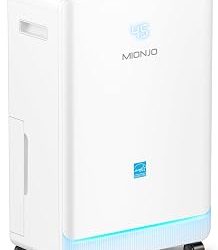
Best small-space pick. The 95oz tank goes roughly two days in a mildly damp bedroom, sleep mode drops it to genuinely background noise, and the 7-color LED doubles as a soft nightlight. Set it on a nightstand or dresser, not the floor — higher intake pulls warmer, wetter air.
95OZ Quiet Dehumidifier with 7 Color Ambient Light
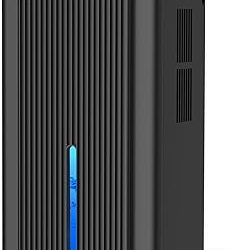
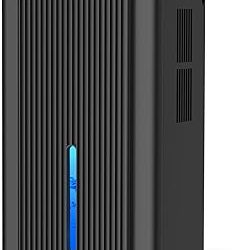
A near-identical performer in black, which matters more than it sounds when the unit lives in a visible living room. Auto shut-off handles a full tank cleanly, and at 1000 sq ft rated coverage it’s sized right for a single bedroom, closet-heavy hallway, or a bathroom you can’t vent properly.
Frequently Asked Questions
Where’s the single best place to put a dehumidifier?
Near the biggest moisture source, with open air on all sides, at least a foot off the wall, and — in a basement — raised off the slab. If you can only pick one spot in a multi-room home, choose the lowest level, since damp air pools downward and rises through the house.
Can I put one inside a closet or cabinet?
No. Enclosed spaces starve the intake and trap exhaust heat, which can push the compressor into a protective shutdown. Instead, run the unit in the adjacent room with the closet door propped open a few inches.
Should it be near a window or an exterior wall?
Keep it away from both. Exterior walls run cooler, and drafty windows feed the machine fresh humid air from outside, so it never reaches its setpoint. Interior placement with doors closed is far more efficient.
How far should it sit from furniture?
Give it two feet from upholstered pieces and solid wood casework. Air needs to circulate behind those items, and the exhaust stream shouldn’t blast a single veneered panel directly, which can dry it unevenly.
Final Thoughts
For basements, crawl spaces, and anything you want plumbed and forgotten, the Waykar 80 Pint is my first recommendation, with the KNKA Energy Star 4500 Sq. Ft as a strong value alternative that ships with the hose you’ll need. Upstairs, the ToLife 95 oz handles a bedroom or bathroom quietly and looks fine doing it. Pick the machine for the room, then spend five minutes getting the placement right — that second step is free, and it’s the one that actually protects your furniture.