Key takeaways
- Match the unit to your climate: Evaporative cooling works by adding moisture to air, so it shines in dry heat and struggles above roughly 60% humidity. If you’re in the Southwest, Mountain West, or a dry inland valley, expect a genuine 10–15°F drop at the outlet. Gulf Coast buyers should temper expectations and treat these as high-airflow fans with a cooling assist.
- Tank capacity determines your refill routine: A 1-gallon tank on high speed typically empties in 5–8 hours. Dual-tank designs pushing toward 24-hour runtime are worth the extra footprint if you want to set it before bed and forget it. Check whether the tank fills from the top or pulls out — top-fill saves you dragging a sloshing reservoir to the sink.
- Oscillation width beats raw CFM: A unit sweeping 120° covers a seating area far better than a stronger fan blowing at one spot. Narrower 70° oscillation suits a desk or single bed; wider sweeps make sense in an open living room.
- Plan for pad maintenance from day one: The honeycomb media pad is the whole engine, and it collects mineral scale and dust. Look for a rear panel you can pop off without tools so you can rinse the pad monthly. Units that bury the pad behind screws quietly become a mildew problem.
- Check the noise floor at low speed: Manufacturer decibel figures are usually measured at the quietest setting. If it’s going in a bedroom, prioritize a model with a genuine sleep mode that steps the fan down over time rather than one that only has three fixed speeds.
What's inside
Renters, basement dwellers, and anyone with a fixed pane or casement window run into the same wall: nearly every compressor-based portable AC needs an exhaust hose pointed outside. If you’ve ever tried to rig a hose through a sliding door with cardboard and tape, you know how quickly that turns into a weekend project that still leaks hot air back into the room.
Windowless evaporative coolers sidestep the whole problem. They pull dry air across a wet media pad, drop the temperature through evaporation, and blow it back at you — no venting, no drilling, no landlord conversations. This guide walks through what actually matters when you’re shopping (tank size, oscillation range, pad access) and reviews the units worth your money in 2026, from slim tower designs to dual-tank models built for all-day runtime.
As an Amazon Associate we earn from qualifying purchases.


How to Choose a Portable Air Conditioner No Window (2026)
- Match the unit to your climate: Evaporative cooling works by adding moisture to air, so it shines in dry heat and struggles above roughly 60% humidity. If you’re in the Southwest, Mountain West, or a dry inland valley, expect a genuine 10–15°F drop at the outlet. Gulf Coast buyers should temper expectations and treat these as high-airflow fans with a cooling assist.
- Tank capacity determines your refill routine: A 1-gallon tank on high speed typically empties in 5–8 hours. Dual-tank designs pushing toward 24-hour runtime are worth the extra footprint if you want to set it before bed and forget it. Check whether the tank fills from the top or pulls out — top-fill saves you dragging a sloshing reservoir to the sink.
- Oscillation width beats raw CFM: A unit sweeping 120° covers a seating area far better than a stronger fan blowing at one spot. Narrower 70° oscillation suits a desk or single bed; wider sweeps make sense in an open living room.
- Plan for pad maintenance from day one: The honeycomb media pad is the whole engine, and it collects mineral scale and dust. Look for a rear panel you can pop off without tools so you can rinse the pad monthly. Units that bury the pad behind screws quietly become a mildew problem.
- Check the noise floor at low speed: Manufacturer decibel figures are usually measured at the quietest setting. If it’s going in a bedroom, prioritize a model with a genuine sleep mode that steps the fan down over time rather than one that only has three fixed speeds.
The Best Portable Air Conditioner No Window (2026)s Reviewed
25.3″ Windowless Evaporative Air Cooler with 90° Oscillation
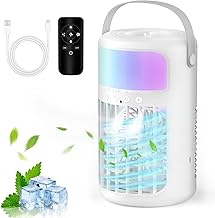
This compact tower hits the sweet spot for bedrooms under 200 square feet — the 90° sweep covers a bed without the wall-bouncing turbulence of wider oscillation. Four included ice packs make a measurable difference in the first hour, and the remote plus timer combination means you can run it from bed without getting up.
42″ Swamp Cooler with Dual 1.1-Gal Tanks and Aroma Function
The tallest unit here, and the extra height puts the air outlet at standing head level, which helps in open-plan rooms. Dual tanks plus a 15-hour timer make this the most set-and-forget option, and the memory function that recalls your last settings after a power blip is a genuinely useful touch most competitors skip.
38.6″ Windowless Cooler with 120° Oscillation, Black
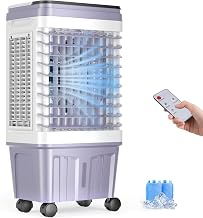
The widest oscillation in this group paired with a large single tank makes this the pick for living rooms where two or three people need airflow. The black finish hides the water line less obviously than white housings, so keep an eye on levels — the 12-hour timer is more generous than the tank realistically supports at high speed.
3-In-1 Ventless Cooler for Office Use
Built for desk-adjacent duty, this one combines cooling, fan, and humidify functions in a footprint that fits beside a filing cabinet. The 70° oscillation is deliberately narrow, which is the right call when you want the air on you and not on your coworker’s paperwork.
24.4″ Small Evaporative Cooler for Bedroom
The most apartment-friendly option, and the one I’d hand to a first-time buyer testing whether evaporative cooling suits their climate. Three speeds, four modes, and a 7-hour timer cover the basics without a learning curve, though the smaller tank means a nightly refill.
Frequently Asked Questions
Do windowless portable air conditioners actually cool a room?
They lower the temperature of air passing through them, but they don’t remove heat from the room the way a vented compressor unit does. In dry air you’ll feel a real 10–15°F drop in the airstream; the ambient room temperature shifts less dramatically.
How often do I need to refill the water tank?
Every 5 to 8 hours on high with a 1-gallon tank, and up to 24 hours with dual-tank models on a lower speed. Running the tank dry won’t damage the unit, but you lose all cooling effect until you refill.
Should I use ice packs or just cold water?
Ice packs give a noticeable boost for the first 60 to 90 minutes, then the effect tapers. For sustained cooling, consistent water levels matter more than starting temperature — rotate two sets of packs in the freezer if you want the boost on demand.
Will this make my room feel humid?
Yes, that’s the mechanism. In a bedroom with the door closed, humidity climbs over several hours, so crack a door or window for airflow. That’s also why these units underperform in already-humid climates.
Final Thoughts
For most rooms, the 38.6″ cooler with 120° oscillation strikes the best balance of coverage and tank size, while the 42″ dual-tank swamp cooler is the one to buy if uninterrupted overnight runtime matters more than footprint. If you’re in a smaller apartment or just want to test whether evaporative cooling works in your climate before committing, the 25.3″ model with 90° oscillation is the low-risk entry point.