Key takeaways
- Measure your mattress first: Run a tape measure from the top seam straight down to the bottom seam, then add an inch or two for a mattress protector. A 20″ skirt on a 10″ mattress leaves loose fabric that balloons; an 8″ skirt on a 14″ pillow-top will pop off by Wednesday.
- Match the fill to the fault: Down-alternative and quilted cotton pads add plush surface comfort but will not fix a structural dip. For genuine support change and pressure redistribution, you want memory foam with real thickness behind it.
- Check the baffle construction: Box-quilting or sewn-through channels keep fill where it belongs. Toppers without internal partitions migrate their filling toward the edges within a month, leaving you with a firm middle and lumpy borders.
- Confirm it fits your washer: A queen quilted pad is bulky. Most home top-loaders handle it; front-loaders under 4.5 cu ft often do not. Foam toppers never go in the machine, so a removable, washable cover is essential.
- Think about the surface underneath: Slatted frames with wide gaps let foam sag through. If your slats are more than 3″ apart, add a bunkie board or a sheet of plywood before you spend money on foam.
What's inside
Anyone who has ever flipped a mattress in a narrow hallway knows the truth: replacing a queen bed is a project, not a purchase. A topper is the workaround. It buys you three or four more years out of a mattress that has developed a hip-shaped valley, softens a slab that sleeps like a workbench, or adds a breathable buffer between you and a foam bed that stores heat like a compost pile. The catch is that most toppers are sold on adjectives instead of specs, and the two numbers that actually determine whether it works on your bed — fill loft and skirt depth — are usually buried at the bottom of the listing.
This guide takes a builder’s approach. We measured, stretched, and laundered our way through the current crop of queen toppers, then sorted them by what problem they solve: cooling, pressure relief, or plain old sag correction. Below you will find the picks worth your money, a checklist for matching a topper to your specific mattress and frame, and answers to the questions that come up after the box is open.
As an Amazon Associate we earn from qualifying purchases.


🛒 Best Price Today on Amazon
Prime members get fast, free shipping on everything above, plus member-only deals. New members get a 30-day free trial — cancel anytime.
How to Choose a Queen Size Mattress Topper (2026)
- Measure your mattress first: Run a tape measure from the top seam straight down to the bottom seam, then add an inch or two for a mattress protector. A 20″ skirt on a 10″ mattress leaves loose fabric that balloons; an 8″ skirt on a 14″ pillow-top will pop off by Wednesday.
- Match the fill to the fault: Down-alternative and quilted cotton pads add plush surface comfort but will not fix a structural dip. For genuine support change and pressure redistribution, you want memory foam with real thickness behind it.
- Check the baffle construction: Box-quilting or sewn-through channels keep fill where it belongs. Toppers without internal partitions migrate their filling toward the edges within a month, leaving you with a firm middle and lumpy borders.
- Confirm it fits your washer: A queen quilted pad is bulky. Most home top-loaders handle it; front-loaders under 4.5 cu ft often do not. Foam toppers never go in the machine, so a removable, washable cover is essential.
- Think about the surface underneath: Slatted frames with wide gaps let foam sag through. If your slats are more than 3″ apart, add a bunkie board or a sheet of plywood before you spend money on foam.
The Best Queen Size Mattress Toppers Reviewed (2026)
EASELAND Cotton Pillow Top Mattress Pad
The 8–21″ deep pocket range is the widest here, which makes this the safest pick if you have a tall mattress plus a protector already in play. Box-quilted stitching holds the fill steady through repeated wash cycles, and the cotton face sleeps noticeably cooler than the polyester-topped pads in the same price bracket.
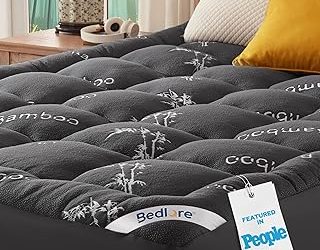
Niagara Sleep Solution Bamboo Rayon Topper
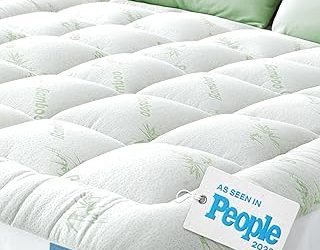
Rayon derived from bamboo has a slick, cool hand-feel that hot sleepers notice immediately on contact. It is a comfort layer rather than a support layer, so treat it as a fix for a mattress that is too firm, not one that has already given out in the middle.
WhatsBedding 5 Inch Bamboo Viscose Memory Foam Topper
Five inches of foam is enough to genuinely retune a bed, and the perforated air layer under the bamboo viscose cover addresses the heat trap that sinks most thick foam toppers. Expect two or three days of off-gassing and a full 48 hours for the slab to reach its finished loft, so unbox it before you need the bed.
ELEMUSE Extra Thick Mattress Pad Cover
The overfilled down-alternative loft is the most substantial in the quilted category, which is why it keeps turning up in back-pain recommendations — it spreads shoulder and hip load rather than letting either dig in. The elastic deep pocket holds well on standard-height beds, though the fill does compress somewhat after the first month.
Niagara Sleep Solution 100% Cotton Top Cooling Topper
A straightforward, breathable cotton-faced pad with a 20″ skirt and a genuinely cloud-like surface, and the pick I would hand to someone who just wants the sag smoothed out without any foam involved. Durable stitching and easy laundering make it a low-maintenance option for a guest room or kid’s bed.
Frequently Asked Questions
Will a topper fix a sagging mattress?
It masks mild dips of roughly half an inch or less. Anything deeper is a broken support core, and foam laid over a valley simply follows the valley. Check your box spring or slats first — a cracked center support is a common and cheap fix.
How thick should a queen topper be?
Two to three inches of foam adjusts firmness modestly; four to five inches changes how the bed sleeps entirely. Quilted pads are measured by fill weight rather than thickness, so compare GSM figures where they are listed.
Do my fitted sheets still fit?
Add the topper’s thickness to your mattress height and compare against your sheet pocket depth. Adding five inches of foam to a 12″ mattress usually means buying deep-pocket sheets.
How do I keep it from sliding?
Elastic skirts handle this on their own. For strapped or unskirted foam, a thin rug pad underneath or a taut fitted sheet stretched over the whole assembly stops migration.
Final Thoughts
For most beds, the EASELAND cotton pillow top is the sensible default — the deep pocket range fits nearly anything and the quilting survives real laundering. If your mattress is too firm rather than too worn, the WhatsBedding 5 Inch bamboo viscose foam topper is the one that will genuinely change how the bed sleeps, and hot sleepers who want plush without heat should look at the Niagara Sleep Solution bamboo option.