Key takeaways
- Look for isolation at every contact point: Rubber pads under the slats and rubber or nylon feet at the floor stop metal-on-metal chatter before it starts. Frames that advertise “noise free” without any elastomer in the stack are relying on bolt tension alone, and bolt tension always loosens.
- Count the legs and center supports: A queen needs at least five or six floor contact points, with a center rail running head to foot. Fewer legs means more deck flex, and flex is what makes joints work loose.
- Prefer captured slats over free-floating ones: Slats that drop into a U-shaped groove or sit in molded pockets cannot shift sideways. Loose slats held only by a fabric tape are the most common source of a rhythmic tick.
- Check whether hardware is serviceable: Hex bolts into welded nuts or steel inserts can be re-torqued forever. Wood screws driven straight into softwood strip out on the second disassembly, so plan to add threadlocker or barrel nuts if you move often.
- Match height to what you actually store: Seven inches gives you a low, extremely rigid platform. Twelve to fourteen inches buys usable underbed clearance but adds leverage to every leg, so bracing matters more.
What's inside
Squeaks almost never come from the mattress. They come from joints — steel sleeve against steel post, a slat end rubbing a wooden ledger, a bolt that backed off a quarter turn six months ago. If you have ever crawled under a bed with a flashlight chasing a creak, you already know the sound moves. Tighten one corner and the noise migrates to the other side, because the frame is flexing as a whole rather than failing at a single point. That flex is the real culprit, and it is a design problem, not a maintenance problem.
This guide looks at bed frames through a builder’s lens: how the corners are joined, whether the slats sit in rubber or bare metal, how much lateral bracing exists, and how many places the thing can rub against itself. I have broken down what actually keeps a frame silent, then applied that to six current platform frames — solid pine, upholstered, low-profile steel, and tall storage models — so you can match the construction to your floor, your mattress, and your patience for reassembly.
As an Amazon Associate we earn from qualifying purchases.



How to Choose a Quiet Bed Frame (2026)
- Look for isolation at every contact point: Rubber pads under the slats and rubber or nylon feet at the floor stop metal-on-metal chatter before it starts. Frames that advertise “noise free” without any elastomer in the stack are relying on bolt tension alone, and bolt tension always loosens.
- Count the legs and center supports: A queen needs at least five or six floor contact points, with a center rail running head to foot. Fewer legs means more deck flex, and flex is what makes joints work loose.
- Prefer captured slats over free-floating ones: Slats that drop into a U-shaped groove or sit in molded pockets cannot shift sideways. Loose slats held only by a fabric tape are the most common source of a rhythmic tick.
- Check whether hardware is serviceable: Hex bolts into welded nuts or steel inserts can be re-torqued forever. Wood screws driven straight into softwood strip out on the second disassembly, so plan to add threadlocker or barrel nuts if you move often.
- Match height to what you actually store: Seven inches gives you a low, extremely rigid platform. Twelve to fourteen inches buys usable underbed clearance but adds leverage to every leg, so bracing matters more.
The Best Quiet Bed Frames (2026) Reviewed
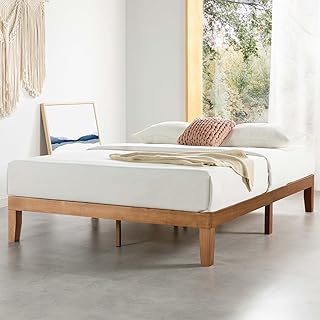
Mellow Naturalista Classic 12″ Solid Wood Platform
Pine on pine is inherently quieter than steel on steel because wood damps vibration instead of ringing, and this 12-inch platform keeps the slat count high enough to support foam directly. Wax the tenons lightly during assembly and snug the bolts in a cross pattern; softwood compresses slightly in the first month, so a single re-torque is worth scheduling.
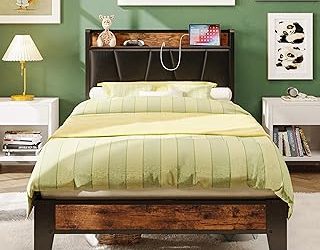
Fluest Queen Platform with Velvet Upholstered Headboard
The upholstered headboard does double duty here, since fabric over padding absorbs the wall-tap noise that hard headboards transmit. Underneath, the steel support runs full length with rubber-shod slats, and assembly is straightforward enough that one person can manage it in under an hour.
ROIL 7″ Low Profile with Rounded Corner Baffles
This is the most rigid design in the group, simply because a 7-inch deck has almost no leverage to work against. The rounded mattress baffles keep the mattress from creeping without sharp edges to chew through the ticking, and the 3,500-pound rating means the joints are working nowhere near their limit — which is exactly why they stay quiet.
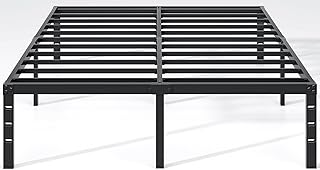
12″ Metal Platform with U-Shaped Groove and 6 Baffles
The U-shaped groove is the detail that matters: each slat is captured on both sides, so nothing can slide or rotate. Add the six baffles and rubber pads and you get a frame that tolerates a restless sleeper better than most, with genuine underbed storage clearance.
JETO 14″ Metal Frame with Storage Space
Fourteen inches is the sweet spot if you want bins and boxes under the bed, and the heavy-gauge steel here handles that height without the wobble cheaper tall frames develop. Because leg leverage is highest in this class, put the feet on felt or rubber pucks if you are on hardwood.
Frequently Asked Questions
Why did my new frame start squeaking after a few weeks?
Fasteners settle as materials compress and the frame finds its loaded shape. Re-torque every bolt at the two-week mark and the noise usually disappears for good.
Does a bed frame really eliminate the need for a box spring?
Yes, if slat spacing is roughly three inches or less. Foam and hybrid mattresses need that support density; wider gaps cause sagging and void many warranties.
Wood or metal for silence?
Wood damps better but wears at the joints. Metal stays dimensionally stable but needs rubber isolation to be quiet. Both work when the design accounts for it.
What is the cheapest fix for an existing creaky frame?
Adhesive felt strips at every slat contact point, plus nylon washers between bolted steel faces. Under ten dollars, twenty minutes, and it solves most cases.
Final Thoughts
For pure rigidity, the ROIL 7-inch low profile is hard to beat — less height means less flex and less to go wrong. If you want storage without wobble, the 12-inch metal frame with U-shaped grooves and six baffles is the most thoughtfully engineered option here, while the Mellow Naturalista Classic remains the pick for anyone who prefers solid wood and does not mind an occasional turn of the wrench.