Key takeaways
- Steel gauge over drawer count: A lower gauge number means thicker steel. Anything in the 20 to 22-gauge range holds shape under load, while thin-wall builds bow at the drawer fronts once you fill them with hand tools. Ten flimsy drawers lose to four solid ones every time.
- Caster diameter and lock quality: Small hard casters catch on extension cords, floor cracks, and expansion joints. Look for 4-inch or larger wheels with at least two swivel casters that lock, and check whether the locks grip the wheel or just the swivel, since only the former stops a loaded cabinet from creeping.
- Drawer slides: Ball-bearing slides rated per drawer are worth the premium. Friction slides bind under 40 pounds of sockets and get progressively harder to open as the cabinet racks slightly out of square.
- Work surface you’ll actually use: A powder-coated steel top is fine for wrenching but transmits noise and dings. If you plan to do layout work or light assembly on it, budget for a hardwood or MDF topper, or choose a model that ships with a countertop.
- Enclosure versus open shelving: Locking doors keep dust off power tools and are worth it in a shared garage. Adjustable shelves behind those doors matter more than you’d think, since cordless tool cases come in wildly different heights.
What's inside
Anyone who has spent a Saturday hunting for a 10mm socket knows the real bottleneck in a home shop isn’t skill or tools, it’s retrieval. Loose wrenches migrate into buckets, driver bits vanish into coffee cans, and the workbench slowly becomes a horizontal junk drawer. Worse, most of us work in garages that double as parking, storage, and overflow space, so a fixed tool wall only solves half the problem. You need storage that travels to the job, whether that’s a bike on the stand, a door being hung, or a car up on ramps in the driveway.
That’s the case for a rolling tool cabinet: real capacity on casters, ideally with a lockable enclosure and a work surface you can put a torque wrench on. This guide breaks down what actually matters when you’re spending your own money on one, then walks through five options that span the range from budget locker-on-wheels to full-size 72-inch workstation. Everything below is judged on build quality, usable layout, and how it holds up to genuine shop abuse, not on drawer count alone.
As an Amazon Associate we earn from qualifying purchases.


🛒 Best Price Today on Amazon
Prime members get fast, free shipping on everything above, plus member-only deals. New members get a 30-day free trial — cancel anytime.
How to Choose a Rolling Tool Cabinet (2026)
- Steel gauge over drawer count: A lower gauge number means thicker steel. Anything in the 20 to 22-gauge range holds shape under load, while thin-wall builds bow at the drawer fronts once you fill them with hand tools. Ten flimsy drawers lose to four solid ones every time.
- Caster diameter and lock quality: Small hard casters catch on extension cords, floor cracks, and expansion joints. Look for 4-inch or larger wheels with at least two swivel casters that lock, and check whether the locks grip the wheel or just the swivel, since only the former stops a loaded cabinet from creeping.
- Drawer slides: Ball-bearing slides rated per drawer are worth the premium. Friction slides bind under 40 pounds of sockets and get progressively harder to open as the cabinet racks slightly out of square.
- Work surface you’ll actually use: A powder-coated steel top is fine for wrenching but transmits noise and dings. If you plan to do layout work or light assembly on it, budget for a hardwood or MDF topper, or choose a model that ships with a countertop.
- Enclosure versus open shelving: Locking doors keep dust off power tools and are worth it in a shared garage. Adjustable shelves behind those doors matter more than you’d think, since cordless tool cases come in wildly different heights.
The Best Rolling Tool Cabinets (2026) Reviewed
WEN 52-Inch Premium Rolling Tool Cabinet (GG532B)
The 21-gauge powder-coated shell and generous 52-inch footprint make this the sensible middle ground for a serious home shop, with enough width to lay out a full socket set without stacking trays. Assembly is straightforward, and the drawer action stays smooth once loaded, which is where cheaper cabinets start to complain.
72″ Rolling Tool Chest with 10 Drawers and Pegboard
This is the full workstation option: ten drawers, three upper cabinets, an integrated pegboard, and a light strip, which effectively replaces a tool wall for anyone who can’t drill into their garage studs. It’s heavy and needs a clear six-foot run of wall, so measure before you commit.
GarveeHome Rolling Tool Cabinet with Adjustable Shelf
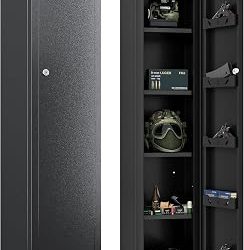
A smart pick when you’re storing cordless kits and cases rather than loose hand tools, thanks to the adjustable shelf behind lockable doors. The rust-resistant wheels are a genuine advantage in a damp or unheated garage where cheap casters seize up within a season.
Mobile Tool Storage Cabinet with 4 Drawers and Locking Doors
The four-drawer plus cabinet layout is the classic compromise, giving you shallow drawers for wrenches and drivers plus an enclosed bay for bulkier gear. Expect a real assembly session with this one, and take the time to square the frame before tightening everything down.
LCAOPC Metal Storage Cabinet with Wheels
Best thought of as a mobile locker rather than a tool chest, this suits hobbyists who need lockable, dust-free storage for finishes, adhesives, and small power tools. It’s also the least intrusive choice if the cabinet has to live somewhere other than a garage.
Frequently Asked Questions
How much weight can a rolling tool cabinet hold?
Mid-range steel cabinets typically handle 400 to 900 pounds total, with per-drawer limits around 40 to 100 pounds. Load heavy items low to keep the center of gravity down, especially on taller units.
Will the casters damage my garage floor?
Hard nylon casters can mark sealed concrete and will scar epoxy under a heavy load. Polyurethane wheels or a set of caster cups solve it cheaply.
Is assembly realistic for one person?
Most four-drawer units are a comfortable solo job in an hour or two. Larger 60-inch-plus workstations are genuinely awkward alone, mainly when lifting the top panel into place.
Do I need a separate work surface?
Not necessarily, but adding a 3/4-inch plywood or hardwood topper protects the steel, quiets the whole cabinet, and gives you a surface you can clamp to.
Final Thoughts
For most home makers, the WEN 52-Inch GG532B hits the best balance of steel thickness, capacity, and price, and it’s the one I’d buy if I only had room for a single cabinet. If your shop is your main workspace, the 72-inch chest with pegboard and light strip is a legitimate one-piece upgrade, while the GarveeHome cabinet is the smarter buy for anyone whose storage problem is cordless kits and consumables rather than loose hand tools.