Key takeaways
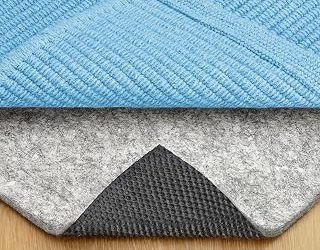
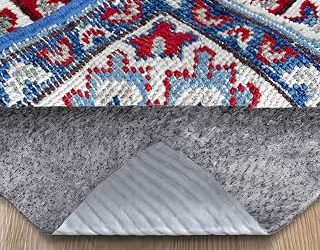
- Backing material: Rubber-dot or full rubber backing grips hard flooring far better than the fuzzy latex sprays that flake off after three washes. If you have luxury vinyl plank, check that the backing is labeled safe for it — some plasticizers can discolor LVP over time.
- Pile height: Under 1/4 inch is the sweet spot. Low pile clears door swings, doesn’t trip anyone, and releases trapped grit in the wash instead of hiding it at the base of the fibers.
- Actual measured length: Measure your run, then subtract 12 to 18 inches total so you leave breathing room at both ends. A runner that dead-ends into a baseboard looks like an installation mistake and wears faster at the compressed edge.
- Washability limits: “Machine washable” varies. Look for cold-water, front-loader-friendly, and air-dry or low-tumble instructions. Rubber backing and high heat are a bad combination — that’s how you get a permanently wavy rug.
- Pattern camouflage: Distressed, abstract, and pointillist prints break up visual noise, so scuffs and small stains disappear into the design. Solid pale runners are honest but unforgiving in a mudroom or under a dog bowl.
What's inside
Anyone who has laid a runner in a hallway knows the two failure points: the rug slides out of position within a week, or it starts holding dirt like a sponge and there’s no practical way to clean it. Standard area rug advice doesn’t transfer well here. Runners live in the highest-abuse strips of a house — the galley kitchen where water hits the floor, the entry where grit gets tracked in, the laundry corridor where a dropped detergent cap becomes a permanent stain. A rug that performs beautifully under a coffee table can fail badly in a 30-inch-wide walkway.
This guide approaches runners the way you’d approach any material spec on a project: what’s the backing made of, will the pile release soil, and can the thing actually survive a wash cycle without curling at the corners. I’ve focused on machine-washable, low-pile runners in the 2×6 to 2×10 range, since those cover the majority of real hallway, kitchen, and entry dimensions. Below you’ll find the picks, followed by the criteria I used to sort them and answers to the questions that come up most often once the rug is on the floor.
As an Amazon Associate we earn from qualifying purchases.



🛒 Best Price Today on Amazon
Prime members get fast, free shipping on everything above, plus member-only deals. New members get a 30-day free trial — cancel anytime.
How to Choose a Runner Rug (2026)
- Backing material: Rubber-dot or full rubber backing grips hard flooring far better than the fuzzy latex sprays that flake off after three washes. If you have luxury vinyl plank, check that the backing is labeled safe for it — some plasticizers can discolor LVP over time.
- Pile height: Under 1/4 inch is the sweet spot. Low pile clears door swings, doesn’t trip anyone, and releases trapped grit in the wash instead of hiding it at the base of the fibers.
- Actual measured length: Measure your run, then subtract 12 to 18 inches total so you leave breathing room at both ends. A runner that dead-ends into a baseboard looks like an installation mistake and wears faster at the compressed edge.
- Washability limits: “Machine washable” varies. Look for cold-water, front-loader-friendly, and air-dry or low-tumble instructions. Rubber backing and high heat are a bad combination — that’s how you get a permanently wavy rug.
- Pattern camouflage: Distressed, abstract, and pointillist prints break up visual noise, so scuffs and small stains disappear into the design. Solid pale runners are honest but unforgiving in a mudroom or under a dog bowl.
The Best Runner Rug (2026)s Reviewed
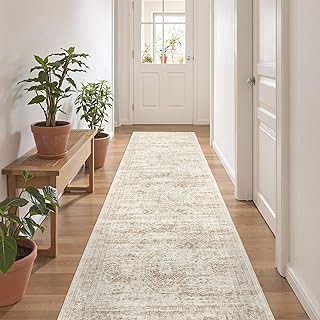
2×6 Hallway Washable Runner Rug (Vintage Distressed)
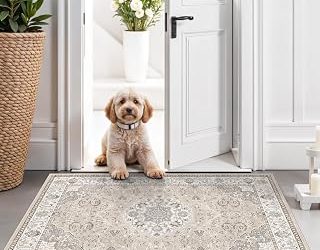
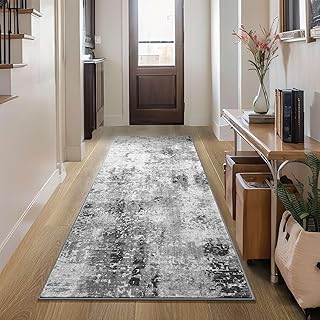
The faded vintage print is the practical star here — it hides everyday traffic marks better than almost anything solid, which makes it a smart pick for kitchens and laundry runs. At 2×6 it fits the standard galley or short hall without bunching, and the non-slip backing holds well on sealed hardwood.
2×8 Non Slip Washable Runner in Beige
The thin, low-profile build is the selling point: it slides under door clearances and appliance toe kicks where thicker runners bind. Beige is a versatile neutral, but I’d steer this one toward bedrooms, nurseries, and interior halls rather than a wet entry.
Hallway Runner Rug 2’x10′ Heavy-Duty
This is the one to buy if your corridor is genuinely long and genuinely busy. The rubber backing and denser heavy-duty construction handle repeated foot traffic without the edges creeping, and the 10-foot length spans runs where two shorter rugs would look disjointed.
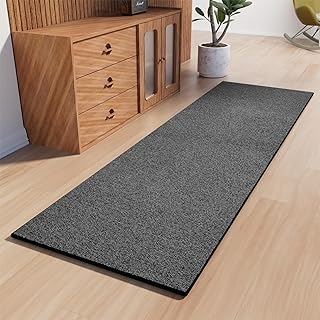
AREDO Runner Rug, Black Pointillism
Black with a subtle pointillist texture is the most forgiving finish on this list for entryways and mudrooms — tracked-in dirt simply doesn’t read. The rubber backing is well bonded, and the low pile means a quick vacuum pass actually pulls debris out.
Ompaa 2×6 Grey Abstract Runner
A soft-handed grey abstract that works as well in a bathroom as it does in a kitchen, with rubber backing that stays put on tile. The abstract pattern does real work disguising water spots and light staining between washes.
Frequently Asked Questions
Do I still need a rug pad if the runner has rubber backing?
Usually no on hard flooring — that’s the point of the backing. But on polished stone, waxed floors, or over an existing low-pile carpet, a thin grip pad adds meaningful stability and reduces edge wear.
How do I wash a rubber-backed runner without ruining it?
Cold water, gentle cycle, no bleach, and either air-dry flat or tumble on the lowest heat setting. Heat is what breaks down rubber backing and causes the curling and cracking people blame on rug quality.
Will the backing damage my vinyl plank floors?
Quality rubber backing is generally safe, but any rug can trap moisture underneath. Lift and air out the runner occasionally, especially in kitchens, and check the manufacturer’s guidance if your LVP warranty specifies rug types.
What length should I buy for a hallway?
Measure wall to wall, then choose a runner that leaves roughly 6 to 9 inches of bare floor at each end. For runs over 9 feet, go with a single long runner rather than two shorter ones — the seam between them collects dirt and trips people.
Final Thoughts
For most homes, the 2×6 Vintage Distressed Washable Runner is the safest all-around buy: the print hides wear, the size fits standard halls, and it cleans up easily. If your corridor sees heavy daily traffic or runs long, step up to the Hallway Runner Rug 2’x10′ Heavy-Duty for its sturdier build and better edge stability. And for entryways where dirt is a constant, the AREDO Black Pointillism Runner is the one that will still look intentional a year from now.