Key takeaways
- Verify your platform, not your old mattress: Measure the wooden deck or slat frame corner to corner before ordering. Factory RV foam often shrinks over years of compression, so the slab you pull out may read smaller than the space it occupied.
- Profile height versus clearance: A 12-inch mattress feels great until the overhead cabinet doors will not swing or the fitted sheet you own no longer reaches. Measure from deck to the underside of any obstruction, then subtract two inches for sheets and bedding loft.
- Weight matters in a rig: Every pound counts against cargo capacity. All-foam builds typically land between 45 and 70 pounds for a short queen, while hybrids with coils climb higher. Check your GVWR margin if you already travel loaded.
- Certifications you should actually look for: CertiPUR-US covers foam emissions and content, OEKO-TEX covers the textile cover, and explicit fiberglass-free labeling matters because many budget mattresses use woven fiberglass as a flame barrier that sheds if the cover is ever opened.
- Cooling in a metal box: RVs heat up fast and often lack the airflow of a bedroom. Gel-infused or open-cell foam paired with a breathable knit cover makes a real difference when you are boondocking without shore power for the AC.
What's inside
Anyone who has crawled into an RV bunk with a tape measure knows the frustration. A short queen runs 60 by 75 inches, five inches shy of a standard queen, and that missing strip means most mattresses on the shelf simply will not fit the platform your rig was built around. Force a regular queen in and you get a bowed edge, a jammed slide-out, or a bed frame that groans every time you shift. Order the wrong size online and you are wrestling a 60-pound compressed foam roll back into a box that no longer wants it.
This guide is written from the perspective of someone who has actually pulled the old factory foam out of a travel trailer, checked the plywood deck for sag, and shimmed a bunk before dropping in a replacement. Below you will find the short queen and RV-specific mattresses worth your money in 2026, plus the practical selection criteria that matter once you are working in a space where every inch and every pound counts.
As an Amazon Associate we earn from qualifying purchases.


🛒 Best Price Today on Amazon
Prime members get fast, free shipping on everything above, plus member-only deals. New members get a 30-day free trial — cancel anytime.
How to Choose a/an Rv Short Queen Mattress (2026)
- Verify your platform, not your old mattress: Measure the wooden deck or slat frame corner to corner before ordering. Factory RV foam often shrinks over years of compression, so the slab you pull out may read smaller than the space it occupied.
- Profile height versus clearance: A 12-inch mattress feels great until the overhead cabinet doors will not swing or the fitted sheet you own no longer reaches. Measure from deck to the underside of any obstruction, then subtract two inches for sheets and bedding loft.
- Weight matters in a rig: Every pound counts against cargo capacity. All-foam builds typically land between 45 and 70 pounds for a short queen, while hybrids with coils climb higher. Check your GVWR margin if you already travel loaded.
- Certifications you should actually look for: CertiPUR-US covers foam emissions and content, OEKO-TEX covers the textile cover, and explicit fiberglass-free labeling matters because many budget mattresses use woven fiberglass as a flame barrier that sheds if the cover is ever opened.
- Cooling in a metal box: RVs heat up fast and often lack the airflow of a bedroom. Gel-infused or open-cell foam paired with a breathable knit cover makes a real difference when you are boondocking without shore power for the AC.
The Best Rv Short Queen Mattress (2026)s Reviewed
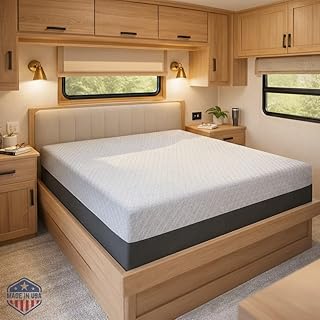
Celestial Sleep 10 Inch RV Short Queen
This is the pick I would hand a friend replacing factory foam for the first time: made in the USA, triple-certified with CertiPUR-US, OEKO-TEX, and explicit fiberglass-free construction, and a medium feel that suits both side and back sleepers. The 10-inch profile hits the sweet spot for most bunk clearances without swallowing your headroom.
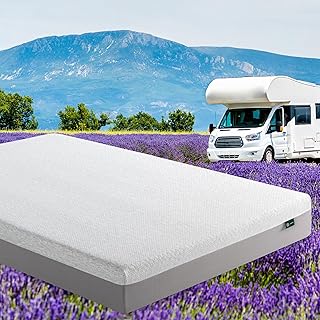
Zinus 8 Inch Short Queen Ultima
The 8-inch build is the smart choice for tight overhead bunks and lightweight trailers where every pound on the axle matters. Medium-firm with breathable airflow foam and the same safety certifications, it ships compressed and expands cleanly in a day or two.
Short Queen 12 Inch Cooling Gel Hybrid
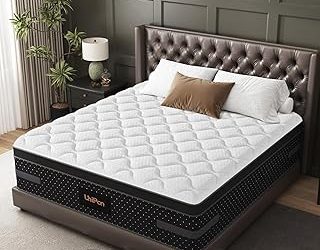
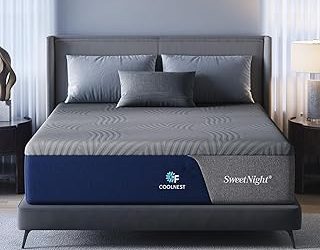
If your rig has the vertical room, this hybrid brings gel memory foam over a supportive core with genuinely good motion isolation, which matters when your partner gets up at 5 a.m. to break camp. The soft knit cooling cover earns its keep in summer heat.
ESHINE Short King RV Mattress
Built specifically for campers and trailers, this 10-inch memory foam slab focuses on shock absorption, so road vibration does not translate into a beaten-up mattress over thousands of miles. Worth flagging that it is a short king, so confirm your platform width before buying.
Dreamfoam Copperflex Essential 6″
A slim, budget-conscious option best suited to bunk beds, dinette conversions, or a guest setup rather than a primary bed. The copper-infused gel foam and stain protection are practical touches for a mattress that will see occasional, hard-wearing use.
Frequently Asked Questions
What size is an RV short queen mattress?
Sixty inches wide by 75 inches long, which is five inches shorter than a standard queen. Some manufacturers list 74 or 76 inches, so measure your platform rather than trusting the label alone.
Will regular queen sheets fit a short queen?
Flat sheets work fine with extra tuck. Fitted sheets will bunch and pop off the corners, so buy short queen fitted sheets or use sheet suspenders as a workaround.
How long does a compressed mattress take to expand?
Most foam mattresses reach full height in 24 to 48 hours. In cold weather, and RVs get cold, warm the space and give it an extra day before judging the firmness.
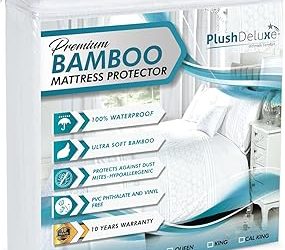
Do I need a mattress protector in an RV?
Yes. Condensation forms under mattresses on cold nights, and moisture trapped against foam invites mildew. A breathable protector plus an occasional lift to air the underside solves it.
Final Thoughts
For most rigs, the Celestial Sleep 10 Inch short queen is the balanced choice: certified materials, made in the USA, and a profile that fits without modification. Go with the Zinus 8 Inch Ultima if you are working with a low bunk or watching cargo weight, and step up to the 12-inch cooling gel hybrid if you have the clearance and want the closest thing to a home mattress on the road.