Key takeaways
- Crosscut capacity over blade size: An 8-1/2″ slider that crosses 12 inches beats a 12″ chop saw for furniture work. Measure the widest board you actually build with, add an inch, and shop from there.
- Rail design and slop: Grab the head and push sideways. Any deflection you feel translates into a cut that isn’t square along its depth. Linear-bearing rail systems and forward-rail designs hold tighter than loose twin tubes.
- Single vs. double bevel: Double bevel tilts both directions, so you stop flipping crown and mitered edging to chase the opposite angle. Worth the upcharge if you build casework or do trim work.
- Cut-line accuracy: Shadow-light systems cast the blade’s own silhouette, so they stay accurate as the blade wears. Lasers need periodic calibration and can drift off the kerf.
- Dust collection reality: Every miter saw makes a mess, but a well-shrouded port paired with a shop vac captures a real share of it. Check whether the port fits a standard 2-1/2″ hose before you buy an adapter.
What's inside
Nothing exposes a sloppy miter cut like a piece of furniture. A picture frame reveals a half-degree error at every corner, and a bookcase with out-of-square shelves will fight you the whole way through glue-up. Most home shops end up with a saw that almost works: enough crosscut width for trim but not for a 12-inch wide apron, a detent plate that drifts under clamping pressure, or a bevel scale that reads 45 when the blade is actually sitting at 44.6. The frustrating part is that the fix usually isn’t technique. It’s the tool.
A slide compound miter saw solves the width problem by putting the head on rails, so a 10-inch blade can cross a board twice its diameter while still tilting and rotating for compound angles. This guide breaks down what actually matters when you’re building furniture rather than framing walls: rail rigidity, blade-to-fence squareness, how the saw handles hardwood, and whether the cut-line system is genuinely useful or just marketing. Below are six saws worth your bench space in 2026, from compact Makita units to a full-size DEWALT workhorse and a cordless option for garage builds.
As an Amazon Associate we earn from qualifying purchases.




How to Choose a Slide Compound Miter Saw (2026)
- Crosscut capacity over blade size: An 8-1/2″ slider that crosses 12 inches beats a 12″ chop saw for furniture work. Measure the widest board you actually build with, add an inch, and shop from there.
- Rail design and slop: Grab the head and push sideways. Any deflection you feel translates into a cut that isn’t square along its depth. Linear-bearing rail systems and forward-rail designs hold tighter than loose twin tubes.
- Single vs. double bevel: Double bevel tilts both directions, so you stop flipping crown and mitered edging to chase the opposite angle. Worth the upcharge if you build casework or do trim work.
- Cut-line accuracy: Shadow-light systems cast the blade’s own silhouette, so they stay accurate as the blade wears. Lasers need periodic calibration and can drift off the kerf.
- Dust collection reality: Every miter saw makes a mess, but a well-shrouded port paired with a shop vac captures a real share of it. Check whether the port fits a standard 2-1/2″ hose before you buy an adapter.
The Best Slide Compound Miter Saws (2026) Reviewed
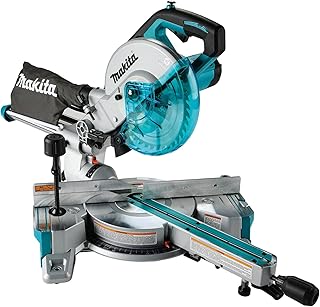
Makita LS1110F 10″
Makita’s newer 10-inch slider uses a forward-mounted rail setup that lets it sit close to a wall while still crossing wide stock, which is a genuine gift in a cramped shop. Cut quality out of the box is excellent, with minimal deflection through hard maple and a bright work light that shows the kerf without needing calibration.
Makita LS0816F 8-1/2″
The 8-1/2″ version is the one I’d hand to someone building furniture in a one-car garage. It’s light enough to carry with one hand, cuts a genuine 12-inch crosscut, and its smaller blade means less vibration and a cleaner edge on veneered plywood and thin hardwood.
DEWALT DWS780 12″ Double Bevel
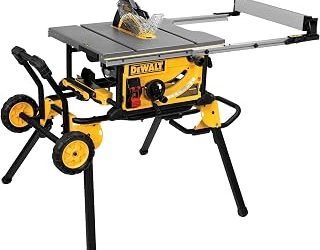
The DWS780 remains the reference-point full-size slider, and the XPS shadow light is still the best cut-line system on the market since it can’t fall out of calibration. Double bevel plus a 12-inch blade means it handles wide table aprons, crown, and thick stair parts without repositioning stock.
VEVOR 12″ Double Bevel
VEVOR’s 12-inch double bevel saw delivers a lot of capacity for the money, with a 60-tooth blade and LED alignment included. Expect to spend twenty minutes squaring the fence and checking the bevel stops before your first real cut, and it rewards that setup time with respectable results.
SEESII 8″ Cordless
A 21V brushless slider with two 5.0Ah packs makes short work of deck boards, trim, and repair jobs where dragging a cord is the worst part of the task. The 2.5 x 12-inch capacity covers most furniture parts, though single bevel means flipping stock for opposing angles.
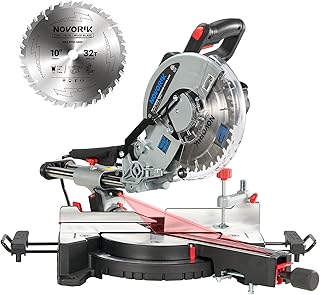
NOVORIK 10″ Single Bevel
A straightforward budget entry with a 15-amp motor and laser guide that gets a beginner cutting accurate miters without a big outlay. Swap the stock TCT blade for a 60- or 80-tooth finish blade and the cut quality improves noticeably.
Frequently Asked Questions
Is a 12-inch saw always better than a 10-inch?
No. A 12-inch blade adds vertical and crosscut capacity but flexes more, costs more to replace, and adds weight. For furniture-scale work, a quality 10-inch or 8-1/2″ slider often cuts cleaner.
Do I need to tune a new miter saw?
Yes, every time. Check blade-to-fence square with a machinist square, verify the 45-degree bevel stops, and adjust the detent plate if your zero is off. Ten minutes of setup prevents weeks of mystery gaps.
What blade should I use for hardwood furniture?
An 60- to 80-tooth ATB fine-finish blade for a 10-inch saw. The stock blades shipped with most saws are general-purpose and will leave tearout on veneered panels and figured wood.
Can a cordless slider replace a corded one?
For jobsite trim, deck work, and occasional shop use, absolutely. For daily hardwood ripping-length crosscuts in a fixed shop, a corded 15-amp motor still delivers more sustained power without battery management.
Final Thoughts
If you want one saw that will outlast your current project list, the DEWALT DWS780 earns its reputation on cut-line accuracy and double-bevel convenience alone. For tight shops and furniture-scale stock, the Makita LS1110F is the smarter footprint, and the LS0816F is the pick if portability matters more than raw capacity. Any of the three will hold a miter tight enough that your joinery, not your saw, becomes the limiting factor.