Key takeaways
- Airflow: Compare CFM at 90 PSI rather than horsepower alone. High-demand tools such as pneumatic sanders and spray guns need steady delivered airflow, not just a large tank.
- Electrical supply: Check voltage, phase, amperage, and wiring before ordering. Many 80-gallon compressors require a dedicated 230V circuit, while some industrial models need three-phase power.
- Pump design: Oil-lubricated, two-stage pumps generally suit demanding shop use and are often easier to service. Oil-free designs reduce routine maintenance but may have different noise and longevity trade-offs.
- Noise and placement: A large tank does not automatically make a compressor quiet. Look for a low-noise design if the machine will share space with a home workshop, and leave room around it for cooling and access.
- Installation: Plan for a level floor, vibration control, proper air-line filtration, and safe condensate drainage. Have a qualified electrician handle fixed wiring and verify local code requirements.
Buying an 80-gallon air compressor is less about chasing the biggest horsepower number and more about matching the machine to the work in your shop. A compressor that looks impressive on paper can still disappoint if its delivered airflow, electrical demand, noise level, or maintenance routine does not fit your furniture-building setup.
This guide takes a hands-on DIY maker’s view of the category. I’m focusing on tank size, usable airflow, power requirements, noise, and serviceability—especially for shops running spray equipment, sanders, nailers, impact tools, or multiple air tools during a long project.
Our top picks




As an Amazon Associate we earn from qualifying purchases at no extra cost to you. Ratings are shown as listed on Amazon.
🛒 Best Price Today on Amazon
Prime members get fast, free shipping on everything above, plus member-only deals. New members get a 30-day free trial — cancel anytime.
How to Choose an 80 Gallon Air Compressor (2026)
- Airflow: Compare CFM at 90 PSI rather than horsepower alone. High-demand tools such as pneumatic sanders and spray guns need steady delivered airflow, not just a large tank.
- Electrical supply: Check voltage, phase, amperage, and wiring before ordering. Many 80-gallon compressors require a dedicated 230V circuit, while some industrial models need three-phase power.
- Pump design: Oil-lubricated, two-stage pumps generally suit demanding shop use and are often easier to service. Oil-free designs reduce routine maintenance but may have different noise and longevity trade-offs.
- Noise and placement: A large tank does not automatically make a compressor quiet. Look for a low-noise design if the machine will share space with a home workshop, and leave room around it for cooling and access.
- Installation: Plan for a level floor, vibration control, proper air-line filtration, and safe condensate drainage. Have a qualified electrician handle fixed wiring and verify local code requirements.
The Best 80 Gallon Air Compressors (2026) Reviewed
VEVOR 80-Gallon Oil-Free Compressor
This VEVOR model is a practical option for makers who want a relatively low-maintenance stationary compressor with a 145 PSI tank and claimed 15.5 CFM at 90 PSI. Its 220V single-phase setup is more approachable than a three-phase industrial unit, but buyers should still confirm circuit capacity and allow plenty of ventilation around the oil-free pump.
Campbell Hausfeld 80-Gallon Vertical Compressor
Campbell Hausfeld’s 5 HP, 140 PSI vertical compressor is a straightforward choice for a dedicated home shop. The vertical footprint preserves floor space, while the familiar capacity and pressure range make it suitable for general pneumatic tools, fastening, inflation, and intermittent finishing work.
VEVOR 80-Gallon Heavy-Duty Compressor
With a 10 HP motor, 175 PSI maximum pressure, and claimed 17 CFM at 90 PSI, this oil-lubricated VEVOR is aimed at heavier workshop demands. It is the kind of machine to consider for frequent tool use, but its 230V three-phase configuration and lack of a plug make electrical planning a central part of the purchase.
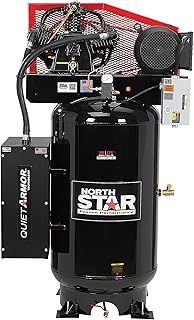
NorthStar 80-Gallon Quiet Armor Compressor
The NorthStar combines a 7.5 HP motor, 26 CFM output, and a quiet-focused enclosure for makers who spend long hours in the shop. Its large-capacity air supply is well suited to demanding pneumatic tools, and the maintenance-friendly access is a welcome detail when regular service matters.
Industrial Plus Silent 80-Gallon Compressor
This Industrial Plus model stands out for its claimed 31 CFM, 7.5 HP drive, vertical two-stage configuration, pressure-lubricated pump, and automatic drain system. It is a strong candidate for a serious furniture shop running air-hungry equipment, although the 230V supply and larger industrial footprint deserve attention before installation.
Frequently Asked Questions
Is an 80-gallon compressor enough for woodworking?
For many home furniture shops, yes. It provides useful reserve air for nailers, staplers, blow guns, and short bursts from spray equipment. Continuous-use tools still depend primarily on the compressor’s CFM at operating pressure.
What size compressor is best for a spray gun?
Check the spray gun manufacturer’s CFM requirement and add a safety margin. A compressor producing substantially more airflow than the gun requires will cycle less often and maintain a more consistent spray pattern.
Do I need 230V power?
Most full-size 80-gallon compressors benefit from a dedicated 230V circuit, and some industrial versions require three-phase service. Never assume an existing outlet is suitable; verify the nameplate requirements and have the circuit installed correctly.
How should I maintain an 80-gallon compressor?
Drain condensate regularly, inspect hoses and fittings for leaks, check the oil when applicable, clean intake filters, and follow the pump manufacturer’s service schedule. An automatic drain helps, but it does not replace periodic inspection.
Final Thoughts
For a typical home workshop, the Campbell Hausfeld is a sensible general-purpose starting point, while the VEVOR oil-free model suits buyers prioritizing simpler routine maintenance. For serious pneumatic production, the NorthStar and Industrial Plus Silent compressors offer much more airflow; choose between them based on your electrical service, noise tolerance, and willingness to maintain an industrial-grade pump.