Key takeaways
- Power source reality check: Electric heaters at 1500W draw roughly 12.5 amps, which eats most of a 15-amp circuit before your converter, fridge, or coffee maker gets a turn. If you dry camp or boondock, propane is the only honest answer — inverters and lithium banks drain shockingly fast under resistive heating loads.
- Tip-over and overheat protection: Campers aren’t level, and dogs and duffel bags move around. Insist on a mercury or ball-bearing tip switch plus thermal cutoff, and skip anything with a wobbly plastic base you wouldn’t trust on a gravel site.
- Footprint and mounting options: Measure your available floor real estate before you shop. Low-profile bodies tuck under a dinette bench or against a wall panel, and some units accept L-brackets so you can permanently mount them and stop the sliding-around problem entirely.
- Oxygen depletion sensor for anything burning fuel: A propane heater without an ODS has no place inside a sealed camper. Even with one, crack a roof vent or window an inch and run a battery-powered CO detector — combustion produces water vapor that will fog windows and breed mildew if you don’t manage airflow.
- Thermostat quality and cycling behavior: Cheap heaters swing wildly between roasting and freezing. A real thermostat with an eco mode holds temperature within a few degrees, cuts your amp draw dramatically over an eight-hour night, and lets you sleep without babysitting a dial.
What's inside
Anyone who has woken up at 3 a.m. in a camper with frost on the inside of the windows knows the problem: RV furnaces burn through propane fast, they roar like a jet engine, and half the heat ends up in the underbelly instead of where you’re sleeping. Meanwhile the little ceramic heater from the house trips your 30-amp breaker the moment the fridge cycles, or worse, it tips over on a rig that never sits perfectly level. Camper heating is its own engineering problem, and treating it like a bedroom heating problem is how people end up cold, broke, or unsafe.
This guide comes from actual time spent wiring, mounting, and testing heat in small spaces. We’ll cover the two camps most van and trailer owners land in: 120V electric units that shine when you’re on shore power, and catalytic or radiant propane heaters that keep you warm when there’s no pedestal in sight. Below you’ll find the picks worth your money, plus the wattage math and ventilation rules that keep this hobby from turning into a headline.
As an Amazon Associate we earn from qualifying purchases.



How to Choose a/an Space Heater For Camper (2026)
- Power source reality check: Electric heaters at 1500W draw roughly 12.5 amps, which eats most of a 15-amp circuit before your converter, fridge, or coffee maker gets a turn. If you dry camp or boondock, propane is the only honest answer — inverters and lithium banks drain shockingly fast under resistive heating loads.
- Tip-over and overheat protection: Campers aren’t level, and dogs and duffel bags move around. Insist on a mercury or ball-bearing tip switch plus thermal cutoff, and skip anything with a wobbly plastic base you wouldn’t trust on a gravel site.
- Footprint and mounting options: Measure your available floor real estate before you shop. Low-profile bodies tuck under a dinette bench or against a wall panel, and some units accept L-brackets so you can permanently mount them and stop the sliding-around problem entirely.
- Oxygen depletion sensor for anything burning fuel: A propane heater without an ODS has no place inside a sealed camper. Even with one, crack a roof vent or window an inch and run a battery-powered CO detector — combustion produces water vapor that will fog windows and breed mildew if you don’t manage airflow.
- Thermostat quality and cycling behavior: Cheap heaters swing wildly between roasting and freezing. A real thermostat with an eco mode holds temperature within a few degrees, cuts your amp draw dramatically over an eight-hour night, and lets you sleep without babysitting a dial.
The Best Space Heater For Camper (2026)s Reviewed
Xtreme Heaters Boat Cabin RV Space Heater
This is the one built for exactly this job — a squat, stable 750/1500W unit with a top-mounted air intake that won’t choke on dust or blanket fuzz the way front-facing grilles do. The low-profile base stays planted on an unlevel pad, and the 6-foot cord reaches a proper outlet without an extension cord (which you should never use with a 1500W load anyway).
Mr. Heater 9,000 BTU Portable Buddy
The go-to for off-grid heat, running on a 1-lb canister or, better, a 20-lb tank with a filter and hose. Its ODS and tip-over shutoff make it the safest radiant propane option going, but you must crack a vent — this unit will happily heat a 200-square-foot trailer while pumping moisture into the air.
Mr. Heater 3,800 BTU Little Buddy
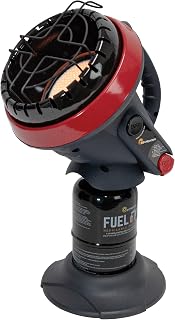
The smaller sibling is arguably the smarter pick for a truck camper, teardrop, or van under 100 square feet, where 9,000 BTU turns your bed into a sauna. It’s dead simple, screws straight onto a 1-lb cylinder, and burns about six hours per canister on a single setting.
DREO Space Heater with 70° Oscillation
The best all-around electric option when you have shore power, thanks to a genuinely accurate thermostat and an eco mode that drops wattage instead of hard-cycling. Oscillation matters more in a camper than people expect — it moves warm air past the cabinets and into the cabover bunk rather than baking one corner.
VOCRS 1500W PTC Electric Heater
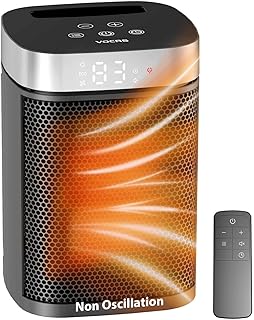
A compact PTC ceramic heater with a remote and 12-hour timer, which means you can preheat the rig from bed or set it to shut off before your battery-monitor anxiety kicks in. It’s the value pick: fewer frills than the DREO, but the thermostat and fan-only mode make it a legitimate three-season workhorse.
Frequently Asked Questions
Can I run a 1500W heater on a 30-amp RV hookup?
Yes, but budget carefully. A 1500W heater pulls about 12.5 amps, leaving roughly 17 amps for everything else — run the air conditioner or a microwave simultaneously and you’ll trip the pedestal breaker. On a 15-amp household outlet, the heater should be the only significant load on that circuit.
Is it safe to sleep with a propane heater running?
Manufacturers advise against unattended overnight use, and that’s the guidance to follow. If you do run one, use a model with an oxygen depletion sensor, keep a roof vent or window cracked, and install a battery-powered CO alarm at sleeping level. Many experienced campers heat the rig before bed, shut it down, and rely on good insulation and bedding overnight.
Why does my camper get so damp when I heat it?
Unvented propane heaters produce roughly a gallon of water vapor per gallon of fuel burned, and that condenses on cold windows and under mattresses. Electric heat is dry, which is a genuine advantage for anyone parked long-term. If you’re on propane, ventilate actively and lift your mattress periodically.
Should I mount my electric heater permanently?
It’s a worthwhile weekend project. Fabricate a simple aluminum bracket, keep the manufacturer’s clearance specs (usually 3 feet from combustibles at the outlet), and never block the intake. A mounted heater can’t tip, can’t slide into a curtain, and frees up floor space you didn’t have.
Final Thoughts
If you camp with hookups, the Xtreme Heaters RV unit is the purpose-built choice and worth the premium for its stability and clog-resistant intake, with the DREO as the smarter buy if you want oscillation and a precise thermostat. For boondocking, the Mr. Heater Portable Buddy handles a full-size trailer while the Little Buddy is the right size for vans and teardrops — and honestly, carrying both an electric and a propane option is the setup most full-timers eventually land on.