Key takeaways
- Measure vertical, not just horizontal: Grab a tape and check ceiling height, then subtract for crown molding or a sloped attic wall. Most towers land between 67 and 78 inches, and a rack that clears your ceiling by less than four inches is miserable to tilt into place during assembly.
- Read the load rating skeptically: A quoted 800 or 890 lb capacity is a total figure spread across every rod and shelf, not per rod. Look at tube diameter instead — 19 mm steel and thicker handles a packed rod of winter coats without bowing.
- Decide on wood versus steel early: Steel pipe systems break down flat and travel well between apartments. Laminated wood towers with drawers feel like real furniture and hide clutter, but they are heavy, semi-permanent, and want a level floor.
- Count the adjustment points: Fixed shelves lock you into today’s wardrobe. Systems with movable shelves and rods let you swap a long-hang section for double-hang once seasons change, which is the whole point of going modular.
- Plan for dust and expansion: Fabric covers matter in basements, garages, and anywhere without a door. And if the line sells add-on shelves, drawers, or shoe racks separately, you can start small and grow instead of buying twice.
What's inside
Anyone who has ever knelt on a bedroom floor with an allen key in one hand and a set of vague instructions in the other knows the truth about closet storage: the built-in you inherited was designed for someone else’s wardrobe. A single hanging rod at chest height wastes the two feet of dead air above it, the floor becomes a shoe graveyard, and folded sweaters end up in stacks that collapse the moment you pull one out. Renters have it worse, since drilling into walls is off the table entirely.
The good news is that modular racks and freestanding closet towers have gotten genuinely good, and most of them assemble with nothing more than a rubber mallet and an afternoon. This guide walks through six systems I would actually put in my own place, sorted by the problem each one solves best, plus the specs that separate a rack that holds up from one that sags by month three.
As an Amazon Associate we earn from qualifying purchases.


🛒 Best Price Today on Amazon
Prime members get fast, free shipping on everything above, plus member-only deals. New members get a 30-day free trial — cancel anytime.
How to Choose a/an Wardrobe Solution (2026)
- Measure vertical, not just horizontal: Grab a tape and check ceiling height, then subtract for crown molding or a sloped attic wall. Most towers land between 67 and 78 inches, and a rack that clears your ceiling by less than four inches is miserable to tilt into place during assembly.
- Read the load rating skeptically: A quoted 800 or 890 lb capacity is a total figure spread across every rod and shelf, not per rod. Look at tube diameter instead — 19 mm steel and thicker handles a packed rod of winter coats without bowing.
- Decide on wood versus steel early: Steel pipe systems break down flat and travel well between apartments. Laminated wood towers with drawers feel like real furniture and hide clutter, but they are heavy, semi-permanent, and want a level floor.
- Count the adjustment points: Fixed shelves lock you into today’s wardrobe. Systems with movable shelves and rods let you swap a long-hang section for double-hang once seasons change, which is the whole point of going modular.
- Plan for dust and expansion: Fabric covers matter in basements, garages, and anywhere without a door. And if the line sells add-on shelves, drawers, or shoe racks separately, you can start small and grow instead of buying twice.
The Best Wardrobe Solution (2026)s Reviewed
VIPEK V5 Heavy Duty Clothes Rack
This is the one I recommend to anyone treating a spare wall as a project: four 23.6-inch rods and eight shelves, two of which slide to whatever height you need, all riding on a frame rated to 890 lbs. The accessory expansion is the real draw, since you can lay out a two-bay wall now and bolt on more later without replacing the core structure.
HOMIDEC Portable Wardrobe Closet
A clean four-tier steel layout that pairs shelving with a hanging rod, which makes it a smart fit for a cloakroom, entryway, or a bedroom corner that needs to handle both coats and folded items. Assembly is snap-fit and forgiving, so it is a solid first build if you have never put a rack together.
E10 Clothes Rack with Stretchable Rod
The telescoping rod is the standout here, expanding from 73 to 97 inches so you can dial the footprint to an awkward alcove instead of settling for a gap. At 15 inches deep with an 800 lb rating, it hugs a wall tightly while still swallowing a full season of hanging garments.
Modular Wood Closet System with 6 Drawers
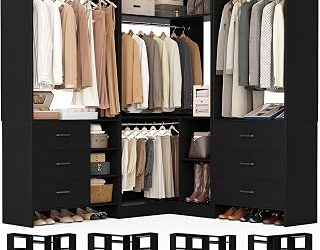
If you have a walk-in and want it to look built-in, this two-tower set scales from 5 to 14 feet with eight expandable rods, adjustable shelving, and six real drawers for the things nobody wants on display. Budget a full day, a level, and a second pair of hands — the payoff is closet-organizer quality at a fraction of custom-cabinet cost.
LOKEME Wardrobe Closet
The 19 mm steel pipe is what earns this a spot, giving three rods and six shelves noticeably less flex than the thinner-tube racks in the same price band. Side pockets are a small touch that turns out to be where belts, scarves, and socks finally live.
Frequently Asked Questions
Do these racks need to be anchored to the wall?
Freestanding steel systems generally do not, but anchoring is cheap insurance in a home with kids, pets, or earthquake risk. Tall wood towers benefit most from a single anti-tip strap into a stud.
How long does assembly actually take?
Plan on 45 to 90 minutes for a steel pipe rack and most of an afternoon for a multi-tower wood system with drawers. Lay every part out and count hardware before you start; that habit prevents the disassembly nobody enjoys.
Will a covered closet keep clothes from smelling musty?
A cover blocks dust and light, but it also traps humidity, so leave the zippers partly open in damp rooms and toss in a desiccant pack. Airflow is what prevents odor, not the fabric itself.
Can I use these on carpet?
Yes, though feet can sink and create a wobble over time. A thin plywood or hardboard sheet under the base spreads the load and keeps everything level, which also protects the carpet from permanent dents.
Final Thoughts
For most people, the VIPEK V5 is the best all-around buy thanks to its load capacity and room to expand, while the E10 with its stretchable rod is the smarter pick for odd-sized walls and tight depth. If you have a walk-in and want something that reads as permanent furniture, step up to the six-drawer modular wood closet system and give yourself a full weekend afternoon to do it right.