Key takeaways
- Rotate rugs 180 degrees every six months so wear and UV fading distribute evenly instead of carving a permanent traffic path.
- Test any cleaner on a hidden corner or the fringe underside first, and check the towel for dye transfer before you touch the visible field.
- Use cool water only — under 85°F. Heat plus agitation is the exact recipe for felting, and it happens in one wash.
- Dry flat and out of direct sun with a fan moving air across the surface. Hanging a wet wool rug stretches it out of square permanently.
What's inside
Wool is the most forgiving rug fiber you can own and the easiest one to wreck in an afternoon. Those crimped, scaly fibers shed dry soil almost eagerly, which is why a wool rug can look decent for years with minimal fuss. But the same scales that make wool resilient will lock together permanently if you hit them with hot water, alkaline detergent, and agitation. That’s felting, and no amount of professional restoration undoes it. The gap between a rug that lasts thirty years and one that turns into a stiff mat comes down to a handful of choices you make with a spray bottle in your hand.
This guide walks through the maintenance rhythm that actually keeps wool looking right: how to vacuum without chewing the pile, how to handle spills in the first few minutes, when a dry powder beats a wet foam, and how to wash a small wool or sheepskin piece by hand without shrinking it. You’ll also learn the pH rule that governs every product decision, plus the specific gear worth keeping in a closet so you’re not improvising at 9 p.m. with a wine stain spreading.
As an Amazon Associate we earn from qualifying purchases.



Our recommended picks for wool rug care — chosen for pH-appropriate chemistry and gentle mechanical action.
🛒 Best Price Today on Amazon
Prime members get fast, free shipping on everything above, plus member-only deals. New members get a 30-day free trial — cancel anytime.
Start With Dry Soil Removal, Not Water
Most of what dulls a wool rug is grit, not stains. Sand and dry soil sit low in the pile and grind against fibers every time someone walks across, cutting them like fine sandpaper. Vacuum weekly in high-traffic zones, and here’s the part people skip: turn the beater bar off, or use a suction-only head. Rotating brushes fuzz wool and pull loose fibers from the backing. For hand-knotted or flatweave rugs, skip the powered head entirely. Twice a year, take smaller rugs outside, drape them face-down over a railing, and beat the back with a broom handle. The amount of dirt that falls out is genuinely alarming, and it’s dirt no vacuum was ever going to reach.
Understand the pH Rule
Wool is protein, chemically closer to your hair than to nylon carpet. It tolerates a narrow window, roughly pH 5 to 8, and degrades outside it. Ordinary laundry detergent runs alkaline at pH 9 to 10, which dissolves the fiber’s protective scale layer and leaves the rug harsh and dull. Never use it. This is why a dedicated pH-neutral wash matters: Outback Gold Wool Wash is plant-based, enzyme-free, and fragrance-free, and the enzyme-free part is not marketing filler. Protease enzymes in “gentle” detergents literally digest protein fibers. For spot work on larger rugs, Woolite Advantage Carpet & Upholstery Cleaner is formulated for the same window and is easier to control than a full wet clean.
Blot Spills Immediately, and Blot Only
Wool’s natural lanolin coating buys you a real window — maybe ten to fifteen minutes before liquid penetrates the fiber core. Use it. Press a white cotton towel straight down with body weight, lift, move to a clean section, repeat. Never scrub in circles; that’s mechanical agitation, and it’s how you felt a spot into a permanent bald patch. Work inward from the edges so you don’t widen the ring. For solids, scrape gently with a spoon edge before any liquid touches it. Once you’ve pulled out what you can, mist lightly with a diluted neutral cleaner, blot again, then place a dry towel with a book on top and let it wick overnight.
Choose Dry Powder or Foam Based on the Job
Wet cleaning wool is risky mostly because of drying time. Wool holds up to 30% of its weight in water without feeling damp, so an over-wetted rug stays wet for days, and that’s when you get mildew, backing rot, and brown-out from dyes migrating up the fiber. Dry compound sidesteps the problem entirely. Capture Carpet & Rug Dry Cleaner works by absorption: sprinkle, brush into the pile, wait, vacuum out, and the powder carries soil with it. It’s the safest full-surface refresh for wool and handles odor at the same time. When you need lifting power on a defined traffic lane or a set-in mark, Woolite Advantage Heavy Traffic Carpet Foam delivers moisture in a controlled foam rather than soaking the backing. Foam for spots, powder for overall dullness.
Restore the Pile Mechanically
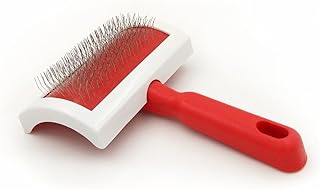
Matted wool usually isn’t dirty — it’s compressed. Fibers bent flat by furniture legs and foot traffic read as a dark, greasy-looking patch even when clean. Brushing lifts and separates them, and it also releases trapped grit that vacuuming misses. A CleanSheep Sheepskin Cleaning Brush or the MetU Sheepskin Rug Brush uses widely spaced metal or stiff pins that reach the base of long pile without shredding it. Always brush damp or dry wool in the direction of the nap, in short strokes, and never yank through a tangle — work it loose from the tip down. On long-pile sheepskin, brush after every wash and drying cycle or it dries into a board.
Tips
- Rotate rugs 180 degrees every six months so wear and UV fading distribute evenly instead of carving a permanent traffic path.
- Test any cleaner on a hidden corner or the fringe underside first, and check the towel for dye transfer before you touch the visible field.
- Use cool water only — under 85°F. Heat plus agitation is the exact recipe for felting, and it happens in one wash.
- Dry flat and out of direct sun with a fan moving air across the surface. Hanging a wet wool rug stretches it out of square permanently.
Frequently Asked Questions
Can I steam clean a wool rug?
Not recommended. Steam combines the two things wool tolerates worst: high heat and saturation. Truck-mounted hot water extraction is fine in professional hands with controlled temperature and strong recovery, but consumer steam machines lack the suction to pull water back out. You end up with a soaked backing and a felted surface.
Why does my wool rug shed so much?
New wool rugs shed short fibers left over from spinning, and it’s normal for the first six to twelve months. Vacuum regularly with suction only and it tapers off. If shedding continues past a year or you see fibers pulling in tufts, that points to a loose weave or backing failure rather than break-in.
How do I get pet odor out without soaking the rug?
Blot the source thoroughly first, since odor lives in what’s left behind. Then apply a dry absorbent cleaner like Capture, work it into the pile with a brush, leave it several hours, and vacuum. Urine that has reached the backing usually needs professional flushing, because surface treatment only masks it.
How often should a wool rug be professionally cleaned?
Every three to five years for a typical living room, sooner for entryways or homes with pets. Ask specifically whether the cleaner does immersion washing for wool. Many carpet services only do hot extraction, which is the wrong process for a hand-knotted or antique piece.
Conclusion
Wool rewards restraint. Vacuum with the beater bar off, blot spills the moment they happen, keep every product you use in the neutral pH range, reach for dry powder before you reach for water, and brush the pile back to life instead of scrubbing it flat. Stock a pH-neutral wash, a controlled foam for spots, a dry absorbent cleaner, and a proper pile brush, and you have covered nearly every situation a wool rug will throw at you for the next several decades.