Key takeaways
- Green or black surface film is algae and mildew. This wants a biocidal outdoor cleaner, not soap. Wet & Forget Outdoor Cleaner is the bleach-free, no-rinse option — you apply it and let weather do the work over several weeks, which suits a rug you’re not in a hurry about. For same-day results, 30 SECONDS Outdoor Cleaner in the hose-end sprayer format covers a large rug fast, and Home Armor Outdoor Cleaner+ works on the same rapid timeline.
- Ground-in dirt and traffic lanes want a surfactant plus oxygen bleach. Simple Green Oxy Solve Total Outdoor Cleaner is a concentrate, so you dilute it heavier for a filthy rug and lighter for maintenance, and it’s EPA Safer Choice certified if runoff onto plantings is a concern.
- Isolated spots — a dropped burger, bird droppings, a rust ring from a planter — want targeted work, not a full wash. Carbona Oxy Powered Outdoor Cleaner has a sponge and bristle brush built into the cap, which is the kind of small design choice that saves you a trip back to the garage.
What's inside
An outdoor rug spends its life soaking up pollen, tracked-in dirt, spilled drinks, and whatever the roof runoff dumps on it. Most of that grime never gets a chance to become a stain if you rinse it off a few times a season. The problem is that nobody does — so by year two the rug looks gray, smells faintly like a basement, and the pattern you paid for has vanished under a film of biological gunk. Polypropylene rugs, which is nearly all of them, don’t rot, but the algae and mildew growing on the fibers absolutely will discolor them permanently if you keep letting it dry in place.
Below is the process I use on my own patio rugs, working from a rinse-and-scrub baseline up through chemical treatment for the stuff a brush won’t touch. You’ll learn how to identify what’s actually staining the rug, which cleaner classes match which problem, how to dry a rug so it doesn’t re-bloom in a week, and where a pressure washer helps versus where it shreds fibers. I’ve also flagged the products I keep in the garage for each job.
As an Amazon Associate we earn from qualifying purchases.



🛒 Best Price Today on Amazon
Prime members get fast, free shipping on everything above, plus member-only deals. New members get a 30-day free trial — cancel anytime.
Step One: Get the Dry Debris Out Before Anything Gets Wet
Skip this and you’re making mud. Pull the rug off the deck, hang it over a railing or fence, and beat it with a broom handle — you’ll be genuinely unsettled by how much sand comes out. Then sweep or shop-vac both sides. Flip the rug and check the underside, because on flatweave polypropylene the grit migrates through and grinds against the surface it’s lying on. Also sweep the deck or patio underneath while you’re at it; putting a clean rug back onto a mildewed slab restarts the clock immediately. If the rug has a rubber or latex backing, inspect it now for crumbling, since that dust becomes a black smear once it’s wet.
Match the Cleaner to What’s Actually Growing
Three different problems get lumped together as “dirty,” and they don’t respond to the same treatment:
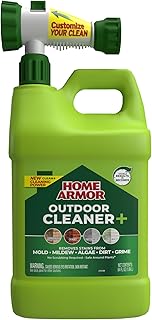
- Green or black surface film is algae and mildew. This wants a biocidal outdoor cleaner, not soap. Wet & Forget Outdoor Cleaner is the bleach-free, no-rinse option — you apply it and let weather do the work over several weeks, which suits a rug you’re not in a hurry about. For same-day results, 30 SECONDS Outdoor Cleaner in the hose-end sprayer format covers a large rug fast, and Home Armor Outdoor Cleaner+ works on the same rapid timeline.
- Ground-in dirt and traffic lanes want a surfactant plus oxygen bleach. Simple Green Oxy Solve Total Outdoor Cleaner is a concentrate, so you dilute it heavier for a filthy rug and lighter for maintenance, and it’s EPA Safer Choice certified if runoff onto plantings is a concern.
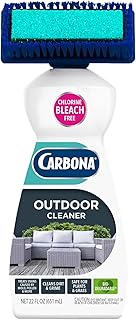
- Isolated spots — a dropped burger, bird droppings, a rust ring from a planter — want targeted work, not a full wash. Carbona Oxy Powered Outdoor Cleaner has a sponge and bristle brush built into the cap, which is the kind of small design choice that saves you a trip back to the garage.
Wash Technique: Flat, Wet, Worked, Rinsed
Lay the rug flat on a driveway or clean concrete rather than washing it hanging — hanging pulls the weave and the cleaner just runs off. Hose the whole rug down first so the fibers are saturated; dry fibers absorb cleaner unevenly and you get blotches. Apply your product, let it dwell the full time on the label (this is where people cheat and then blame the product), then agitate with a stiff-bristle push broom in the direction of the weave. Rinse until the water running off is clear, then rinse once more. Leftover surfactant attracts dirt and makes the rug feel tacky underfoot.
Drying Is the Step That Determines Whether You Repeat This
A polypropylene rug left flat on the ground to dry will trap moisture against the backing and bloom mildew within days, no matter how well you cleaned it. Hang it over a fence, two sawhorses, or a deck rail so air moves on both faces, and squeegee or push standing water out first with the broom. Give it a full sunny day. Before it goes back down, make sure the surface underneath is dry too, and consider a breathable rug pad so the two surfaces aren’t in flat contact.
Pressure Washers: Useful, With Limits
A pressure washer is excellent for the patio, adequate for a thick woven polypropylene rug, and destructive to anything with a printed pattern, a bound edge under tension, or natural fibers. If you use one, fit a 40-degree white tip, stay under about 1,500 PSI, keep the wand a foot back, and test on a corner. Simple Green Oxy Solve runs through a pressure washer’s detergent tank, which lets you soap and rinse in one pass. Never use a pressure washer on jute, sisal, or seagrass.
Tips
- Treat the concrete or decking under the rug at the same time — otherwise you’re transplanting spores back onto clean fibers.
- Pre-wet nearby shrubs and grass before spraying any outdoor cleaner, then rinse them again after. Dilution is what protects them.
- Keep a spot cleaner near the door so spills get handled in minutes instead of curing into the fiber over a weekend.
- Roll the rug loosely for winter storage, never fold it — folds hold moisture and set permanent creases in polypropylene.
Frequently Asked Questions
How often should I deep-clean an outdoor rug?
Twice a season for a covered porch, three or four times for a rug in open weather or under trees. Quick weekly sweeping does more for longevity than any single deep clean, because it removes the abrasive grit that dulls the fibers.
Can I just use bleach?
You can, diluted, on solid-color polypropylene — but bleach kills surface growth without removing the biofilm it leaves behind, so the rug looks clean and then regrows quickly. It also fades patterns and degrades latex backings. A purpose-built outdoor cleaner is the better tool.
Will these cleaners hurt my deck or patio?
The products above are formulated for exactly those surfaces, so overspray isn’t a problem. What you should protect is unsealed wood furniture, painted metal, and anything with a wax finish. Cover it or move it.
What about a mildew smell that won’t leave?
That’s growth in the backing, not the surface. Saturate the underside with a biocidal cleaner, agitate it, rinse thoroughly, and dry it hanging in full sun. If the smell survives two rounds, the backing has likely broken down and the rug is finished.
Conclusion
The best way to clean an outdoor rug isn’t a product, it’s a sequence: debris out, correct cleaner in, honest dwell time, real agitation, thorough rinse, and drying with air on both sides. Keep a fast-acting cleaner like 30 SECONDS or Home Armor for seasonal resets, an oxygen-based concentrate like Simple Green Oxy Solve for traffic grime, and a spot treatment like Carbona within reach for accidents — and your rug will look intentional rather than weathered for years longer than it otherwise would.