Key takeaways
- Large gravity dispensers like the Waterdrop WFD-22L come apart into a few washable pieces — reservoir, spigot, lid — and most parts handle a warm soapy hand-wash easily. Remove the filter before soaking anything.
- Compact fridge pitchers such as the Brita Metro need weekly attention rather than deep cleaning, because their small volume turns over fast and the lid vents collect condensation.
- Bottom-load and top-load coolers need the full drain-descale-sanitize cycle every six months, or quarterly in humid climates and busy offices.
What's inside
Pull the drip tray off your water dispenser and look underneath. That pinkish film along the seam isn’t dust — it’s a biofilm colony that’s been quietly building since the last time anyone paid attention. Every dispenser develops it, whether it’s a $30 pitcher in the fridge door or a bottom-load cooler humming in the corner of the kitchen. Water sits still, room-temperature air circulates through the reservoir, and bacteria find a rent-free home. The taste goes flat, then faintly metallic, then vaguely swampy, and most people blame the filter.
Cleaning a dispenser properly takes about forty minutes twice a year, plus a five-minute wipe-down weekly. Below I’ll walk through the full teardown-and-sanitize routine I use on my own bottom-load cooler, the descaling step that solves hard-water crust, and how the approach shifts for filter pitchers versus plumbed coolers. You’ll also learn which cleaning agents are safe for food-contact surfaces and which ones leave residue you’ll be tasting for weeks.
As an Amazon Associate we earn from qualifying purchases.




🛒 Best Price Today on Amazon
Prime members get fast, free shipping on everything above, plus member-only deals. New members get a 30-day free trial — cancel anytime.
Start With a Full Drain and Disassembly
Unplug the unit and give hot tanks at least two hours to cool — this is not optional, and skipping it is how people end up with scalded forearms. Drain both reservoirs completely using the taps, then locate the rear drain plug (most bottom-load models like the Brio 520 have one behind a small cap). Catch the last cup or two in a bowl; it’s usually cloudy, and that cloudiness tells you how overdue you are. Remove the drip tray, the tray grate, the bottle probe or spike assembly, and any silicone gaskets you can pull without tools. Lay everything on a towel in the order you removed it. Phone photos of each step cost nothing and save real frustration during reassembly.
Descale Before You Sanitize
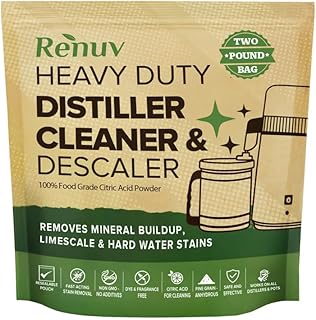
Mineral scale is a physical shield — sanitizer can’t reach bacteria hiding beneath a calcium crust, so descaling always comes first. Food-grade citric acid is the right tool here. Mix roughly two tablespoons of Renuv citric acid powder per quart of warm water, fill the cold reservoir, and let it sit for twenty to thirty minutes. If your hot tank is heavily scaled, run the solution through it and let the heater cycle once, which dramatically speeds the reaction. You’ll hear faint fizzing as carbonate deposits break down. Citric acid rinses clean and leaves no smell, which is exactly why it beats vinegar for anything you’ll be drinking from later.
Scrub the Places Water Actually Touches
This is where a brush set earns its keep. A Holikme bottle brush kit gives you a long-handled reservoir brush plus thin straw brushes that reach into tap channels and the narrow tubing behind the spigot — the exact spots a sponge cannot follow. Work through the tank walls, the reservoir floor, the underside of the lid, and the inside of every tap. Then hit the bottle probe: on bottom-load coolers, that intake straw runs the entire height of the cabinet and collects a slick film you’ll never see. If you own a filter pitcher instead, scrub the reservoir seat where the filter cartridge nests, since that lip traps sediment that redistributes into every pour.
Sanitize, Then Rinse Like You Mean It
For sanitizing, an NSF-listed product designed for potable systems is the safer path — a purpose-built water cooler cleaning kit gives you a pre-measured food-safe dose and clear dwell times, which removes the guesswork of DIY bleach ratios. If you do go the bleach route, one teaspoon of unscented household bleach per gallon is the ceiling; anything stronger doesn’t sanitize better, it just takes longer to purge. Let the solution dwell for the full recommended time, then drain and rinse with fresh water at least three times, running each rinse through every tap. Taste-test the final rinse. Any chemical note at all means rinse again.
Match the Routine to Your Dispenser Type
- Large gravity dispensers like the Waterdrop WFD-22L come apart into a few washable pieces — reservoir, spigot, lid — and most parts handle a warm soapy hand-wash easily. Remove the filter before soaking anything.
- Compact fridge pitchers such as the Brita Metro need weekly attention rather than deep cleaning, because their small volume turns over fast and the lid vents collect condensation.
- Bottom-load and top-load coolers need the full drain-descale-sanitize cycle every six months, or quarterly in humid climates and busy offices.
Tips
- Never put a filter cartridge through the sanitizing cycle — pull it out first, since carbon media absorbs chemicals and then releases them back into your water for weeks.
- Wipe the drip tray and taps weekly with a dilute vinegar spray. Two minutes here prevents most of the buildup that makes deep cleaning miserable.
- Air-dry every disassembled part completely before reassembly. Trapped moisture in a sealed reservoir is the fastest route to a fresh biofilm.
- Write the cleaning date on masking tape stuck to the back of the cabinet. Nobody remembers otherwise.
Frequently Asked Questions
How often should I deep clean a water dispenser?
Every three to six months for coolers and large gravity dispensers, or with each bottle change if the unit sees heavy use. Filter pitchers should be washed whenever you swap the cartridge.
Can I use vinegar instead of citric acid?
Vinegar works for descaling, but it lingers. Citric acid dissolves the same minerals and rinses out without leaving a sour aftertaste in the reservoir.
Is that pink slime dangerous?
The pink film is typically Serratia marcescens, an airborne bacterium. It’s not usually harmful to healthy adults but signals that the surface needs scrubbing, not just rinsing.
Does cleaning replace filter changes?
No. Cleaning removes biofilm and scale from surfaces; a filter removes contaminants from the water passing through it. Both need to happen on their own schedules.
Conclusion
A clean dispenser is mostly a matter of sequence: cool it down, drain it fully, descale before sanitizing, scrub the hidden channels, and rinse until the water tastes like nothing at all. Get a citric acid descaler, a decent brush set, and a food-safe sanitizer on the shelf, put a reminder on the calendar, and the whole job becomes a twice-yearly forty minutes that keeps every glass tasting the way it should.