Key takeaways
- Wall depth before width: Measure your stud cavity first. Standard 2×4 framing gives you roughly 3.5 inches of usable depth, and several linear fireplaces need more. If a unit is rated for 2×6 studs, you are either building out a false wall or picking something shallower.
- Heat outlet direction: Front-facing heaters push warm air into the room; top-vent designs blow straight up your wall. If a TV is going above the fireplace, front-vent or a hidden-vent design saves you from a warm screen and a voided warranty.
- Circuit capacity: A 1,500W heater draws about 12.5 amps. On a shared 15-amp circuit with anything else running, you will trip breakers. Plan a dedicated 15- or 20-amp receptacle inside the framed opening, and confirm your local code before you close up the drywall.
- Trim versus frameless: Frameless looks cleaner but demands tight drywall work — your rough opening has to be square and your mud lines crisp. A trim kit forgives a quarter inch of sloppiness. Be honest about your finishing skills.
- Flame realism over flame count: Thirty color options sound impressive, but you will use two. What matters is ember bed depth, whether the media catches light convincingly, and how the flame moves at low speed. Look for real log sets and layered hearth media.
What's inside
Shopping for an electric fireplace usually starts with a wall you already dislike and ends in a spreadsheet. Widths jump from 50 to 72 inches with no logic, some units want a framed recess while others hang off drywall anchors, and the flame effects range from genuinely convincing to a strip of orange LEDs behind frosted plastic. Add wiring questions — can this share a circuit with the TV, or does it need its own run? — and a straightforward upgrade turns into a research project.
I have installed enough of these to know which specs matter on install day and which are marketing filler. Below are the models worth your framing lumber, sorted by how they behave in a real wall: stud depth requirements, heater placement, glass and trim options, and whether the smart features actually earn their keep. Every pick here is a recessed or wall-mount unit, so plan for a level, a stud finder, and an afternoon.
As an Amazon Associate we earn from qualifying purchases.



🛒 Best Price Today on Amazon
Prime members get fast, free shipping on everything above, plus member-only deals. New members get a 30-day free trial — cancel anytime.
How to Choose a/an Consumer Reports Best Electric Fireplace (2026)
- Wall depth before width: Measure your stud cavity first. Standard 2×4 framing gives you roughly 3.5 inches of usable depth, and several linear fireplaces need more. If a unit is rated for 2×6 studs, you are either building out a false wall or picking something shallower.
- Heat outlet direction: Front-facing heaters push warm air into the room; top-vent designs blow straight up your wall. If a TV is going above the fireplace, front-vent or a hidden-vent design saves you from a warm screen and a voided warranty.
- Circuit capacity: A 1,500W heater draws about 12.5 amps. On a shared 15-amp circuit with anything else running, you will trip breakers. Plan a dedicated 15- or 20-amp receptacle inside the framed opening, and confirm your local code before you close up the drywall.
- Trim versus frameless: Frameless looks cleaner but demands tight drywall work — your rough opening has to be square and your mud lines crisp. A trim kit forgives a quarter inch of sloppiness. Be honest about your finishing skills.
- Flame realism over flame count: Thirty color options sound impressive, but you will use two. What matters is ember bed depth, whether the media catches light convincingly, and how the flame moves at low speed. Look for real log sets and layered hearth media.
The Best Consumer Reports Best Electric Fireplace (2026)s Reviewed
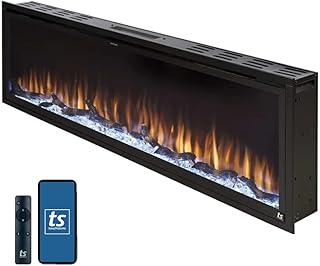
Touchstone Sideline 50″ Smart Recessed Fireplace
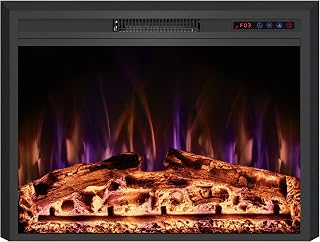
The Sideline 50 is the safest bet for a first install — it fits standard 2×4 framing, includes both log and crystal hearth media so you can change the look without buying accessories, and the WiFi thermostat holds a set temperature rather than just cycling on and off. The 30 flame and ember combinations are more than anyone needs, but the default warm amber setting is genuinely convincing at dusk.
Westinghouse 60″ Electric Fireplace Heater
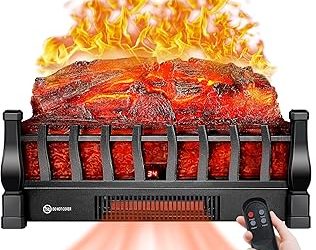
This is the value play at 60 inches, and the dual 750W/1500W setting makes it usable in shoulder seasons when you want ambiance without cooking the room. It installs recessed or wall-mounted with the same hardware, and the 24-hour timer plus Alexa and Google Home support cover the automation basics without a subscription or a fussy app.
Ambe Linear 72″ with Real Wood Log Set
The Ambe is the one that fools people. Actual Midwest hardwood logs sit over a deep ember bed, and the hidden vent design means you can mount a TV above it without a heat plume — that alone justifies the build-out if your wall needs it. Confirm your depth before ordering; this is a commitment, not a weekend impulse.
Touchstone Sideline Elite Smart 60″
The Elite steps up from the standard Sideline with a cleaner frameless face, 60 color combinations, and three media options — logs, crystals, and driftwood — included in the box. If you are drywalling a new accent wall and want the glass to read as a floating panel, this is the unit to frame around.
R.W.FLAME 60″ Recessed Fireplace
Rated for 2×6 studs and noticeably quieter than most units in this class, the R.W.FLAME suits bedrooms and offices where blower hum would be a dealbreaker. The touch screen on the unit itself is a small thing that matters when the remote inevitably disappears into the couch.
Frequently Asked Questions
Do I need an electrician?
If a properly rated receptacle already sits inside your framed opening, no. If you are running a new dedicated circuit to the panel, hire one — permits and inspections exist for a reason, and insurance companies read them.
Can I mount a TV above an electric fireplace?
Only with a front-vent or hidden-vent model, and only with the manufacturer’s stated clearance above the unit. Top-venting fireplaces send heat directly up the wall and will shorten a panel’s life.
How much heat do these actually produce?
A 1,500W unit warms roughly 400 square feet as supplemental heat. Treat it as a comfort boost for one room, not a furnace replacement.
Recessed or wall-mounted?
Recessed looks integrated and protects the unit, but it is permanent and requires framing. Wall-mounted takes an hour and moves with you. Renters should not be cutting into drywall.
Final Thoughts
For most installs, the Touchstone Sideline 50″ is the right call — standard framing, reliable thermostat, no surprises. Step up to the Sideline Elite 60″ if you want a frameless face and extra media options, or go with the Ambe Linear 72″ if you have the wall depth and want a log set that reads as real from across the room.