Key takeaways
- Pro: Single-pass duplex eliminates re-feeding delays on multi-page contracts and booklets.
- Pro: Generous ADF capacity means you can queue a full stack and walk away.
- Con: Its footprint and weight make it awkward to relocate between rooms.
A growing pile of receipts, contracts, and paper forms on your desk isn’t just an aesthetic problem—it’s a practical one. A desktop scanner eliminates the friction of manually filing documents, lets you search your paperwork in seconds, and ensures you can produce a clean PDF when a tax accountant or landlord needs one. The best models in 2026 handle multi-page jobs without babysitting, flip pages automatically, and integrate with cloud services so scanned files land where you expect them.
What separates a scanner you’ll actually use from one that gathers dust is reliability under real-world conditions. A device that jams on a second page or requires you to scan each side manually will lose to a cheaper unit with a dependable feed. The products compared below range from compact single-sheet options to high-speed duplex workhorses, and the right choice depends on volume, page types, and how much you value one-button simplicity.
Our top picks


As an Amazon Associate we earn from qualifying purchases at no extra cost to you.
Quick Picks
| Product | Best for | Price |
|---|---|---|
| Epson WorkForce ES-400 II | High-volume home offices | $352.95 |
| ScanSnap iX2500 | Set-and-forget wireless scanning | $379.99 |
| Brother DS-640 | Travel and on-the-go scanning | $134.99 |
| Epson WorkForce ES-50 | Budget single-sheet digitizing | $146 |
| ScanSnap iX1300 | Families splitting one scanner | $279.99 |
| Epson WorkForce ES-C220 | Small ADF on a midrange budget | $227.18 |
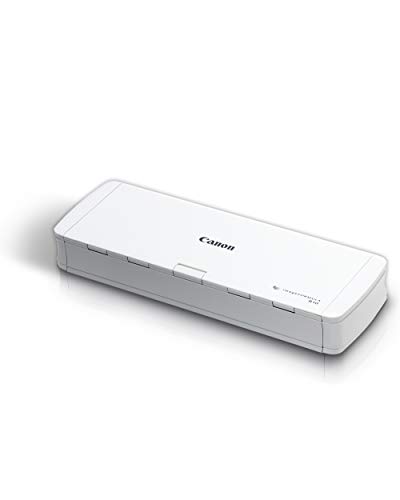
| Canon imageFORMULA R10 | USB-powered minimalism | $183.90 |
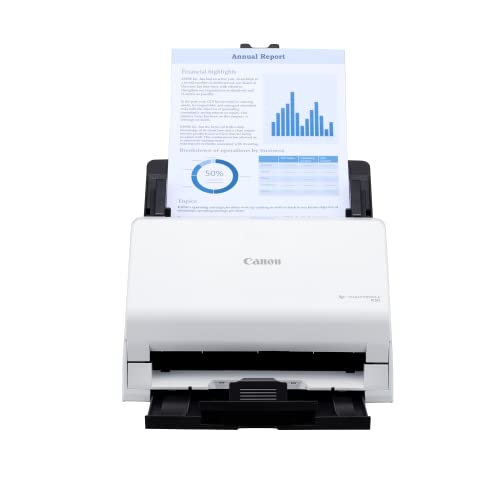
| Canon imageFORMULA R30 | Plug-and-play office use | $259 |
How We Picked
We narrowed these eight by weighing four factors that most influence long-term satisfaction: automatic document feeder capacity and whether duplex is handled in a single pass, scan speed measured in pages per minute at typical office resolutions, connectivity options including wireless and USB with driver-free operation, and owner-reported reliability over the first year of regular use. Price-to-throughput ratio also played a role, since a scanner that costs less but jams constantly is not a bargain.
The 8 Best Desktop Scanner in 2026
Epson WorkForce ES-400 II
This is the pick for anyone scanning more than a few dozen pages per day. Owners highlight its single-pass duplex mechanism that feeds both sides simultaneously, cutting time roughly in half compared to units that re-flip pages. The 50-page ADF handles mixed paper stocks without frequent intervention, and the build quality feels closer to a commercial device than a consumer gadget.
- Pro: Single-pass duplex eliminates re-feeding delays on multi-page contracts and booklets.
- Pro: Generous ADF capacity means you can queue a full stack and walk away.
- Con: Its footprint and weight make it awkward to relocate between rooms.
Skip it if your scanning is occasional and a single-sheet model would clear the backlog without occupying permanent desk space.
ScanSnap iX2500
The iX2500 is the scanner you set up once and forget about. Wireless connectivity paired with Fujitsu’s scanning app lets multiple household members hit one button and have files routed to shared cloud folders. Owners consistently praise the touchscreen interface that shows scan previews and lets you batch-organize without opening a computer.
- Pro: Standalone operation via Wi-Fi means no computer needs to be running.
- Pro: Intelligent document routing keeps receipts, contracts, and photos in separate folders automatically.
- Con: Premium price puts it out of reach for buyers who scan only a handful of pages monthly.
Pass on it if you need raw speed over convenience, as the ES-400 II handles heavy batches faster.
Brother DS-640
Designed for people who scan at client sites or on the road. The DS-640 is pocketable, runs entirely off a single USB connection with no separate power adapter, and includes a carrier sheet for fragile receipts and tickets. Owner feedback emphasizes how it slides into a laptop bag without adding noticeable bulk.
- Pro: Bus-powered design means one cable connects scanning, power, and data transfer.
- Pro: Compact enough to travel daily without feeling like extra gear.
- Con: No automatic feeder, so multi-page jobs require manual sheet-by-sheet loading.
Skip it if you regularly scan booklets or multi-page packets that need an ADF.
Epson WorkForce ES-50
The ES-50 occupies a similar niche to the Brother DS-640 but with Epson’s scanning software ecosystem. It’s a single-sheet duplex unit that handles both sides in one pass, which is rare at this price tier. Owners note the rubberized feet keep it planted on smooth desk surfaces during repeated feeds.
- Pro: Duplex scanning in a compact form factor under $150.
- Pro: Epson Document Capture Pro offers free OCR and cloud upload options.
- Con: Feeding mechanism can struggle with very thin paper like onion-skin or thermal receipts.
Look elsewhere if you need to handle stapled or damaged pages that an ADF-equipped model can accommodate with a carrier sheet.
ScanSnap iX1300
The iX1300 is the step-down sibling to the iX2500, retaining wireless connectivity and the intuitive app while trimming the price by roughly a hundred dollars. It suits households where two or three people scan school forms, medical paperwork, and tax documents a few times per month without needing maximum throughput.
- Pro: Wireless setup works with phones, tablets, and computers from one device.
- Pro: Single-pass duplex handles two-sided pages efficiently.
- Con: Smaller ADF capacity means longer documents may need splitting into batches.
Choose the iX2500 instead if you want the touchscreen preview and advanced routing features.
Epson WorkForce ES-C220
The ES-C220 fills the gap between portable single-sheet scanners and full-size office models. Its 20-page feeder is enough for most contract packets, and the duplex mechanism keeps throughput competitive for mid-range home use. Owners describe it as the smallest scanner that still feels substantial enough for daily professional tasks.
- Pro: Compact enough for a shelf but capable of batch scanning without manual feeding.
- Pro: Reasonable price-to-speed ratio among ADF-equipped desktop units.
- Con: No wireless option; USB connection only, which limits placement flexibility.
Consider the ES-400 II if you need wireless or higher ADF capacity for heavier workloads.
Canon imageFORMULA R10
Canon’s R10 is the answer for anyone who wants zero clutter. It draws all power from USB, has no separate tray or lid, and weighs almost nothing. The duplex sensor captures both sides in one pass. Owners who work from coffee shops or co-working spaces appreciate how it disappears into a laptop sleeve.
- Pro: Truly portable with no power adapter needed.
- Pro: Plug-and-play operation requires minimal driver installation on modern systems.
- Con: Single-sheet only design makes it tedious for documents exceeding a few pages.
Skip it if your workflow involves scanning 10-page contracts or multi-page forms regularly.
Canon imageFORMULA R30
The R30 adds a modest ADF to Canon’s portable formula, making it viable for small office teams that scan invoices, purchase orders, and HR forms daily. Its Plug-and-Scan feature triggers a scan action directly from the button without software installation, which owners find invaluable when sharing one scanner among multiple workstations.
- Pro: Dedicated scan-to-button workflow eliminates software setup on shared machines.
- Pro: ADF with duplex handling supports batch jobs that the R10 cannot.
- Con: Feeder capacity is modest compared to premium units, requiring reloading on long jobs.
Look at the ES-400 II if you need higher page capacity per load.
Buying Guide
ADF Capacity and Duplex Type
The automatic document feeder determines whether a scanner suits your workflow or becomes a bottleneck. Capacity ranges from single-sheet (no feeder) to 50-plus pages in premium models. More critical than raw capacity is whether duplex is handled in a single pass—meaning both sides scan simultaneously—or in a dual pass where the unit flips the page and scans again. Single-pass duplex roughly halves the time on two-sided documents and reduces mechanical wear from repeated flipping. If you scan contracts, booklets, or two-sided forms, single-pass duplex is non-negotiable.
Connectivity and Standalone Operation
USB-only scanners are simpler and cheaper but must sit within cable range of a computer. Wireless models add placement flexibility and, in the case of ScanSnap units, allow scanning without any computer powered on at all. For shared household or small office use, wireless or network connectivity reduces friction enough to matter daily. If your scanner will live on a bookshelf away from your desk, prioritize Wi-Fi or Bluetooth.
Software and Output Routing
The physical device is only half the equation. Look for bundled software that offers OCR so scanned text becomes searchable, cloud destination options like Google Drive or Dropbox, and profile-based routing that sorts by document type. ScanSnap’s app ecosystem is the most refined here, but Epson’s Document Capture Pro and Canon’s CaptureOnTouch both offer solid OCR and batch editing without additional purchases.
Our Verdict
The top pick for most home-office users is the ScanSnap iX2500, because its combination of wireless simplicity, intelligent routing, and single-pass duplex means you actually use it consistently. For budget-conscious buyers scanning occasional documents, the Epson WorkForce ES-50 delivers duplex capability under $150 in a tiny footprint. However, if your primary need is high-volume batch scanning of long contracts or booklets, the Epson WorkForce ES-400 II wins on throughput and feeder capacity despite lacking the ScanSnap’s wireless convenience.
FAQ
Do I need a scanner with an ADF, or is a flatbed enough?
Flatbed scanners work well for photos, books, and fragile originals but are impractical for multi-page text documents. An ADF-equipped scanner reduces a 20-page contract to a single button press, while a flatbed would require lifting the lid between each page. For anything document-focused, choose an ADF model.
What resolution do I actually need for paper documents?
300 DPI is the standard for searchable text and produces clean, legible PDFs without excessive file sizes. Higher resolutions like 600 DPI help with small print or archival purposes, but for everyday receipts and forms, 300 DPI is more than sufficient. Most models in this roundup default to that setting.
Can these scanners handle receipts and credit card slips?
Most handle standard paper receipts without issue, but very thin thermal paper can cause feed problems on ADF models. Units like the Brother DS-640 and Canon R10 include a carrier sheet that protects fragile media during feeding. If receipts are your primary material, choose a model with carrier sheet support or a single-sheet design.
How long should a desktop scanner last?
Owner feedback across these models suggests five to seven years of regular use before feed rollers show meaningful wear. Epson and ScanSnap units tend to report longer service lives due to replaceable roller kits. A scanner that jams frequently in year one likely has a design flaw or quality-control issue rather than normal aging.