Key takeaways
- Old fuel leaves varnish in the tiny jets of the carburetor; that is the leading reason a mower will not start after storage.
- A quick in-place clean works for mild symptoms; a stubborn no-start usually needs the bowl and main jet taken out.
- Never poke jets with wire or a drill bit, because a scratched jet changes the fuel flow.
- Replace the bowl gasket (and any soft O-rings) while you are in there; old ones leak.
- If the carburetor is badly corroded or the float is cracked, a replacement is a better use of your time than another cleaning.
How to clean a lawn mower carburetor in short: shut off the fuel, remove the air filter, take the carburetor bowl off (or the whole carburetor off the engine), spray every jet and passage with carb cleaner, and reassemble with fresh gaskets. If the mower only runs rough or surges, a lighter in-place clean with spray cleaner and a drained float bowl may be enough. Work outdoors, away from sparks and open flame, because both gasoline and carb spray are flammable.
Our top picks


As an Amazon Associate we earn from qualifying purchases at no extra cost to you.
Key takeaways
- Old fuel leaves varnish in the tiny jets of the carburetor; that is the leading reason a mower will not start after storage.
- A quick in-place clean works for mild symptoms; a stubborn no-start usually needs the bowl and main jet taken out.
- Never poke jets with wire or a drill bit, because a scratched jet changes the fuel flow.
- Replace the bowl gasket (and any soft O-rings) while you are in there; old ones leak.
- If the carburetor is badly corroded or the float is cracked, a replacement is a better use of your time than another cleaning.
Signs You Need to Clean a Lawn Mower Carburetor
A dirty carburetor tends to show a pattern. If several of these fit your mower, a cleaning is worth doing before you spend money on other parts.
- The engine cranks but will not start, especially after sitting for a season with fuel in the tank.
- It starts only with starting fluid or runs only with the choke on.
- It surges, with the speed rising and falling on its own.
- It stalls under load, or dies when the choke is opened.
- Fuel leaks from the carburetor bowl or the overflow, which can mean a stuck float needle.
- Black smoke or a strong gas smell hints at a rich mixture, sometimes from a sticking float.
Check the easy things first: fresh fuel, a clean air filter, a good spark plug, and an open fuel shutoff valve. Carburetor work is worthwhile only when those are in order.
How to Clean a Lawn Mower Carburetor Without Removing It
This is the light option. It does not replace a full teardown, but it can wake up a mower that has mild varnish or a partly blocked jet. It also fits people searching for how to clean a lawn mower carburetor without removing it.
- Prepare the mower. Let the engine cool. Pull the spark plug wire. Set the mower on level ground in a ventilated space.
- Shut off the fuel. Close the fuel valve if there is one. If not, pinch the fuel line with line clamps or run the tank low.
- Remove the air filter and cover. This exposes the carburetor throat.
- Spray the intake. Use carb and choke cleaner with a straw tip. Spray into the throat and around the choke plate while you work the throttle and choke levers back and forth.
- Drain the float bowl. Many small engines have a bowl drain screw or a bowl nut with a hollow center. Place a container underneath, loosen the drain, and let the old fuel run out until it looks clear. Tighten it again.
- Let it soak. Wait a few minutes so the cleaner loosens varnish, then wipe the area dry.
- Refit and try. Reinstall the air filter, open the fuel, reconnect the spark plug wire, and try to start. If it runs, let it idle for a few minutes and then run at full speed to flush any loosened debris.
If the mower runs better but still hunts, the main jet is likely still partially clogged. That calls for the bowl-off method below.
How to Clean a Lawn Mower Carburetor With the Bowl Off
This is the sweet spot for many mowers: you do not remove the whole carburetor from the engine but you reach the main jet and float directly.
- Shut off the fuel and drain the bowl. Same safety steps as above.
- Remove the bowl. On many carburetors a single bowl bolt on the underside holds the float bowl in place. Support the bowl as you loosen it, because it will hold some fuel.
- Pay attention to parts. Note the bowl gasket, the float, the float pin, and the needle. Take a photo before you touch anything.
- Inspect the float. A float that is cracked, soaked, or stuck will cause flooding. The needle’s tip should look smooth, not grooved.
- Clean the main jet. Spray cleaner through the main jet (often the brass tube in the center of the carb body) and hold it up to the light to see if you can see through it. Use compressed air if you have it.
- Soak the bowl. Wipe out sludge with a clean rag and a soft brush.
- Refit with a new gasket. Put the bowl back with a fresh gasket and tighten the bolt snugly. Do not overtighten, because the bowl can crack.
How to Clean a Briggs and Stratton Carburetor
Many walk-behind mowers use a Briggs and Stratton engine, and their carburetors share a layout that makes cleaning predictable. The details differ by engine family (for example side-draft float carburetors versus the plastic-bodied designs on some newer models), so check the model number on the engine and the parts diagram before you start.
- Bowl nut with a hollow center: on some designs the main jet is built into the bowl nut. Remove it and clean the small cross-holes in its sides with carb spray and compressed air.
- Plastic carburetors: avoid harsh soaks and do not use aggressive solvents that attack plastic; use a spray cleaner rated for the material and keep the cleaner off rubber parts where the label advises.
- Governor linkage: take a photo of the springs and the linkage before removing the carburetor. They are easy to reinstall wrong, and a wrong spring will cause surging.
The Briggs and Stratton maker’s page lists the model, type, and code lookups that point to exact parts. Use that to confirm gasket kits and jet sizes instead of guessing.
Full Removal: When the Carburetor Needs to Come Off the Engine
If the engine still will not run after a bowl-off clean, or the passages inside the carburetor body are clogged, remove the carburetor and clean it on the bench.
- Photograph everything. Fuel line, throttle cable or linkage, choke linkage, and springs.
- Disconnect the fuel line. Use a clamp to stop fuel flow if it is still attached, and have a rag ready.
- Remove the mounting nuts. The carburetor usually sits on two studs with a gasket. Slide it off gently and unhook the linkage.
- Disassemble. Remove the bowl, float, needle, jets, and any idle mixture screw. Count and note the turns on any adjustable screw so you can reset it close to where it was.
- Clean each part. Spray the passages from both ends. Use a soft brush for the body and avoid wire in the jets.
- Replace soft parts. Use a carburetor rebuild kit or at least a new bowl gasket and needle if the old needle shows wear.
- Reinstall. Put on a new mounting gasket, hook up the linkage, tighten the nuts evenly, and reconnect fuel.
| Symptom | Start with | Move up to | Time |
|---|---|---|---|
| Hard starting after storage | Fresh fuel, drain bowl, spray intake | Bowl off, clean main jet | 15 to 45 min |
| Surging or hunting | Bowl off, clean main jet | Full removal, clean idle passages | 30 to 60 min |
| Flooding or fuel dripping | Inspect float and needle | Replace needle, float, gasket | 30 to 60 min |
| Only runs on choke | Bowl off, clean jets | Full removal, rebuild kit | 45 to 90 min |
| Corroded body or stripped threads | Not worth cleaning | Replace the carburetor | 45 to 60 min |
Carburetor Cleaner for Lawn Mowers: What to Use
A carburetor cleaner for lawn mowers should be labeled for carburetors or throttle bodies and should come with a straw for tight passages. Some are aerosol “jet sprays”; others are dip soaks for parts you remove. Pick what fits the job:
- Aerosol spray for in-place cleaning and for flushing passages on a bench.
- Dip solvents for heavily varnished metal parts, following the label for soak times and material warnings.
- Fuel additive cleaners that you pour into the tank help prevent buildup but will not clear a blocked jet.
Read the label about plastic, rubber, and gaskets. Some strong solvents can swell or soften rubber, so keep soft parts out of the soak.
Gear that helps
- Gumout Carb and Choke Jet Spray, 16 oz: aerosol carb cleaner · removes gum and varnish · straw tip for jets
- WD-40 Specialist Carb/Throttle Body & Parts Cleaner, 13.5 oz: aerosol · for carburetors and throttle bodies · check the can’s material notes
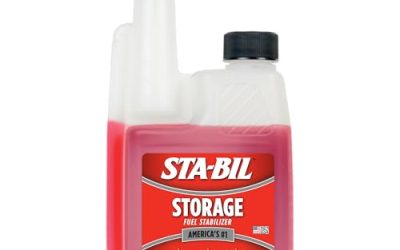
- STA-BIL Fast Fix Small Engine Treatment, 8 oz: tank additive · treats 20 gallons per the label · a helper, not a replacement for cleaning
Reassembly Checks and First Start
- Check that the float moves freely and the bowl gasket sits flat.
- Re-attach the throttle and choke linkage and confirm full travel by hand.
- Refit the air filter. Use fresh fuel with a stabilizer.
- Prime (if your mower has a primer bulb), set the choke, and pull the starter. A carburetor that was fully dry may take a few extra pulls.
- Run the engine for several minutes, then try the throttle and choke. Look for leaks around the bowl.
How to Keep a Mower Carburetor Clean
- Use fresh fuel. Buy fuel in small amounts and use it within about a month, or add a stabilizer.
- Run the carburetor dry before storage. Close the fuel shutoff and let the engine run until it stops, or drain the tank per your manual.
- Keep ethanol exposure in mind. Fuels with more ethanol attract moisture and can leave deposits faster in small engines. Check your engine manual for the fuel grade it allows.
- Service the air filter. Dust bypassing a clogged filter can also clog jets.
Frequently Asked Questions
Can I clean a lawn mower carburetor without removing it?
You can do a partial clean by spraying the throat, draining the float bowl, and letting the cleaner soak. It helps with mild varnish. If the engine still hunts or will not start, take the bowl off at minimum to reach the main jet.
How do I know if my mower carburetor is clogged?
Typical signs are no start after storage, surging, stalling under load, and running only with the choke on. Confirm fresh fuel, a clean filter, and a working spark first.
Is it better to clean or replace the carburetor?
Clean it if the body is sound and the problem is varnish. Replace it if there is corrosion, stripped threads, or a cracked body. A replacement is also sensible when you have already cleaned it and the problem returns.
What should I never use to clean carburetor jets?
Never use wire, drill bits, or sharp picks to clear a jet. They can enlarge the hole and change the mixture. Use spray, compressed air, and a soft bristle.
How often should I clean a lawn mower carburetor?
There is no fixed interval. Clean it when symptoms show up. Fresh fuel, stabilizer, and storing the mower with an empty carburetor cut how often it comes up.
Do I need a carburetor rebuild kit?
Not always, but at minimum replace the bowl gasket. Add a new needle and float if they are worn, and use the maker’s parts lookup to match the kit to your engine.
More from Amazon
Programs that pair well with the guide above. Offers and eligibility are set by Amazon and may change.
A free business account with business pricing and bulk-buying tools for work, shop or home office.
Create a business accountFree shipping on eligible items, Prime Video and more. Eligible new members can start with a free trial.
Start a Prime free trialAudiobooks and podcasts to listen to on the go. Eligible new members can start with a free trial.
Try Audible freeAd-free music streaming. Eligible new subscribers can start with a free trial.
Try Music Unlimited freeAs an Amazon Associate we earn from qualifying purchases.