Key takeaways
- Check the oil level first. An overfilled crankcase is one of the easiest causes to fix.
- Smoke that appears right after an oil change often comes from oil spilled on the muffler and burns off.
- Tipping a mower with the carburetor or air filter side down can send oil into the intake; the usual result is a smoky first start.
- Continuous white or blue smoke at all speeds points to internal wear, such as rings or valve seals.
- Black smoke is a different problem (rich fuel mixture), usually a dirty air filter or carburetor issue.
A lawn mower smoking white smoke is most often burning oil that should not be in the combustion chamber or on the hot engine. The usual causes are too much oil in the crankcase, oil that spilled onto the muffler during an oil change, a mower that was tipped onto the wrong side, or, less often, worn piston rings or a failed valve seal. A brief puff after an oil change that clears in a few minutes is usually harmless. Smoke that keeps coming, grows thicker, or comes with a loss of power is a reason to shut the engine off and investigate.
Our top picks


As an Amazon Associate we earn from qualifying purchases at no extra cost to you.
Key takeaways
- Check the oil level first. An overfilled crankcase is one of the easiest causes to fix.
- Smoke that appears right after an oil change often comes from oil spilled on the muffler and burns off.
- Tipping a mower with the carburetor or air filter side down can send oil into the intake; the usual result is a smoky first start.
- Continuous white or blue smoke at all speeds points to internal wear, such as rings or valve seals.
- Black smoke is a different problem (rich fuel mixture), usually a dirty air filter or carburetor issue.
Lawn Mower Smoking White Smoke: Quick Diagnosis Table
Use this table to match what you see to the likely cause before you pick up any tools. Color and timing narrow things down fast.
| What you see | When it happens | Likely cause | First fix |
|---|---|---|---|
| Thin white wisps, gone in a minute | First start after an oil change | Spilled oil burning off the muffler or engine | Wipe oil off the engine, let it burn off, recheck level |
| Thick white smoke, oily smell | After tipping the mower | Oil in the air filter, carburetor, or cylinder | Replace or clean the air filter, run until it clears |
| White to bluish smoke, heavy | Continuous, any speed | Overfilled oil or worn rings or valve seals | Check oil level, drain extra, then diagnose wear |
| White smoke at startup, clears warm | Cold start only | Valve seal wear or moisture in the exhaust | Watch for oil consumption; compression check |
| Blue smoke | Under load or after idling | Burning oil from rings, seals, or a clogged breather | Check oil, breather, and compression |
| Black smoke | Any speed, with gas smell | Rich mixture: clogged air filter, stuck choke, or carburetor | Clean or replace the filter, check the choke |
Is White Smoke from a Lawn Mower Dangerous?
White smoke from a lawn mower is not an emergency by itself, but it is information. Smoke is a sign that something is burning that should not be, and continuing to run the mower can turn a small oil issue into engine damage. Treat it like this:
- Brief, thin, and clearing: likely spilled oil or moisture. Keep an eye on it, and run the mower for a few minutes in the open.
- Constant or getting heavier: shut it off, let it cool, and check the oil level and the air filter.
- Any flames, fuel leaking, or a hot metal smell: stop immediately. Keep clear of the mower and use a fire extinguisher only if it is safe to do so. A leaking carburetor or fuel line on a hot engine is a real fire risk.
Also be aware that smoke from the engine area can sometimes be smoke from the deck. A belt that is slipping or a seized spindle on a riding mower can cause burning smells and smoke too, so look at where the smoke originates.
Cause 1: Too Much Oil in the Crankcase
Overfilling is the most common reason for a smoking mower, especially after a fresh oil change. When the crankcase holds too much oil, the spinning crankshaft whips it into foam and pushes it past the breather into the intake or out through the piston rings, and it burns as white or bluish smoke.
- Park on level ground and wait a few minutes after the engine cools so the oil settles.
- Remove the dipstick and wipe it clean. Reinsert it (check your manual on whether to screw it in or rest it on the tube) and read the level.
- If the level is above the full mark, drain a small amount through the drain plug or siphon it out with an oil extractor.
- Recheck the level after each adjustment until it sits at full.
Oil capacity on small walk-behind engines is small, often in the range of 15 to 20 fluid ounces, so even a few ounces of extra oil is a large share of the capacity. Check the capacity in your owner’s manual.
Gear that helps
- Long Reach Lawn Mower and Generator Oil Funnel: extra-long spout · flat-side design · reduces spills on the engine
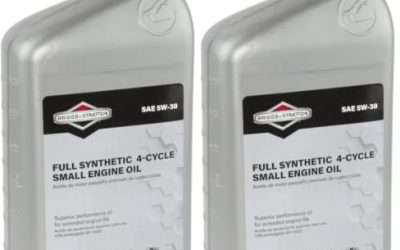
- STP Premium Small Engine 4 Cycle Oil, SAE 10W-30: small engine oil · for lawn mowers and similar engines · confirm viscosity against your manual
Cause 2: Spilled Oil Burning Off
If your mower is smoking after an oil change, oil on the muffler or cylinder fins is the likely culprit. You will see light white smoke and smell hot oil for a short time. Let the engine cool, wipe the engine down with a rag or degreaser, and check for pooled oil around the filler tube. The smoke should fade within a few minutes of running. If it continues, look for a leak at the drain plug or oil fill cap.
This also explains “lawn mower smoking after oil change” searches: the fix is usually just cleaning up the spill and confirming the level.
Cause 3: The Mower Was Tipped the Wrong Way
When you tilt a mower to clean the deck or change the blade, the side you tip it toward matters. Tipping with the air filter and carburetor facing down can let oil run into the air filter, the carburetor, and the cylinder. The next start produces thick white or blue smoke as the oil burns off.
- Remove the air filter. If the foam or paper element is saturated with oil, clean or replace it.
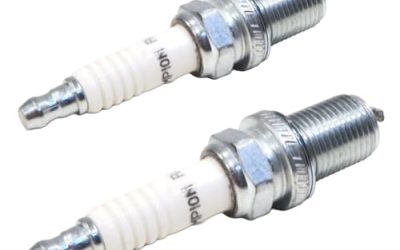
- Pull the spark plug and check it for oil. Wipe or replace it.
- With the plug out and the wire disconnected, pull the starter a few times to push excess oil out of the cylinder (stand clear of the hole).
- Reinstall the plug and filter and start the engine. Expect some smoke for a minute or two.
Next time, tip the mower with the carburetor and air filter side up, or drain the fuel first if your manual recommends it.
Cause 4: Worn Rings, Valve Seals, or a Bad Head Gasket
If the oil level is correct, the filter is clean, and the engine still smokes at all speeds, internal wear is the likely cause. These are more costly repairs, so confirm before you commit.
- Worn piston rings: oil gets past the rings and burns. Symptoms include blue-white smoke under load, oil use between changes, and loss of power. A compression check can confirm it.
- Valve seals or guides: often cause a puff of smoke on startup that fades once the engine warms. The oil that seeped past the valve burns when the engine starts.
- Head gasket (on engines that have one): a leaking head gasket may show smoke along with oil leaking from the joint, and possibly a loss of compression.
- Clogged crankcase breather: can build pressure and push oil into the intake. Check that the breather hose and valve are clear.
For a basic push mower with an engine that is worn out, the cost of a rebuild often exceeds the cost of a new mower. For a larger engine on a riding mower, a rebuild or replacement engine may be worth it. A compression test with a gauge tells you where you stand, and the maker’s manual lists the expected range for your engine.
White Smoke vs Steam: Do Not Mix Them Up
On a cool morning or while mowing wet grass, you may see vapor rising from the deck or the muffler that looks like white smoke. That is usually moisture turning to steam on a hot surface. It does not smell like oil and goes away when the surface dries. Oil smoke has a distinct, acrid smell. If you are unsure, shut the engine off and look at the muffler and the engine for oil residue.
A 10-Minute Triage Before You Spend Money
Run through this order, because each check is free and the early ones solve most cases.
- Look at the muffler and engine for fresh oil. A wet, shiny coat means spilled oil is cooking off. Wipe it down.
- Read the dipstick on level ground. Above the full mark means drain some.
- Pull the air filter. Oil-soaked or clogged means clean or replace it.
- Check the spark plug. Wet with oil points to oil in the cylinder; black and sooty points to a rich mixture.
- Think about recent events. Did you tip the mower, change oil, or leave it sitting? The answer often points straight to the cause.
- Run it again in the open. If smoke fades within a few minutes at full throttle, you probably solved it. If it returns after the engine warms or under load, move on to a compression check and consider an engine shop.
Keep a note of how much oil the mower uses between changes. A mower that loses a noticeable amount of oil between mows has a wear problem, while one that stays at the full mark but smoked once after a tip does not.
How to Prevent Smoke Problems
- Fill oil slowly in stages, checking the dipstick each time.
- Wipe any spilled oil right away and replace the cap securely.
- Tip the mower with the air filter and carburetor side up, and follow the manual.
- Keep the air filter clean to avoid a rich mixture and black smoke.
- Change oil on schedule. Old oil thins and can burn faster.
- Use fresh fuel with a stabilizer in storage.
Frequently Asked Questions
Why is my lawn mower smoking white smoke?
The most common reasons are too much oil, spilled oil on the engine, or oil that entered the intake after the mower was tipped. Continuous smoke can mean worn rings or valve seals.
Is it normal for a lawn mower to smoke after an oil change?
A little smoke is normal if oil spilled on the muffler or engine. It should clear in a few minutes. If it keeps going, check the oil level for overfilling.
Can I keep mowing if it is smoking?
Not if the smoke is heavy or growing. Shut it off, let it cool, and check oil level and the air filter. A light puff that clears is less concerning.
What does blue smoke from a mower mean?
Blue smoke is burning oil. That points to an overfilled crankcase, a tipped mower, a blocked breather, or wear in rings or seals.
How do I know if my mower has a blown head gasket?
Signs include loss of power, smoke, and oil seeping from the cylinder head joint. A compression check helps confirm it, and the manual will list engine specifications.
Is black smoke different from white smoke?
Yes. Black smoke means the engine is running rich, often because of a clogged air filter, a stuck choke, or a carburetor fault. White or blue smoke is about oil.
More from Amazon
Programs that pair well with the guide above. Offers and eligibility are set by Amazon and may change.
A free business account with business pricing and bulk-buying tools for work, shop or home office.
Create a business accountFree shipping on eligible items, Prime Video and more. Eligible new members can start with a free trial.
Start a Prime free trialAudiobooks and podcasts to listen to on the go. Eligible new members can start with a free trial.
Try Audible freeAd-free music streaming. Eligible new subscribers can start with a free trial.
Try Music Unlimited freeAs an Amazon Associate we earn from qualifying purchases.