
Key takeaways
- Target Audience: Adult
- Recommended Uses For Product: Endurance, Exercise and Fitness, Speed
- Item Length: 280 Centimeters
Before you buy a jump rope, measure the ceiling in the room where you actually plan to use it. A rope swinging overhead needs roughly your standing height plus 12 to 18 inches of clearance, which means an 8-foot ceiling works for most people under 6 feet tall but becomes a knuckle-scraping problem for anyone taller. This single constraint eliminates more jump rope purchases than price ever does, and it explains why so many ropes end up in a drawer after two sessions. If your only open floor is a basement with exposed ductwork or a bedroom with a ceiling fan, the honest answer is that jumping rope may not be your cardio.
Assuming you have the clearance, the next tradeoff is cable type. Thin coated steel cables spin fast and teach rhythm quickly, but they whip hard against bare shins and mark drywall. Thicker PVC or leather-style cords are slower and more forgiving, which suits beginners and tight rooms where the rope will occasionally clip a wall. Weighted handles add resistance to the shoulders and forearms but slow rotation, so they are a poor first purchase for someone still learning to time the jump. The six ropes below cover speed cables, boxing-grade cords, and one-pound weighted options, and each has a different clearance and floor-space profile.
Our top picks
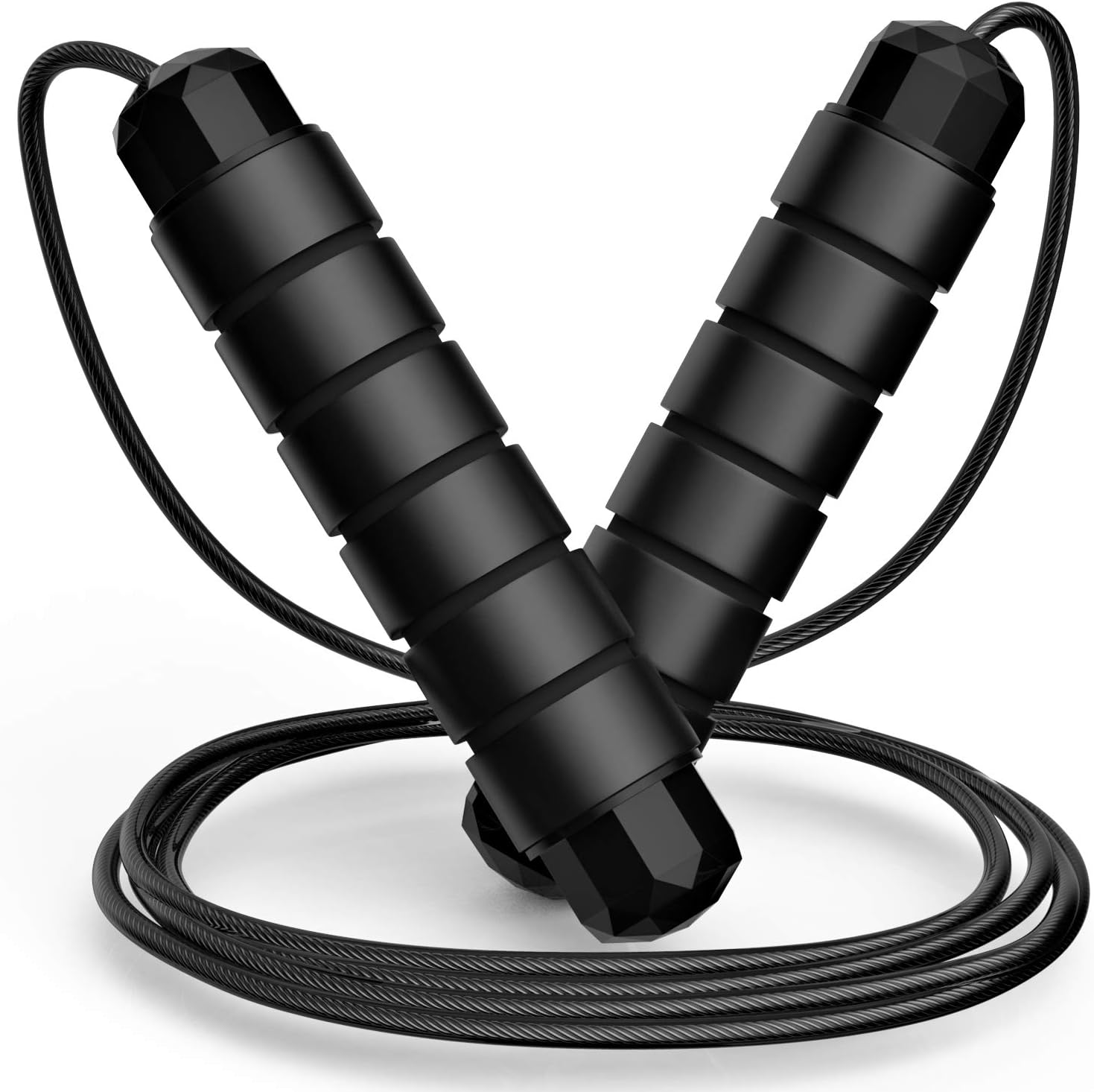 Jump Rope
- Target Audience: Adult
- Recommended Uses For Product: Endurance, Exercise and Fitness, Speed
- Item Length: 280 Centimeters


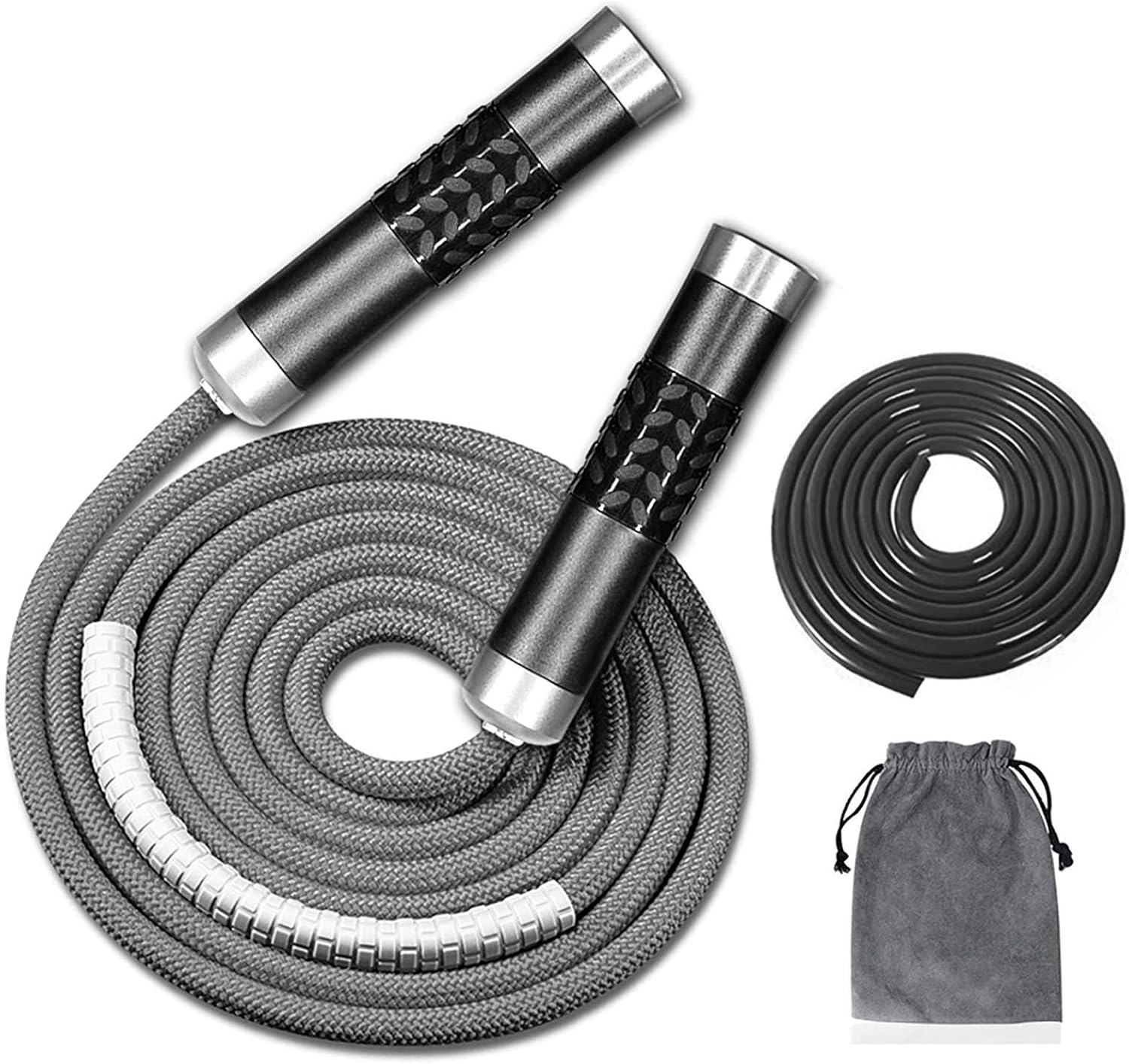 Redify Weighted Jump Rope for Workout Fitness
- Target Audience: Adult
- Item Length: 120 Inches
- Handle Diameter: 1 inches
 BOOMIBOO Jump Rope
- Target Audience: Adult, Kid
- Recommended Uses For Product: Exercise and Fitness
- Item Length: 9.2 Feet
As an Amazon Associate we earn from qualifying purchases at no extra cost to you.
Quick Comparison
| Product | Best For | Standout Feature | Watch Out For |
|---|---|---|---|
| Tangle-Free Rapid Speed Rope | Tight rooms and fast rotation | Ball-bearing swivel keeps the cable from kinking | Thin cable stings bare legs on missed reps |
| SPORTBIT Adjustable Rope | Shared household use | Tool-free length adjustment between users | Excess cable must be trimmed or it drags |
| Honor Athletics Pro Boxing Rope 3.0 | Outdoor and rough surfaces | 5.3mm cord survives concrete abrasion | Thicker cord needs more overhead swing arc |
| KUTIZE Adjustable Weighted Rope | Adding load without new gear | 1 lb handles with adjustable cable length | Weight amplifies form errors early on |
| Pre-Sized 1 lb Weighted Rope | Buyers who hate sizing | Three fixed lengths, no adjustment step | Wrong size choice cannot be corrected |
| 1 lb Heavy Weighted Rope | Conditioning circuits | Heavier cord gives a steady, slower cadence | Too slow for double-under practice |
How to Choose
- Overhead clearance: Stand where you will jump, raise one arm, and add six inches. If that number exceeds your ceiling height, choose a shorter rope length or move to a garage, patio, or basement bay with open joists.
- Floor radius: A rope needs roughly a 4-foot by 6-foot clear rectangle. Walk the space and check for lamp cords, table corners, and door swings before ordering anything.
- Cable diameter: Cables around 2mm to 2.5mm are speed-oriented; 4mm to 5.3mm cords are more durable and more forgiving. Thicker cords are the safer pick for rooms with walls nearby.
- Sizing method: Adjustable ropes handle multiple users but leave a tail of excess cable unless you trim. Pre-sized ropes remove that step but demand you get your height bracket right the first time.
- Handle weight: One-pound handles build grip and shoulder endurance but reduce rotation speed. Start unweighted if you cannot yet string together 60 unbroken single jumps.
Top Picks Reviewed
Best for Low Ceilings: Tangle-Free Rapid Speed Rope
The ball-bearing swivel is the meaningful feature here. It lets the cable rotate without transmitting twist back into the handles, so the rope holds a tight, predictable arc instead of ballooning outward. In a room with an 8-foot ceiling that predictability matters, because a wobbling cable is what clips the light fixture. Shortening it a few inches tightens the arc further.
The limitation is the cable itself. It is thin, coated steel, and when you miss a rep it lands like a switch across the calf. Wear long socks for the first two weeks, and expect to replace the cable if you use it regularly on rough concrete.
Best for Households: SPORTBIT Adjustable Rope
If two or three people of different heights share one rope, tool-free adjustment saves a genuine argument. The SPORTBIT resizes in under a minute, which is short enough that people actually do it rather than jumping with a badly sized rope.
The honest drawback is the leftover cable. Unless you commit to trimming, the excess tail sits coiled at the handle and can slap your forearm during fast sets. That is fine for a shared rope, annoying for a personal one.
Best for Rough Surfaces: Honor Athletics Pro Boxing Rope 3.0
At 5.3mm, this cord is built to be dragged across driveway concrete without shredding. If your clear space is outdoors, this is the rope that will survive the season. The extra mass also gives useful feedback about where the cable is in the arc, which helps timing.
The tradeoff is arc size. A heavier, thicker cord swings wider, so it wants more headroom than a thin speed cable. Indoors under a low ceiling it is the wrong tool.
Best Adjustable Weighted: KUTIZE Weighted Rope
One pound per handle changes the exercise from a foot-speed drill into a shoulder and forearm workout. The KUTIZE keeps the adjustable cable, so you can tune length as your technique improves rather than buying twice.
Weighted handles punish sloppy form. If your elbows drift away from your ribs, the load turns into shoulder fatigue within 90 seconds. Build a clean unweighted base first.
Best No-Fuss Sizing: Pre-Sized 1 lb Weighted Rope
Three fixed lengths in medium, large, and extra-large remove the setup step entirely. Open the box, jump. The faux-leather grips also stay usable when your hands sweat, which cheap foam does not.
There is no recovery from a sizing mistake. Measure by standing on the cable midpoint and checking that the handles reach your armpits before you order.
Best for Circuits: 1 lb Heavy Weighted Rope
A heavier cord enforces a slower, steadier cadence, which makes it well suited to 30-second intervals between strength sets. The rhythm is easy to hold when you are already tired.
Do not buy it expecting to learn double-unders. The rotation speed simply is not there, and forcing it leads to tangled reps and frustration.
Frequently Asked Questions
What ceiling height do I really need?
Add roughly 12 to 18 inches to your standing height. A 5-foot-8 jumper is comfortable under an 8-foot ceiling; a 6-foot-2 jumper is not, and should shorten the rope or find a taller space.
Will a jump rope damage a drywall corner?
A thin steel cable can scuff paint and chip a corner bead over time. Position yourself at least three feet from any wall, or use a thicker PVC cord that dissipates the impact.
Can I jump rope on carpet?
You can, but carpet absorbs rebound and wears the cable faster where it strikes. A thin exercise mat or a plywood panel over the carpet gives a better surface and protects the fibers.
How long should a first session be?
Five to eight minutes of broken intervals is plenty. Calves and Achilles tendons adapt slower than your cardiovascular system, and most first-time injuries come from a 20-minute debut session.
Final Thoughts
Jump rope is efficient cardio, but it is space-dependent in a way that treadmills and stationary bikes are not. Measure your ceiling and floor radius first, pick a cable diameter that matches the surface and the walls around you, and only add handle weight once your rhythm is reliable. Get those three decisions right and a rope costing less than a single gym month will outwork most of the equipment in your house.



Write Your Review
No reviews yet. Be the first to share your experience!