Key takeaways
- Adjustable dial distinguishes wet, dry and coarse-to-fine leaf settings.
- Manufacturer lists 55-gallon-per-minute throughput with a 13-amp motor.
- Twenty spare cutting lines are included with the SDJ616.
A leaf mulcher is worth considering when fall cleanup leaves you with more bags than your curbside service accepts or more dry leaves than your compost pile can absorb. The first decision is not the advertised shredding ratio: it is whether you want to feed gathered leaves into a stationary machine or vacuum leaves directly from paths and beds. Those approaches save different kinds of work, and buying the wrong one can make cleanup slower rather than faster.
Quick Verdict: The Sun Joe SDJ616 is our Best Overall choice for homeowners who already rake or blow leaves into piles: its manufacturer documents a 13-amp motor, a 19-inch-class hopper, adjustable feed settings, and up to 55 gallons per minute of claimed throughput. Choose the RYOBI RY40405BTL when avoiding extension cords matters more than bulk pile processing. These are editorial choices based on published documentation and outside reviews as of October 2026, not our own detailed research. Check the current price, specific package, and availability before ordering.
As an Amazon Associate we earn from qualifying purchases.
By DIY Ideas 4 Home Editorial Team
The 5 Best Leaf Mulcher Models Reviewed
We compared identifiable U.S. product models using their manufacturers’ product pages, support documents and available published prices, then consulted Bob Vila’s September 2026 leaf-mulcher field comparison and Good Housekeeping’s testing of leaf-vacuum combinations for practical context. Standalone shredders and pickup-style vacuum mulchers both qualify, but their advertised reduction ratios are manufacturer claims, not standardized head-to-head measurements. Listed U.S. prices ranged from about $99 for a corded combination tool to around $200 for a dedicated WORX shredder in October 2026; package and outlet availability still matter.
| Product | Best For | Key Spec | Listed Price (as of October 2026) | Watch Out For |
|---|---|---|---|---|
| Sun Joe SDJ616 | Best Overall: dedicated leaf-pile processing | 13 A; 12-in cutting path; claimed 16:1 reduction; 55 gal/min | $149.99 at ShopJoe | Requires gathering and hand-feeding leaves |
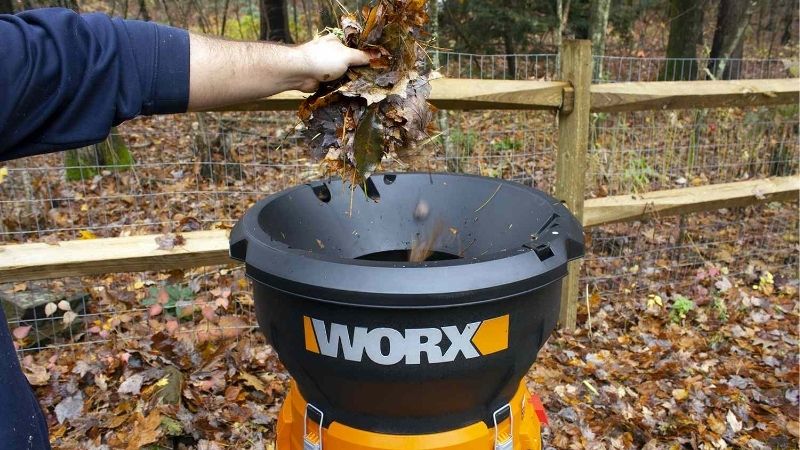
| WORX WG430 | Stationary bagging with collapsible storage | 13 A; 13-in cutting diameter; claimed 11:1; 53 gal/min | $199.99 manufacturer listed | WORX site temporarily out of stock |
| Toro UltraPlus 51621 | Walkway cleanup with a metal shred ring | 405 CFM vacuum; up to 260 MPH blower; 13 lb | $119.99 manufacturer listed | Dealer or retailer availability differs |
| BLACK+DECKER BEBL7000 | Blower and vacuum work with backpack bag | 12 A; up to 250 MPH and 400 CFM; 15.3 lb | $99.00 at Home Depot | Corded; backpack fills during heavy pickup |
| RYOBI RY40405BTL | Cordless leaf pickup near beds and fences | 40 V; metal impeller; claimed 16:1; 12.7 lb listed | $149.00 tool-only manufacturer listing | Battery and charger purchased separately |
Sun Joe SDJ616: Best Overall for Leaf Piles
Best For: Households with repeated large piles of collected leaves and room to set up a stationary processing station.
Sorting a mound of dry leaves through a broad feed opening is a different job from chasing individual leaves with a handheld vacuum. The SDJ616 serves that first job especially well: the adjustable dial is useful when the pile contains both crisp leaves and more stubborn, lightly damp material. Compared with the WORX WG430, Sun Joe also publishes more feed-control detail and a higher claimed volume-reduction ratio, making it our preferred dedicated shredder when its adjustable settings matter. Neither machine collects leaves from the lawn by itself.
ShopJoe’s official SDJ616 product page lists a 13-amp, 8,000-rpm motor, a 12-inch cutting diameter, a stated 16:1 particle reduction ratio and up to 55 gallons of leaf material per minute. Its October 2026 displayed price was $149.99. Those figures describe advertised capability under favorable material conditions; the result with leathery, rain-soaked or contaminated leaves can be much slower. The same page specifies a trimmer-line cutting system and supplies 20 replacement lines. That is a serviceable design for a homeowner willing to replace inexpensive consumables rather than maintain a metal impeller.
The official ShopJoe specification page lists 14.5 lb net product weight, a roughly 18.9-inch funnel and assembled dimensions of 30 inches wide by 30 inches deep by 48.5 inches high; a separate older manual lists 13.4 lb for another document revision, so shipping or handling weights should be checked against the current seller’s SKU. The tall assembled stance calls for a level working area and a securely fitted bag below. Follow the model’s operator’s manual for GFCI-protected outdoor power, cable selection, eye protection and clearing jams only after unplugging the equipment. Cutting-line replenishment is the predictable ownership cost; the manufacturer states a two-year warranty.
Pros:
- Adjustable dial distinguishes wet, dry and coarse-to-fine leaf settings.
- Manufacturer lists 55-gallon-per-minute throughput with a 13-amp motor.
- Twenty spare cutting lines are included with the SDJ616.
Cons:
- Won’t retrieve scattered leaves; a rake or blower is still needed.
- Feed line wears and a high hopper requires safe manual loading.
Who Should Buy It: Pick SDJ616 for processing collected leaves in quantity; choose Toro UltraPlus 51621 if leaves remain scattered along paths.
WORX WG430: Best for Compact Seasonal Storage
Best For: Homeowners who bag many dry leaves each fall but need their shredder to disassemble after the season.
The WG430 keeps the work deliberately simple: deposit a pre-gathered pile through its funnel and let the flexible lines reduce volume directly into a fitted bag. Its tool-free breakdown and bag-support arrangement make it more appealing than hauling out a rigid drum shredder for just two weekends a year. WORX positions the product for bulk leaf processing, not branch chipping or ground pickup. It can be an excellent fit for people with a leaf blower already in the shed, provided a seller actually has stock.
WORX’s WG430 product page states 13 amps at 120 volts, a 13-inch cutting diameter, a manufacturer-claimed 11:1 mulch ratio and up to 53 gallons per minute. The brand’s October 2026 listed price was $199.99, but the direct product page simultaneously marked the model temporarily out of stock. That makes stock verification a purchasing gate rather than a footnote. The brand documents an included bag-support ring and 24 cutting lines, while the trash bag itself is excluded; price comparisons should include your preferred collection bags and future replacement lines.
WORX lists the machine weight at 20 lb and calls out a 0.09-inch line diameter in its technical specifications. That is heavier to relocate than the published 14.5-lb SDJ616 figure, although the difference may be less important once a shredder remains stationary for a whole afternoon. Its collapsible design is a storage convenience, not evidence that wet leaf clumps will slide through the hopper without assistance. WORX states a three-year warranty. Keep hands and foreign objects away from the feed area, and treat stones, sticks and large chunks of wet debris as reasons to stop, sort and inspect rather than force the load.
Pros:
- Bag-support ring directs shredded material into your chosen trash bag.
- Includes 24 replacement lines for the 0.09-inch cutting system.
- Fold-down assembly reduces the space occupied between autumn cleanups.
Cons:
- Manufacturer website currently flags the WG430 as temporarily unavailable.
- Its 20-lb weight makes frequent relocation less convenient than SDJ616.
Who Should Buy It: Buy WG430 only after confirming a current seller has stock; otherwise select Sun Joe SDJ616 for a dedicated hopper shredder.
Toro UltraPlus 51621: Best for Hardscape Cleanup
Best For: Owners clearing leaves from patios, pathways and driveways who also want a finer shred while vacuuming.
Leaves trapped around steps and planting borders are inconvenient to rake into a stationary hopper. Toro’s UltraPlus takes the other route: gather debris with blower mode, then collect and shred accessible areas through its vacuum tube. The model’s Shredz-All ring gives it a concrete mulching feature beyond the simple plastic-fan machines sometimes marketed as blowers with a collection bag. That design may be more useful than a dedicated funnel if most leaves sit in narrow places, though it is less efficient for feeding an already enormous mound.
Toro’s official 51621 product page gives up to 260 MPH outlet speed, 340 CFM in blower mode and 405 CFM in vacuum mode. Its shredder reduction is described as up to 97 percent, with the maker explicitly noting that material conditions change the result. These are different units and tests, so the 97-percent claim must not be compared numerically with a different company’s 16:1 ratio as if they came from a common protocol. Toro displayed $119.99 for model 51621 as of October 2026, but the site directed buyers to dealers rather than offering direct online checkout. Good Housekeeping’s 2026 leaf-vacuum coverage singled out a Toro Ultra Electric Blower Vac for handling and mulching, although retailer model names should be matched before assuming the editorial sample was exactly this SKU.
The current Toro 51621 specification page gives a 13-lb product weight and a two-year limited warranty; older coverage sometimes reports a lighter figure for earlier configurations, making the current model sheet more relevant. Its oscillating nozzle is designed to widen the sweeping path on hard surfaces without repeatedly twisting your wrist. Vacuum conversions, a bag to empty, and maneuvering a cord around shrubs add setup time that the standalone Sun Joe does not impose. Toro’s 51621 operator’s manual warns against using the appliance on wet surfaces or exposing it to rain, an important distinction from the fact that some dry or slightly damp leaves may still enter a shredder under controlled conditions.
Pros:
- Dedicated Shredz-All ring offers fine reduction during vacuum collection.
- 405 CFM vacuum specification supports pickup-focused work along hardscapes.
- Oscillating blower nozzle widens sweeps without continuous side-to-side wrist motion.
Cons:
- Direct website checkout unavailable; nearby dealer stock must be confirmed.
- Converting and carrying a corded vacuum takes longer for huge piles.
Who Should Buy It: Select Toro 51621 for hard edges and pathways; switch to WORX WG430 when bagging gathered leaf heaps matters more.
BLACK+DECKER BEBL7000: Best for Backpack Collection
Best For: Homeowners who want to blow leaves, vacuum leftovers and carry the collection bag on their back.
Holding a handheld vacuum while a collection sack pulls at your arm can make a long leaf session frustrating. The BEBL7000 moves the bag onto your back, a distinctive convenience when leaves are spread around fences, sidewalks and foundation beds. It still requires a power outlet, but users can change between moving loose debris with air and picking up the final layer without investing in separate machines. A backpack bag is not the same thing as a full-sized backpack leaf blower: the BEBL7000 remains a corded combination vacuum and mulcher.
BLACK+DECKER’s official BEBL7000 product page describes a 12-amp corded machine with up to 250 MPH air speed, up to 400 CFM airflow, POWERBOOST control and a flexible vacuum tube. Its roll-and-clip reusable bag is designed to empty without a zipper, which may matter more during frequent small collections than an unstandardized reduction claim. Home Depot’s current U.S. listing displayed $99.00 for the BEBL7000 in October 2026; BLACK+DECKER’s own direct page does not consistently expose a list price, so the retailer number is the price anchor rather than an invented manufacturer MSRP.
The manufacturer lists a 15.3-lb product weight and physical dimensions of 18.3 inches high, 14.7 inches long and 13.2 inches wide on the official product page. The bag and tube can change the machine’s balance while collecting, so confirm the strap adjustment and walking path before using an extension cord across a crowded garden. A large bag does not eliminate the need to stop when the load becomes heavy. Empty collected debris promptly and check the intake whenever suction changes; packed leaves can obstruct air movement even when the motor keeps running. Review the manufacturer’s product manual for approved uses and replace worn bag components rather than improvising a dust-leaking patch.
Pros:
- Roll-and-clip backpack collection bag avoids a zipper when emptying.
- POWERBOOST control offers a temporary push for stubborn loose debris.
- Manufacturer lists 400 CFM airflow for this 12-amp combination machine.
Cons:
- A 15.3-lb machine plus collected leaves requires comfortable strap adjustment.
- Extension-cord routing remains an obstacle around trees and planting beds.
Who Should Buy It: Choose BEBL7000 when carrying capacity matters; the RYOBI RY40405BTL suits yards without convenient outdoor receptacles.
RYOBI RY40405BTL: Best for Cordless Leaf Pickup
Best For: Homeowners maintaining scattered planting beds or fenced corners where dragging a cord would interrupt every pass.
A disconnected backyard or garden island is a reasonable place to pay more for a compatible battery ecosystem rather than maximum stationary throughput. The RY40405BTL eliminates extension-cord routing and uses a metal impeller to mulch material it vacuums, so it addresses the leaves that a blower may leave trapped against edging. Unlike the BLACK+DECKER machine, however, this is primarily a vacuum/mulcher, not an interchangeable blower and vacuum, so owners may still need a rake or separate blower to gather a widespread layer efficiently.
RYOBI’s 40V Leaf Vacuum/Mulcher RY40405BTL product page lists a 16:1 claimed mulch ratio, a metal impeller and more than 30 minutes of claimed runtime using a 40V 4Ah battery in the stated low-speed condition. The official tool-only listing showed approximately $149.00 in October 2026, with live page snapshots varying by promotion. That price should not be compared to a complete kit: the RY40405BTL package contains the tool, while a compatible battery and charger are separate purchases. The advertised runtime is a low-setting claim, not a guarantee for continuously vacuuming heavy, damp material.
RYOBI’s specifications identify a 12.7-lb product weight and a five-year limited tool warranty. Battery mass and the bag’s filling level change practical handling as you work, and the charger requires sheltered storage away from leaf dust and moisture. The manufacturer’s documentation identifies a variable-speed control arrangement and a 40V platform shared with other compatible outdoor tools. For somebody who already owns a 40V mower or string trimmer, reusing power packs can make this a more economical decision than the sticker price alone suggests. For a first-time battery buyer, adding a genuine 4Ah pack and charger could cost more than a corded Toro 51621, so compare the actual checkout bundle.
Pros:
- Forty-volt battery operation eliminates trailing cables through garden beds.
- Metal impeller provides shredding as vacuumed leaves enter the tool.
- Five-year limited tool warranty is listed for the RY40405 family.
Cons:
- Tool-only price omits the battery and charging equipment.
- Thirty-minute-plus runtime claim applies to a 4Ah pack on low.
Who Should Buy It: Buy RY40405BTL when cordless movement is the priority; choose BLACK+DECKER BEBL7000 for combined blowing and backpack bagging.
How to Choose a Leaf Mulcher for Your Yard
A good buying decision begins with where the leaves are and where the shredded material must go. A dedicated shredder makes sense when leaves are already consolidated and your goal is reducing bags. A leaf vacuum makes sense when collection is the bottleneck. The five machines above span both jobs, and four considerations distinguish them more reliably than an impressive ratio printed on a carton.
Start With the Leaf Collection Method
If you normally rake everything into a central pile, a wide-mouth hopper is a practical investment. The Sun Joe SDJ616 has an approximately 18.9-inch funnel, while WORX gives the WG430 a 13-inch cutting diameter with bag support underneath. Neither removes leaves from a lawn; both require a separate gathering step and a position where shredded material can land directly in a bag or container. Buyers often overlook that workflow, then discover they have added another machine without removing any raking.
Conversely, a vacuum/mulcher can finish the detail work around a fence, stone border or shrub base. Toro’s 51621 is built for alternating blower and vacuum tasks, the BLACK+DECKER BEBL7000 makes collection more wearable, and RYOBI’s RY40405BTL trades cord reach for a finite battery interval. Think about your yard’s proportions: a small property with many planters may favor the vacuum approach; a large open lawn with repeatable leaf piles may favor the stationary hopper. A mower with a suitable mulching setting can also leave finely cut material in place when leaf cover is thin enough, although it is not a direct substitute for bagging with these machines.
Read Reduction Ratios as Manufacturer Claims
A label such as 16:1 means a brand describes a substantial decrease in bulk after shredding. It does not specify one universal test material, moisture content, packing pressure or particle-size distribution. Sun Joe claims 16:1, WORX claims 11:1 and RYOBI claims 16:1, while Toro expresses reduction as up to 97 percent. Those statements cannot safely be ranked as though they came from the same independent trial. Bob Vila’s September 2026 field comparison is useful context because its editors actually worked with dry and wet leaves and reported differences in clogging and handling, rather than judging machines by catalog figures alone.
A higher reduction claim also does not necessarily mean better garden mulch. Finely cut leaves may compact if kept in a thick, wet mat, whereas coarser particles can leave more air gaps in a compost mix. For composting, the useful measure is whether the output mixes well with available green material and can be turned or watered evenly. For curbside bagging, volume reduction matters more directly. Keep stones, grit, seed pods and small branches out of line-cutting machines unless the operator documentation specifically allows them, because those objects may damage lines or be thrown back from the feed opening.
Calculate Power, Reach and Physical Effort
The stationary Sun Joe and WORX machines each list a 13-amp motor, but that does not prove identical shredding speed; feed opening, cutting geometry and leaf conditions alter the result. BLACK+DECKER’s BEBL7000 uses 12 amps, and Toro provides airflow figures for separate blower and vacuum modes. Airspeed in MPH alone measures neither vacuum pickup rate nor shred fineness. Corded users should measure the actual route from a suitable outdoor outlet, including obstacles, then consult the model’s operator manual for the approved extension-cord length and wire gauge. Outdoor-rated cable and GFCI protection are important, and manufacturers may restrict use in rain or on wet surfaces.
RYOBI changes the constraint from electrical reach to battery capacity. Its more-than-30-minute published claim depends on a 4Ah pack and low speed, and hard-to-pick-up debris could require a higher setting. The WORX WG430 weighs a stated 20 lb, the Sun Joe page lists 14.5 lb, the Toro sheet lists 13 lb and BLACK+DECKER lists 15.3 lb. Those figures are starting points, not the weight you will feel once carrying a filled collection bag or battery. For users with back or shoulder limitations, consider whether the machine remains on the ground, rests on a shoulder strap or rides in a backpack before focusing on the lightest advertised number.
Check Bags, Wear Parts, Noise and Availability
Hidden recurring costs can outweigh a small difference in initial price. A line-cutting hopper requires replacement trimmer line of the correct gauge and length. The WG430 includes 24 lines and a bag ring but not a trash bag; the SDJ616 includes 20 spare lines and a system for directing output into a bag-lined container. Vacuum models trade those lines for impellers, intake tubes and collection bags that should be inspected for tears and blockages. A battery vacuum adds pack replacement over its lifetime, with cost depending on the battery platform and whether the buyer already owns compatible equipment.
Expect considerable noise and dust from shredding dry material, even when a brand describes a dust-reducing airflow design. ShopJoe reports a 110-dB value for SDJ616 without making it directly comparable to every rival’s noise measurement at the same operator position; use hearing and eye protection according to the manual rather than inferring one machine is quieter from incomparable figures. Dry leaves, dust and fungal particles are especially unpleasant for sensitive users, so consider a suitable mask and avoid processing moldy material where it could be dispersed toward people. Finally, verify model availability: the official WORX WG430 page shows temporary stock depletion, and Toro directs buyers through retailers or dealers. An attractive listed price has little value if the correct unit and bag accessories are unavailable for your fall cleanup window.
Frequently Asked Questions
Most leaf-mulcher frustrations come from feeding the wrong debris, assuming any vacuum can handle a massive pile, or misunderstanding the difference between dry leaf processing and operating electrical equipment in wet conditions. These questions address those practical limits.
Can a Leaf Mulcher Handle Wet Leaves?
Some designs offer settings for lightly damp material, but wet leaves tend to cling together and can obstruct feed openings and vacuum tubes. Sun Joe explicitly provides settings for wet and dry leaf types on the SDJ616. That does not override electrical warnings: Toro’s 51621 manual says not to operate on wet surfaces or expose the machine to rain. Follow the exact model’s instructions, allow saturated material to drain or dry when appropriate, and reduce feeding speed if a heavy mat begins to choke the intake. Unplug corded equipment or remove its power source before attempting any blockage clearance.
Are Leaf Mulchers the Same as Wood Chippers?
No. Leaf shredders are designed primarily to reduce lightweight organic material; wood chippers rely on a cutting mechanism and feed arrangement suitable for woody branches within a stated diameter. A 12-inch cutting diameter on the Sun Joe SDJ616 describes the working area of its leaf-shredding system, not permission to feed a 12-inch branch. Bob Vila’s 2026 comparison observed that a separate Sun Joe wood chipper with a narrow hopper was better matched to sticks than large volumes of leaves. Buy for the actual waste stream instead of assuming all garden shredders interchangeably process leaves and branches.
Will Shredded Leaves Help a Compost Pile?
Yes, shredded leaves can serve as a useful carbon-rich ingredient when balanced with nitrogen-rich materials and adequate moisture and airflow. Smaller pieces are easier to mix than whole curled leaves, but a soaked layer of fine material can still compact. Avoid assuming that a very high advertised shredding ratio always creates the best finished compost. If the purpose is mulching flower beds, distribute leaves in an appropriate layer that does not bury crowns or smother tender stems. Leaves treated with pesticides or contaminated by road debris may not be appropriate for edible garden beds.
Should I Buy a Cordless or Corded Leaf Mulcher?
Choose corded power when most work happens near suitable outdoor outlets and you want to process leaves without charging interruptions. Sun Joe SDJ616 and WORX WG430 are stationary options; Toro 51621 and BLACK+DECKER BEBL7000 combine collection and shredding while staying tethered. A RYOBI RY40405BTL is more useful when the leaf problem lies behind a shed or at the far edge of a fenced yard. Before buying it, price the complete 40V battery-and-charger setup rather than only the bare-tool listing, and treat advertised runtime as dependent on speed setting and debris load.
Final Thoughts
The Sun Joe SDJ616 is our Best Overall leaf mulcher for homeowners who gather leaves into substantial piles: its adjustable hopper operation, documented 13-amp motor and included cutting-line spares fit that workload without requiring a second function you may never use. For detail cleanup along paths, the Toro UltraPlus 51621 offers a more suitable blower-vacuum workflow; for cordless reach, the RYOBI RY40405BTL is the focused alternative. The WORX WG430 is worth comparing only after confirming an in-stock seller. Check the current price, availability, collection method, and included power accessories on the exact model listing before buying.