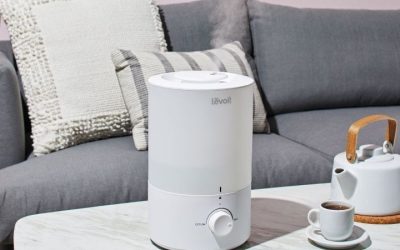
Key takeaways
- Six-liter tank supports longer low-mist operation than the Dual 200S.
- VeSync provides schedules, target humidity settings, and voice control.
- Twenty-six-watt rating keeps cool-mist electrical demand modest.
A good smart humidifier should manage moisture without forcing you to watch a tank or change settings throughout the day. The useful upgrades are a dependable automatic humidity setting, schedules that work with your routine, and controls you can still reach when the phone is elsewhere. Tank size matters, but so do refill access and cleaning: an app does not make standing water clean. These six US models show what connected controls can accomplish. The US Environmental Protection Agency’s 2022 humidifier guidance advises keeping indoor humidity at or below 50 percent, using low-mineral water in ultrasonic models, and cleaning tanks frequently.
Quick Verdict: For most shoppers, the Levoit Classic 300S is Best Overall. Its 6-liter tank, VeSync scheduling, built-in automatic control, and maker-stated 60-hour low-setting runtime make a balanced combination at a listed $79.99. Picks use October 2026 manufacturer documentation, not in-house testing; check current prices.
As an Amazon Associate we earn from qualifying purchases.
By DIY Ideas 4 Home Editorial Team
The Best Smart Humidifiers Reviewed
We selected these models using their US product pages, named model specifications, stated app functions, tank sizes, and physical dimensions. Automatic humidity control carries more weight here than decorative lights or the highest advertised room coverage. In the sampled manufacturer listings, prices range from $54.99 for compact connected options to $149.99 for a tall 10-liter model; temporary promotions can change that range. Each product below has identifiable manufacturer documentation, but advertised noise and coverage figures are not independent measurements. Our assessments rely on those published materials rather than in-house testing.
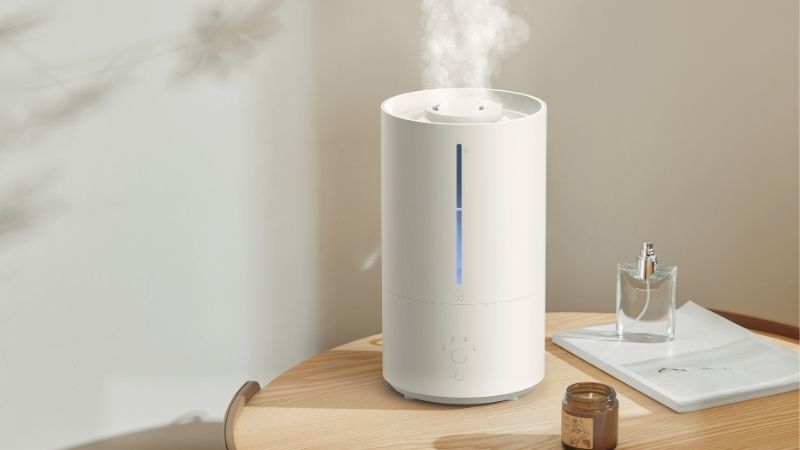
| Product | Best For | Key Spec | Listed Price (as of October 2026) | Watch Out For |
|---|---|---|---|---|
| Levoit Classic 300S | Best Overall | 6 L; up to 60 h on low; VeSync Auto Mode | $79.99 | Ultrasonic mist needs low-mineral water |
| Dreo HM311S | Best for Narrow Shelves | 4 L; app and voice; 5.51-in depth | $54.99 | Check cartridge variant when ordering |
| Levoit Dual 200S | Best for Small Bedrooms | 3 L; 107 to 290 sq ft claimed | $54.99 | Smaller tank means more frequent refills |
| GoveeLife H7145 | Best for Sensor Integration | 6 L; built-in sensor; compatible external sensors | $99.99 | Extra sensor purchased separately |
| Dreo HM713S | Best for Warm Mist Control | 6 L; 300 or 500 mL/h by mist mode | $89.99 | Warm mode draws much more power |
| Levoit OasisMist 1000S | Best for Fewer Refills | 10 L; up to 100 h on low | $149.99 | 28.7-in tower needs floor clearance |
Levoit Classic 300S: Best Overall
Best For: Households wanting one automatic, app-connected cool-mist unit for a medium-size room without paying tower prices.
The Classic 300S strikes the most useful balance between hands-off operation and a tank that is manageable at the sink. VeSync lets users build a daily schedule and adjust the humidity target, while the unit’s Auto Mode changes mist delivery as the room changes. Unlike the smaller Dual 200S, it has enough reservoir space to make repeated bedtime refilling less likely. And unlike the tall OasisMist 1000S, it can sit on a substantial dresser without occupying floor space. This is an editorial preference for routine control rather than an assertion that the sensor is laboratory-accurate.
Levoit’s Classic 300S product page lists a 6-liter reservoir, 26-watt rated power, a maker-estimated 215 to 505 square feet of coverage, and up to 60 hours on the lowest mist setting. The same page lists a regular price of $79.99 as of October 2026 and describes Alexa and Google Assistant integration through VeSync. Its stated noise ceiling is 30 dB, although the page does not supply a common test protocol across rival brands. Low-setting runtime should not be treated as an all-day promise when a dry room needs substantial output.
At 9.6 inches deep, 7.5 inches wide, and 13.4 inches tall, the machine needs an open, water-resistant placement away from walls and absorbent furniture. The wide top opening is helpful because the EPA recommends wiping and refilling portable tanks daily, even when the reservoir can last longer. Levoit’s product page names replaceable aroma and descaling accessories; those are optional expenses, not proof that routine cleaning is unnecessary. Set an independent hygrometer nearby before trusting the on-unit humidity reading as the only reference.
Pros:
- Six-liter tank supports longer low-mist operation than the Dual 200S.
- VeSync provides schedules, target humidity settings, and voice control.
- Twenty-six-watt rating keeps cool-mist electrical demand modest.
Cons:
- Built-in humidity sensing may differ from conditions across the room.
- Six-liter reservoir still needs frequent hygienic water changes.
Who Should Buy It: Choose the Classic 300S for app-managed everyday rooms; select the Dreo HM713S when warm-mist output is a nonnegotiable requirement.
Dreo HM311S: Best for Narrow Shelves
Best For: Apartment residents who need phone-based control while preserving depth on a relatively shallow shelf or tabletop.
Many compact humidifiers are roughly square, but Dreo’s HM311S uses a shallower body with a wider face. That unusual footprint is the practical reason to choose it over the Dual 200S, even though their current listed prices match. Dreo combines app commands, voice operation, a humidity-responsive Auto Mode, and a visible humidity indicator. It suits someone who wants to check a bedroom’s settings from a phone but still appreciates immediate local feedback when the app is not open.
Dreo’s Smart Humidifier 311S 4L product page identifies the HM311S as a 4-liter, 26-watt cool-mist unit with 300-square-foot maker-estimated coverage and a stated 28 dB noise level. The company lists the connected version at $54.99 in October 2026 and identifies app, touch, and voice control. The product page also shows several color and cartridge options; a buyer should verify that the selected item is indeed the Smart WiFi configuration rather than an adjacent standard unit. Automatic output is convenient but does not independently verify room humidity.
The shell measures 5.51 inches deep, 11.02 inches wide, and 10.16 inches high, and the listed weight is 3.1 pounds. That wide front edge will not work on every narrow bedside ledge even though the front-to-back depth is small. Dreo supplies a cleaning brush according to the HM311S product page, which matters because its top-fill design has multiple wet surfaces beyond the visible tank opening. An optional demineralization cartridge, when bundled with a particular variant, changes maintenance spending and should not be assumed to be included with every color.
Pros:
- Only 5.51 inches deep, useful where front clearance is limited.
- Four-liter tank offers a middle ground between two Levoit sizes.
- App, voice, and touch controls are all listed for HM311S.
Cons:
- Its 11.02-inch width can crowd a narrow nightstand.
- Cartridge-inclusive colors may differ in price or stock.
Who Should Buy It: Pick HM311S for shallow furniture; the Levoit Dual 200S is a better alternative for a compact, nearly square base.
Levoit Dual 200S: Best for Small Bedrooms
Best For: Buyers humidifying a smaller sleeping space who want humidity schedules without dedicating space to a six-liter reservoir.
The Dual 200S makes connected humidity control easier to fit into a crowded room. A smaller tank is not automatically a weakness when you fill, empty, and rinse the reservoir daily anyway. Its more contained shape is the advantage over the Dreo HM311S: it can stand on a deeper but narrower side table where the Dreo’s wide body would be awkward. VeSync still gives this entry-level model timed operation and a target-humidity setting, avoiding the false economy of buying a plain manual humidifier and later replacing it solely for automation.
According to Levoit’s Dual 200S product page, the 3-liter tank is intended for an estimated 107 to 290 square feet, with a maximum 25-hour runtime on the low mist setting. The manufacturer lists 24-watt rated power, a maximum stated sound level of 28 dB, and a $54.99 regular price as of October 2026. The US owner’s manual is linked on that product page. The automatic setting and third-party voice support are useful, but do not confuse a built-in target with a guarantee of even humidity at the opposite end of a room.
Levoit gives dimensions of 7.1 by 7.1 by 11.8 inches and a weight of 3 pounds, making this the easiest of the selected Levoit options to move for sink cleaning. Its low overall capacity can require another fill after extensive high-output operation, especially near a heating vent. The product page says essential oils may be added to the designated base chamber, not indiscriminately throughout the water tank; follow the US manual’s placement instructions. As with larger ultrasonic competitors, distilled water may be worth the added cost where hard-water residue appears.
Pros:
- Square 7.1-inch base is practical for small nightstands.
- Twenty-four-watt rating is slightly below the Classic 300S specification.
- US manual and 25-hour low-setting runtime are clearly published.
Cons:
- Three liters offers less buffer during high-output winter use.
- Manufacturer’s 290-square-foot upper estimate may not suit open plans.
Who Should Buy It: Choose Dual 200S for a small enclosed room; look at the Levoit Classic 300S if an adjacent living area also needs moisture.
GoveeLife H7145: Best for Sensor Integration
Best For: Govee smart-home users who want a built-in humidity sensor and an option for supported external room sensors.
The GoveeLife Smart Humidifier 2, model H7145, takes an interesting route to automation. It has its own humidity sensing, yet Govee also names compatible external thermo-hygrometers in the product description. That creates a more flexible room-monitoring path than a humidifier whose sensor must always remain next to its mist outlet. This distinction is worth more than extra colored lighting if your comfort problem occurs on the other side of the bedroom. The added sensor remains a separate purchase, so compare the total system cost rather than the humidifier price alone.
Govee’s H7145 product page specifies a 6-liter capacity, a maximum cool-mist output of 300 mL per hour, and a maker-stated operating area of up to 500 square feet. It lists the regular price at $99.99 as of October 2026, with occasional promotions and coupon language that should not be mistaken for a permanent price. Govee describes app and voice commands, 60-hour maximum runtime, and a built-in Auto Mode. The named compatible sensors include the H5179, H5075, and H5100, so check the supported model list rather than assuming every Govee accessory can provide humidity feedback.
Its documented body is 11.4 inches deep, 5.1 inches wide, and 13.5 inches high; the published weight is 5.7 pounds. That long, narrow footprint can work beside a desk, provided there is room to remove the tank and direct mist away from electronics. Govee’s US page describes a wide access opening and includes a brush, but these conveniences do not remove the need to dry wet surfaces. The RGB lighting is optional ambiance rather than a humidity measurement. At the regular price, the H7145 makes the most sense when compatible sensors and existing Govee controls matter to the household.
Pros:
- Built-in sensing works without first adding an external hygrometer.
- Supports named Govee sensors for a different humidity feedback location.
- Six-liter tank and 300 mL/h listed peak output suit larger rooms.
Cons:
- External monitoring equipment adds to its $99.99 regular price.
- Decorative lighting does not improve actual moisture distribution.
Who Should Buy It: Choose H7145 for supported Govee accessories; buy the Levoit Classic 300S if a standalone built-in Auto Mode is enough.
Dreo HM713S: Best for Warm Mist Control
Best For: Adults wanting remotely adjustable warm or cool mist, detailed humidity history, and room-aware output modes.
The HM713S is the specialist for people who truly want the choice between cool ultrasonic mist and an electrically heated mist mode. It is not a better basic humidity solution simply because it can warm the output, and buyers with small children should take extra care around hot components. Its more compelling smart feature is Dreo’s published 30-day humidity history and cleaning reminders, which can help identify when a thermostat schedule or winter cold front makes the room notably drier. Neither a temperature setting nor an app replaces manufacturer safety directions.
Dreo’s HM713S product page specifies 300 mL/h maximum output for cool mist and 500 mL/h for warm mist, based on its own product conditions. It also lists 26 watts in cool operation against 280 watts in warm mode, along with a 6-liter tank, 28 dB stated noise, and a $89.99 selling price as of October 2026. Its smart controls include app, touch, and voice, and the brand identifies multiple humidity modes. That difference in electrical demand matters over long heating-season use, although real consumption varies with the selected mist level and operating cycle.
The HM713S is 11.41 inches deep, 6.14 inches wide, and 13.93 inches high and weighs about 5.95 pounds according to Dreo’s product specifications. It has more front-to-back depth than the HM311S, so check that it can stand clear of curtains and the path of children or pets. The HM713S user manual and cleaning guide are listed in the box; both deserve attention because heated moisture systems have surfaces that can remain hot after shutdown. Warm mist also does not sterilize an unclean tank, so follow the same water-change discipline as with a cool-mist appliance.
Pros:
- Separate 300 and 500 mL/h output figures clarify the two modes.
- Dreo app offers up to 30 days of humidity history.
- Cleaning reminders support maintenance beyond basic tank-empty alerts.
Cons:
- Warm operation is rated at 280 watts, far above cool mode.
- Hot mist equipment needs extra care around vulnerable occupants.
Who Should Buy It: Pick HM713S for its dual-temperature mode; the GoveeLife H7145 makes more sense when external sensing matters instead.
Levoit OasisMist 1000S: Best for Fewer Refills
Best For: Owners of roomy living spaces who have floor clearance for a tall, app-connected reservoir with long low-setting operation.
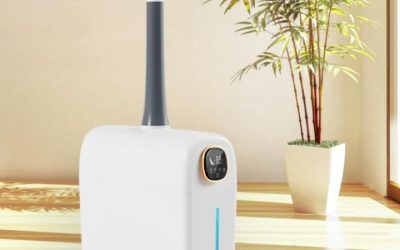
The OasisMist 1000S changes the refill experience rather than the basic purpose of a humidifier. Its tank holds substantially more water than any other option in this comparison, so it can operate for extended periods without needing a fresh top-up. The tower also adds a remote control, which gives a useful alternative when a phone is charging or a household member does not use VeSync. Its bulk is the reason not to choose it reflexively: a tall floor unit is a poor fit for a desk corner even if its listed coverage seems attractive.
Levoit’s OasisMist 1000S product page specifies a 10-liter tank, an estimated 300 to 600 square feet of room coverage, and up to 100 hours of runtime at low mist output. Rated electrical power is 27.5 watts, while noise is stated below 28 dB without a universally comparable cross-brand test setup. Manufacturer store listings place the unit at $149.99 as of October 2026. VeSync supports schedules, timers, and monitoring, and the product page also lists a physical remote in the box. The longest runtime figure is an ideal low-mist condition, not a promise for dry, drafty open plans.
The tower stands 28.7 inches high, with an 8.4 by 10-inch base and a 6.4-pound stated unit weight. A filled tank adds considerable water weight, making a stable floor placement more appropriate than a high shelf. Its included stand and cable winder help manage installation, but they do not make a damp floor acceptable. Levoit’s product page also lists a manual and cleaning brushes; large reservoirs should still be emptied and cleaned on the EPA schedule rather than left unattended for several days. A buyer should measure height clearance beneath furniture before selecting the larger model.
Pros:
- Ten-liter tank offers the greatest reservoir capacity in this shortlist.
- Maker states up to 100 hours at the lowest mist setting.
- Included remote gives access when app control is inconvenient.
Cons:
- Nearly 29-inch height restricts placement options in smaller homes.
- Large tank may tempt users to skip daily water replacement.
Who Should Buy It: Choose OasisMist 1000S for large-room floor placement; buy the Dreo HM311S when narrow tabletop depth is more valuable.
How to Choose a Smart Humidifier
The difference between a connected appliance and a genuinely helpful one is whether its automation solves a specific task. Start with the location where you want humidity measured, the quantity of water a typical day will consume, and the amount of cleaning you can sustain. Treat each brand’s quoted square footage as a conditional estimate rather than a room-size certification. A useful purchase still needs a manual interface, a stable location, and a plan for the day the Wi-Fi disconnects.
Humidity Targets and Sensor Placement
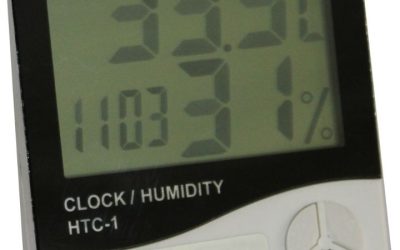
Automatic output should respond to room moisture, not simply run at a fixed number of hours. EPA’s June 2022 guidance advises avoiding relative humidity above 50 percent because excessive moisture can support unwanted biological growth. A target around 40 to 45 percent can be a practical starting point where windows remain dry, but lower settings may be needed if condensation appears in cold weather. Humidity beside the mist outlet can differ from the reading across a bedroom; use an independent hygrometer to confirm the environment occupants actually experience.
Among these candidates, Govee’s H7145 offers a notable path to compatible external sensors, while the Classic 300S, Dual 200S, HM311S, HM713S, and OasisMist 1000S all publish built-in automatic control or target-setting features. A separate sensor is not proof of accurate closed-loop operation unless the manufacturer explicitly supports that pairing. Check app compatibility, whether the control still works on the unit itself, and whether the required Wi-Fi frequency is supported before purchase.
Tank Size, Output, and Refill Workflow
The six reservoirs span 3 to 10 liters, but holding more water is useful only when you can empty, wash, and refill the device comfortably. Levoit’s Dual 200S is the portable end of this selection, with a 3-liter tank and stated 25-hour low-mist runtime. The OasisMist 1000S carries 10 liters and advertises as much as 100 hours under its lowest-output condition. Those statements are not equivalent to measured performance on a cold day with a room demanding high mist. Govee’s H7145 publishes 300 mL/h maximum cool-mist output; Dreo’s HM713S publishes both cool- and warm-output figures.
For household planning, ask how wide the filling opening is, whether you must lift the wet base, and whether the appliance fits under the faucet. Running a large tank until empty may feel convenient, yet the EPA recommends emptying, wiping, and refilling portable units daily. Factor this maintenance into your decision before paying extra for capacity. An appliance that is easy to clean can be the better long-term purchase than a larger one that is difficult to carry without spilling.
Power, Mist Temperature, and Household Safety
Most selected cool-mist machines publish rated power near 24 to 28 watts, but the Dreo HM713S lists 280 watts in warm mode. A warm option therefore deserves an energy-cost comparison if it will run frequently. The extra heat does not excuse poor water handling. Keep warm-mist equipment beyond children’s reach, unplug the unit before cleaning, and follow the product manual for cooling times and allowed cleaning agents. Place cool-mist units so their plume does not wet carpets, paintwork, furniture, plugs, or electronic equipment.
Ultrasonic devices can send minerals from tap water into the air, as explained in the EPA’s 2022 home humidifier publication. Distilled or other low-mineral water can reduce white residue, although purchased water may increase recurring cost. Clean portable tanks every third day at minimum under EPA guidance, and replace tank water daily. If a label mentions an electronic safety certification, confirm it for the exact model rather than assuming every product from that brand holds the same listing.
App Features, Compatibility, and Real Cost
A worthwhile app allows scheduling, adjusting target humidity, and reading current conditions with little friction. Dreo HM713S adds manufacturer-stated history and cleaning reminders. Govee H7145 emphasizes external-sensor integration. The two Levoit bedroom models share VeSync controls but differ in reservoir footprint. Decide which of those functions you would actually use each week; a colored light or a phone notification has little value if you already operate the unit with two local touches.
The official prices used here sit between $54.99 and $149.99, and a separate Govee sensor or demineralization accessories can raise spending. The water requirement may be a larger cost than the electronics for homes with mineral-heavy tap supplies. Ask whether app features need an account, if existing smart-home speakers are supported, and whether basic mist and shutoff functions remain usable offline. Finally, compare the exact product variant in the retailer’s cart with the model specified in the manufacturer’s manual, since visually similar standard and connected devices can appear on the same product page.
Frequently Asked Questions
These questions address the operating details that are easiest to overlook when comparing specifications, especially what an app can actually accomplish when room conditions or connectivity change.
Will a smart humidifier work if Wi-Fi goes down?
Usually, its local controls continue operating, but app scheduling, remote commands, and voice features may be limited. The exact behavior is model-dependent, so inspect the owner’s manual before relying on remote activation as your only method. A connected humidifier should be purchased for convenience rather than as equipment that must maintain a particular humidity level under every network condition.
Do smart humidifiers know the humidity everywhere in a room?
No. A sensor in the machine reads air at or near its location, and the rest of a room can have different humidity. Govee’s H7145 supports specified external thermo-hygrometers, which may help place the reading elsewhere, but that feature still needs correct setup. A stand-alone hygrometer placed away from the mist stream offers a useful comparison when a machine’s reported number seems inconsistent with condensation or dryness.
Can I leave an automatic humidifier running all night?
Only if the specific appliance manual permits overnight operation, the unit is stable, and the surrounding area remains dry. Automatic shutoff and a built-in humidity target reduce some practical concerns but do not replace supervision appropriate to the household. If moisture appears on windows or nearby furniture, reduce the output or switch it off. Follow EPA guidance to keep relative humidity at or below 50 percent.
Does app monitoring replace daily tank cleaning?
No. A connected app can remind you to refill or clean, but it cannot remove microorganisms, dissolved minerals, or scale. The EPA’s 2022 recommendations call for emptying, wiping, and refilling a portable tank every day, with a more thorough cleaning every third day. After disinfecting, rinse as directed so cleaning chemicals are not dispersed into the room. If respiratory symptoms appear to be associated with humidifier use, stop using the unit and discuss symptoms with a healthcare professional.
Final Thoughts
Before purchasing, measure the surface where the humidifier will sit and check whether your home needs automation at the machine or at a separate monitoring point. The smart humidifier decision is clearest for most rooms with the Levoit Classic 300S: it combines a 6-liter tank, scheduled VeSync control, and a sensible $79.99 listed price without requiring extra sensors. Choose GoveeLife H7145 instead only if supported sensor integration is the reason for upgrading, or the OasisMist 1000S if a stable floor location and greater reservoir capacity are worth the price. Check live pricing and read the exact US manual before ordering.