Key takeaways
- Measure the final location, doorway, hallway, and stair turns.
- Check whether the floor is level and strong enough for the assembled cabin.
- Keep ventilation space around the unit as specified by the manual.
- Plan where towels, water, and cleaning supplies will be stored.
What's inside
Choosing the best infrared sauna for home use is less about chasing the highest temperature and more about matching the cabin to your room, routine, and budget. A well-chosen unit should be comfortable to enter, straightforward to assemble, easy to clean, and suitable for the electrical circuit where it will live.
This guide takes a hands-on DIY maker’s view of the decision. You’ll learn how to compare sauna types, measure for installation, judge heating and light features, and decide whether a wooden cabin or portable tent makes more sense for your space.
As an Amazon Associate we earn from qualifying purchases.




🛒 Best Price Today on Amazon
Prime members get fast, free shipping on everything above, plus member-only deals. New members get a 30-day free trial — cancel anytime.
Start With the Sauna Format
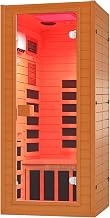
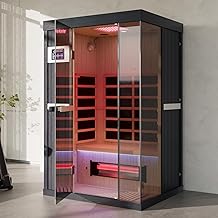
Most home infrared saunas fall into two groups: rigid wooden cabins and portable fabric tents. Wooden cabins create a more furniture-like experience. They look finished, hold their shape, and usually offer a bench, integrated heaters, glass, lighting, and speakers. The OUTEXER Far Infrared Sauna, for example, is a compact Canadian hemlock cabin with a tempered-glass door and 120V operation. It is a sensible format for a dedicated corner.
Portable tents trade appearance for flexibility. The Infrared Sauna Tent with 3L Steamer includes a folding chair, remote control, timer, and multiple heat levels, while the Infrared Sauna Box adds 660nm and 850nm light therapy lamps to a steam-tent layout. These are easier to store and often cost less, but they need drying time after use and do not provide the same solid, built-in feel as a cabin.
Measure the Room Before Buying
Do not rely on the advertised footprint alone. Leave room to carry panels through doorways, open the sauna door fully, sit down without brushing a wall, and reach the power outlet. Check ceiling height as well: the 1–2 Person Infrared Sauna measures approximately 40 by 36 by 73 inches, while the OUTEXER model is shorter at roughly 61.6 inches.
- Measure the final location, doorway, hallway, and stair turns.
- Check whether the floor is level and strong enough for the assembled cabin.
- Keep ventilation space around the unit as specified by the manual.
- Plan where towels, water, and cleaning supplies will be stored.
A sauna is more likely to become part of your routine if you can enter it without moving furniture or wrestling with a storage pile.
Compare Infrared Heating Systems
Far-infrared heaters are common in home cabins and are designed to provide radiant warmth at relatively modest air temperatures. Full-spectrum models add near- and mid-infrared elements, although terminology and heater layouts vary by manufacturer. Treat “full spectrum” as a specification to investigate rather than an automatic quality guarantee.
Look for a clear heater count, heater placement, temperature range, warm-up information, warranty, and replacement-part policy. The 3 Person Ceramic Infrared Sauna combines far- and near-infrared heating with a granite-look backdrop and red-light therapy. The 2-Person Full Spectrum Infrared Sauna lists 1,990W operation and a 12-by-12-inch red-light panel. Those details are useful starting points, but they should be checked against the current manual and electrical requirements.
For a first-time buyer, even heating across the back, sides, and lower body is generally more important than a long feature list. Sit in the intended position, if possible, and consider whether the bench height and heater locations will feel comfortable.
Understand Power, EMF, and Build Quality
Electrical planning is a practical safety issue. Many compact saunas use a standard 120V supply, but wattage still matters. A 1,200W unit and a nearly 2,000W unit place different demands on a circuit. Avoid sharing a heavily loaded circuit with portable heaters, hair dryers, or other high-draw appliances. Use the supplied plug and follow the manufacturer’s instructions; do not use an unsuitable extension cord or modify the wiring.
“Low EMF” is frequently used in product descriptions, but test methods and reporting can differ. If this matters to you, look for measurements that state the distance, operating conditions, and units used. Also inspect the physical construction: tight-fitting panels, smooth bench edges, secure door hardware, tempered glass, accessible controls, and a finish that can be wiped without trapping moisture.
Choose Features You Will Actually Use
Red-light therapy, chromotherapy, Bluetooth audio, and interior reading lights can make a sauna more inviting, but they should not distract from the fundamentals. A reliable timer, readable control panel, comfortable seating, and simple cleanup are features you may appreciate every session.
For couples or family use, the 3 Person Ceramic Sauna offers extra interior room. For a smaller footprint, the 1–2 Person model adds Bluetooth, radio, and seven-color lighting. Remember that integrated electronics add more components that could eventually need service. Prioritize the heater warranty and cabin construction before choosing entertainment features.
Tips
- Assemble a wooden cabin with a second person; panels can be awkward even when they are not especially heavy.
- Run the sauna briefly with the door open before the first regular session to clear manufacturing odors, following the manual.
- Use a towel on the bench and wipe condensation or perspiration from the interior after every use.
- Start with short, moderate sessions, drink water, and stop if you feel dizzy, nauseated, or unwell.
Frequently Asked Questions
Are infrared saunas as hot as traditional saunas?
Usually not. Infrared cabins warm the body directly, so they commonly operate at lower air temperatures than traditional steam or wood-fired saunas. Comfort varies by person, heater design, room temperature, and session length.
Is a sauna tent a good alternative to a wooden cabin?
It can be. A tent is practical for renters, small rooms, or occasional use and can be folded away. It will feel less spacious and furniture-like, and steam models require careful drying to prevent lingering moisture and odors.
Do I need a dedicated electrical circuit?
Not always, but you must follow the specific electrical instructions for the model. Check the voltage, wattage, plug type, and circuit load. Have a qualified electrician assess the setup if you are unsure.
Can anyone use an infrared sauna?
No. People who are pregnant, have certain medical conditions, take heat-sensitive medications, or have concerns about dehydration should ask a healthcare professional first. Never use a sauna while intoxicated, and supervise anyone who may have difficulty responding to heat.
Conclusion
The best infrared sauna is the one that fits your room, circuit, body size, and actual habits. Choose a wooden cabin such as the OUTEXER or a larger 3 Person Ceramic Sauna when you want a permanent, furniture-style installation. Choose a tent or sauna box when portability matters most. Whichever route you take, verify measurements, electrical details, warranty coverage, and cleaning requirements before placing the order.