Key takeaways
- Side sleepers: medium to medium-firm, so the shoulder and hip sink enough to keep the spine straight.
- Back sleepers: medium-firm, with enough support to stop the lower back from dipping into the mattress.
- Stomach sleepers: firm, because any sinkage at the pelvis hyperextends the lumbar spine.
- Combination sleepers: medium-firm hybrids, which are easier to roll across than deep foam.
What's inside
Unboxing a mattress is one of the few furniture projects that goes from cardboard tube to finished bed in under an hour, and it rewards the same habits any good build does: measure first, read the spec sheet, then let the material do its thing. The compressed-roll format exists because foam and pocket springs survive vacuum compression far better than an innerspring ever could, which is why the category has quietly taken over the mid-price bedroom. The tradeoff is that you’re buying from a photograph and a spec list instead of lying down on a showroom floor.
This guide walks through how to read those specs like a builder reads a materials list. You’ll learn how foam and hybrid constructions actually behave under load, why firmness is really a sleep-position question, what makes a cooling claim credible, and the frame and slat details that decide whether your new mattress performs as designed or sags in the middle by spring. A short set of solid picks below covers the common cases, and the sections after explain how to choose between them.
Our Recommended Picks
As an Amazon Associate we earn from qualifying purchases.


Foam vs. Hybrid: Match the Build to the Load
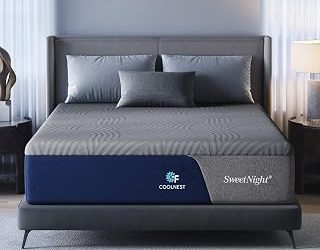
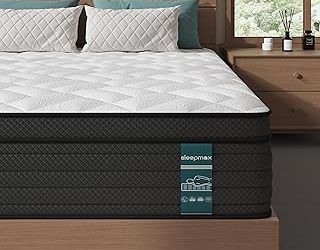
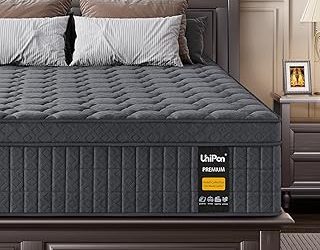
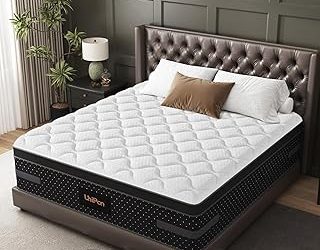
All-foam mattresses use a support core of dense polyfoam with softer comfort layers stacked on top. They isolate motion almost perfectly and hug the body, which suits side sleepers and anyone sharing a bed with a restless partner. Hybrids swap that core for individually pocketed coils, adding real pushback near the edges and more airflow through the middle of the bed. If you weigh over roughly 200 pounds, sleep hot, or sit on the edge of the mattress to put on shoes, coils earn their keep. The Sleepmax 14-Inch Hybrid is the clearest example here, while the 12-inch hybrid pocket-spring queens hit a middle ground with foam comfort layers over springs for lumbar support and motion isolation.
Firmness Follows Your Sleep Position
Manufacturers rate firmness on a loose 1–10 scale, and “medium firm” typically lands at 6 to 7. Use your dominant sleep position as the deciding factor rather than a general preference for soft or hard:
- Side sleepers: medium to medium-firm, so the shoulder and hip sink enough to keep the spine straight.
- Back sleepers: medium-firm, with enough support to stop the lower back from dipping into the mattress.
- Stomach sleepers: firm, because any sinkage at the pelvis hyperextends the lumbar spine.
- Combination sleepers: medium-firm hybrids, which are easier to roll across than deep foam.
How Cooling Claims Hold Up
Memory foam traps heat because it’s a closed, dense material that molds around you and cuts airflow. Gel infusions and green tea additives, like those in the EGOHOME 10-Inch Green Tea Gel and the Novilla 12-Inch Gel Memory Foam, add thermal mass that absorbs warmth for the first part of the night. That’s real but finite. Structural cooling does more over eight hours: open-cell or convoluted foam layers, coil units that let air move, and a breathable knit cover. The FATHOM 12-Inch Medium pairs gel foam with a removable cover, which helps with both airflow and washing. Expect meaningful improvement over old-style foam, not refrigeration.
Your Frame Is Part of the Build
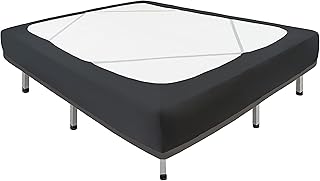
This is the step most people skip, and it’s where warranties quietly die. Foam and hybrid mattresses need continuous, evenly distributed support. Slats should sit no more than 3 inches apart, and a queen or larger needs a center support leg running to the floor. Box springs are the wrong tool here: they flex under foam and create dips. If your existing platform has wider gaps, a sheet of quarter-inch plywood or a bunkie board is a fifteen-minute fix that costs almost nothing. Check the manufacturer’s spacing requirement before you unbox, since installing on a non-compliant base often voids coverage.
Certifications, Fire Barriers, and Trial Periods
CertiPUR-US certification means the foam was tested for VOC emissions, heavy metals, and prohibited flame retardants. Every pick above carries it. Separately, look for explicit “fiberglass-free” language: fiberglass is a legal, effective fire barrier, but it becomes a serious cleanup problem if the cover ever tears. Then check the trial window. Foam takes two to four weeks to fully break in and your body needs the same to adapt, so anything under 100 nights is thin. Longer trials, like the 365-night window on the Sleepmax, give you a full seasonal cycle to judge cooling honestly.
Tips
- Carry the box to the bedroom before cutting it open. A queen roll weighs 60 to 90 pounds compressed and becomes almost impossible to steer once it expands.
- Use a box cutter with the blade barely extended, or better, scissors on the plastic. Slicing the cover is the most common unboxing casualty.
- Give it 24 to 72 hours in a ventilated room before dressing the bed. Off-gassing smell is normal and fades; airflow speeds it up.
- Rotate the mattress head to foot every three to six months. Never flip a layered foam or hybrid mattress, since the support core belongs on the bottom.
Frequently Asked Questions
How thick should a mattress in a box be?
Ten inches works for lighter sleepers and guest rooms. Twelve inches is the practical sweet spot for most adults, giving enough comfort layer above the support core. Fourteen inches suits heavier sleepers or anyone who wants a taller, more traditional bed profile.
Can I sleep on it the first night?
Usually yes, though it may feel firmer than intended until the foam finishes expanding. If the room is cold, warm it up first, since foam decompresses faster at room temperature.
Does a mattress in a box last as long as a traditional one?
A well-built foam or hybrid model typically lasts seven to ten years, comparable to a mid-range innerspring. Foam density and proper base support matter more to lifespan than the shipping method.
What about the old mattress?
Many municipalities run bulk pickup or recycling drop-offs, and foam cores can be reused as workshop padding or garage matting. Arrange disposal before the new one arrives, since you can’t leave a queen-size mattress standing in a hallway for long.
Conclusion
Pick the construction that matches your weight and sleeping position, verify the certifications and fire-barrier language, then make sure your frame supports the mattress the way its designer intended. Get those three right and any of the picks above will serve you well for years. Get the base wrong and even a great mattress will disappoint within a season.