Key takeaways
- Both fixed and plunge bases are included in the kit.
- One-half-inch collet supports many larger woodworking router-bit shanks.
- Eight-thousand-to-twenty-five-thousand-RPM range helps match cutter diameter.
Router shopping goes wrong when buyers pick by advertised horsepower and discover later that the base or collet will not suit their projects. A wood router used to break a small edge has a different workload from a machine cutting deep dados or running in a router table. This comparison covers a full-size combo kit, three corded compact alternatives, and one cordless compact option. It emphasizes the collet, speed adjustment, base stability, and whether the price covers everything needed to cut safely.
Quick Verdict: The Bosch 1617EVSPK is the best overall choice for a woodworking shop: it includes fixed and plunge bases, accepts both 1/4-inch and 1/2-inch shanks, and uses a 12-amp motor. Its 10-pound published weight makes trim work less convenient than a compact router. This is an editorial pick based on manufacturer documentation as of October 2026, not in-house testing; compare the exact kit listing before purchasing.
As an Amazon Associate we earn from qualifying purchases.
By DIY Ideas 4 Home Editorial Team
5 Best Wood Router Models Reviewed
We compared specific US-sold routers using Bosch, Makita, DEWALT, RIDGID, and RYOBI product documentation and retailer listings. These five models were listed at approximately $99 to $230 in October 2026, before bits and accessories. Some include one fixed base; the Bosch package includes both fixed and plunge bases. The advertised maximum horsepower of different manufacturers is not a standardized continuous output comparison, so the purchasing decision rests on documented collet capacity, base system, speed adjustment, and the intended cut.
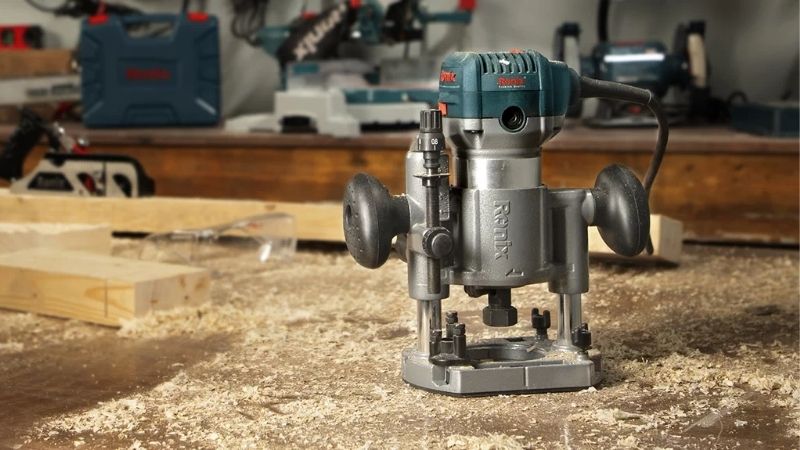
| Product | Best For | Key Spec | Listed Price (as of October 2026) | Watch Out For |
|---|---|---|---|---|
| Bosch 1617EVSPK | Best Overall | 12 A; 8,000-25,000 RPM; 1/2-in collet | $230.15 | At 10 lb, a heavier handheld trim option |
| Makita RT0701C | Best for Trim and Edges | 6.5 A; 10,000-30,000 RPM; 1/4-in collet | $159.00 | Plunge base costs extra in this configuration |
| DEWALT DWP611 | Best for Cut Visibility | 7 A; up to 27,000 RPM; 1/4-in collet | $169.00 | Single fixed base; plunge kit sold separately |
| RIDGID R24012 | Best for Included Guides | 5.5 A; up to 30,000 RPM; 1/4-in collet | $139.00 | Lower-current motor than DEWALT DWP611 |
| RYOBI PCL424B | Best for Cordless Trimming | 18V ONE+; up to 30,000 RPM; 1/4-in collet | $99.00 | Battery and charger are extra on tool-only listing |
Bosch 1617EVSPK: Best Overall
Best For: Workshop owners who need both a plunge mechanism and a fixed base for varied cabinetry and joinery.
The Bosch combo takes first place because it solves a versatility problem without requiring a second router immediately. Its fixed base can handle edge profiles and an appropriate table setup, while the plunge base makes stopped grooves and mortises more controlled. Makita RT0701C is handier for narrow trim, but Bosch can accept larger half-inch-shank bits and offers more base choices in the box.
Bosch’s 1617EVSPK product page lists a 12-amp motor, no-load range of 8,000 to 25,000 RPM, and both 1/4-inch and 1/2-inch collets. The manufacturer documents a 2-1/4-inch plunge travel and the RA1161 fixed base with through-table adjustment capability. Home Depot listed the specific combo kit for $230.15 in October 2026. The price includes the two bases and case, not a router table, bits, or dust hood; those require their own budget.
The published 10-pound weight and 11.625-inch height explain why this is not the easiest machine for a tiny door edge. Its fixed-base diameter is six inches, and the plunge assembly takes still more room around clamps. Bosch’s documentation names the compatible RA1171 and RA1181 router-table systems, but mounting depends on the actual plate and hardware. The dust-sealed switch helps protect one vulnerable component, yet proper chip extraction, correct bit installation, and two-handed control remain essential.
Pros:
- Both fixed and plunge bases are included in the kit.
- One-half-inch collet supports many larger woodworking router-bit shanks.
- Eight-thousand-to-twenty-five-thousand-RPM range helps match cutter diameter.
Cons:
- Ten-pound published weight is cumbersome for small freehand edge passes.
- Dust hoods and router table are separate purchases.
Who Should Buy It: Choose this as a primary workshop router; use Makita RT0701C instead for lighter handheld edge work.
Makita RT0701C: Best for Trim and Edges
Best For: Cabinet installers and hobbyists shaping narrow edges with a light 1/4-inch-shank machine.
Makita’s compact router rewards people whose hands spend more time above a cabinet edge than below a routing table. Its rack-and-pinion depth control is particularly useful for a consistent chamfer or hinge recess. Compared with Bosch, the important trade is not simply power; RT0701C is a fixed-base trim machine in this package, with smaller collet capacity and fewer included configurations.
Makita’s RT0701C product page and instruction manual state 6.5 amps, variable 10,000-to-30,000 RPM, soft start, and electronic speed regulation. The unit accepts 1/4-inch-shank bits and includes a fixed trimmer base, straight guide, and wrenches. Home Depot listed it at $159.00 in October 2026. The RT0701CX7 is a separate kit with a plunge base, so do not infer that every photo showing a Makita plunge router represents the RT0701C package.
At 3.9 pounds and 7-7/8 inches in overall length according to Makita, this model is easier to move around a small shelf than Bosch’s full-size combo. The housing is aluminum, with a flat top meant to simplify bit changes after the tool is disconnected. The fixed base must remain fully supported, particularly as the cutter approaches an end grain corner. Makita’s product documentation lists a one-year limited warranty and compatible optional bases; factor in extra attachments if future joinery needs will go beyond edging.
Pros:
- Three-point-nine-pound body is practical for handheld trim work.
- Ten-thousand-to-thirty-thousand-RPM dial offers broad compact-router adjustment.
- Rack-and-pinion depth system allows controlled small changes.
Cons:
- Standard RT0701C box lacks the plunge base.
- One-quarter-inch collet excludes half-inch-shank cutters.
Who Should Buy It: Buy this for edge profiles and hinge recesses; select Bosch 1617EVSPK for larger-shank bits or plunge work.
DEWALT DWP611: Best for Cut Visibility
Best For: Woodworkers following a small marked route who want a lit cutter area and straightforward depth adjustment.
DEWALT’s draw is sightline management. Dual LEDs and a clear fixed base make it easier to position a cut at a penciled edge or template, a tangible difference beside RIDGID’s more basic compact package. It is still a high-speed cutter that needs proper guidance; a light does not substitute for a fence, and looking through the base requires keeping fingers away from the bit.
DEWALT’s DWP611 product page specifies a seven-amp motor, soft start, electronic feedback, and up to 27,000 RPM. The fixed-base depth adjustment is described in 1/64-inch increments, and the standard base offers up to 1.5 inches of travel. Home Depot displayed $169.00 for DWP611 in October 2026, with the fixed base and wrench rather than the DWP611PK plunge combo. Confirm the exact code because identical-looking motors can be sold in several base configurations.
Home Depot’s exact-model listing states an eight-foot cord; a compact motor with a documented 4.6-pound weight is reported in a DEWALT DWP611 tooling overview. That gives a buyer concrete reach and handling information when an outlet is beyond a workbench. The 1/4-inch collet suits smaller bits and trim jobs, but the base should be firmly supported through the full cut. DEWALT lists a three-year limited warranty with separate free-service terms; bits and guides are additional expenses.
Pros:
- Twin LEDs illuminate the cutter through a clear fixed sub-base.
- Documented eight-foot cord offers bench-side reach without batteries.
- Soft start reduces the abrupt launch of the seven-amp motor.
Cons:
- DWP611 includes no plunge base despite similar combo-kit photos.
- One-quarter-inch collet limits large-diameter bit choices.
Who Should Buy It: Choose DWP611 for visibility-critical edge cuts; choose RIDGID R24012 when a lower listed purchase price matters more.
RIDGID R24012: Best for Included Guides
Best For: DIY woodworkers seeking a compact corded router bundled with useful starter edge-guiding accessories.
RIDGID R24012 is attractive as a ready-to-use trim package because its assortment of guides and bases reduces the number of immediate accessory purchases. Its small motor is a sensible fit for laminate edges and modest profiles. The included trim bit and edge guide do not make it an all-purpose joinery machine; Bosch’s plunge depth and half-inch-shank support remain more appropriate for ambitious cabinet work.
RIDGID’s R24012 product page lists 5.5 amps, variable speed up to 30,000 RPM, a soft-start mechanism, and a micro-adjustment depth dial. The package specifies a 1/4-inch collet, round and square bases, an edge guide, guide bars, and a contractor bag. Home Depot listed R24012 at $139.00 as of October 2026. Because the contents are already useful for straight controlled edging, the comparison should be based on the full box instead of motor-only prices.
The manufacturer-affiliated RIDGID specification identifies a 3.8-pound tool and an eight-foot cord, which makes bench layout less demanding than an extension-heavy shop. Warranty marketing mentions a lifetime service agreement, but registration and qualifying rules determine who receives that benefit. Inspect the supplied bit before use, choose the correct collet insertion depth, and never make a plunge cut with a fixed base as though it were a plunge mechanism.
Pros:
- Included square base and edge guide support controlled trimming.
- Three-point-eight-pound body is suitable for small handheld jobs.
- Eight-foot cord reaches many standard workshop benches.
Cons:
- Five-point-five-amp motor offers less headroom for harder cuts.
- Lifetime service coverage depends on eligibility and registration.
Who Should Buy It: Buy R24012 when you want guides included; compare DEWALT DWP611 if lit cutter visibility matters more.
RYOBI PCL424B: Best for Cordless Trimming
Best For: Existing 18V ONE+ battery owners working away from outlets on light edge-finishing tasks.
The RYOBI is the only model here intended to travel without a cord, making it useful for rounding an installed shelf or working on a jobsite with no accessible outlet. Its appeal depends on already owning an 18V ONE+ battery. Without that battery, the apparent $99 price advantage can evaporate once the power source and charger are added.
RYOBI’s PCL424B product page describes a compact variable-speed 18V ONE+ router capable of up to 30,000 RPM. The company lists the bare tool at $99.00 in October 2026, while Home Depot sells separate battery-and-charger configurations. The tool uses a fixed base and 1/4-inch collet, so it should not be treated as a cordless counterpart to Bosch’s two-base package. Runtime is workload-dependent and no universal full-load endurance value is claimed here.
An independent PCL424B equipment profile measures the bare tool at about 2.6 pounds and approximately 5.5 by 4 by 7.25 inches; battery choice increases finished weight and may change balance. The same profile identifies an adjustable 20,000-to-30,000-RPM range, while the current RYOBI page confirms the upper speed. Remove the battery for bit changes and use a guide for accurate cuts. A compact cordless router is convenient for quick passes, but prolonged heavy routing is usually easier with a wired machine.
Pros:
- Eighteen-volt ONE+ compatibility rewards existing RYOBI battery owners.
- Variable speed reaches up to 30,000 RPM on suitable bits.
- Cord-free setup helps when trimming installed shelves away from outlets.
Cons:
- Tool-only $99 package omits both battery and charger.
- Fixed-base, one-quarter-inch-collet format restricts larger joinery work.
Who Should Buy It: Choose this for mobile edge work with existing batteries; take Makita RT0701C for longer corded sessions.
How to Choose a Wood Router
A router removes material with a very fast rotating cutter. Secure workpieces with clamps, use eye and hearing protection, follow the bit maker’s recommended speed and feed direction, and wait for the cutter to stop before setting the machine down. Unplug a corded model or remove its battery when installing a bit. Avoid freehand cuts without a fence, bearing, template, or other appropriate guide; shallow passes and a well-supported base matter more than an impressive motor label.
Choose a collet for the bits you own
A router with a 1/2-inch collet can accept many longer or larger-profile cutters whose shanks are too large for a 1/4-inch-only machine. Bosch 1617EVSPK ships with both relevant collets, while the compact Makita, DEWALT, RIDGID, and RYOBI entries use 1/4-inch shanks. Never force an ill-fitting bit into the wrong collet.
Begin with the bits you actually intend to buy: a small roundover can work beautifully in a trim router, but broad raised-panel work is another category. Check bit diameter, shank, recommended RPM, and base opening together rather than assuming that a more powerful motor makes any bit safe.
Match fixed and plunge bases to cut type
A fixed base provides consistent bit exposure for edge profiles and guided grooves beginning at an open edge. A plunge base allows the cutter to enter the work under controlled movement, helpful for stopped cuts. Bosch includes both; Makita RT0701C and DEWALT DWP611 are sold here in fixed-base configurations, even though separate combo packages exist.
Do not try to duplicate plunge movement by tilting a running fixed-base router into a board. If your first project is a stopped dado, a plunge kit may cost less than adding a second compatible base later. If you only soften shelf edges, a lighter fixed-base trim tool may be more enjoyable.
Set speed for bit diameter and workload
Bosch lists 8,000 to 25,000 RPM, Makita 10,000 to 30,000, and DEWALT a maximum of 27,000. These are unloaded settings, and the right speed depends on cutter diameter, bit maker requirements, wood characteristics, and feed rate. Larger bits often require slower operation than small edge bits.
Advertised horsepower is commonly a peak marketing number, not a directly comparable continuous cutting figure across brands. Avoid interpreting 1.25 versus 1.5 horsepower labels as a laboratory ranking. Take shallow passes, keep cutters sharp, and stop if burning or chatter shows your setup is wrong.
Budget for guidance and chip removal
A router needs support and a repeatable path. RIDGID includes an edge guide and alternate square base; the Bosch kit brings two bases but not a router table. Makita includes a straight guide, while cordless RYOBI charges separately for its battery. These accessories can change what a supposedly inexpensive machine costs at the bench.
Chip extraction, hearing protection, suitable eye protection, and secure clamps are operating requirements rather than optional luxuries. Check dust-hood compatibility by exact base model, especially for plunge and table use. With hardwood, plan for test cuts on scrap before putting an expensive workpiece against a new cutter.
Frequently Asked Questions
Router ownership brings compatibility questions that product photos do not answer. Check the tool’s manual and the bit manufacturer’s warnings whenever those sources differ from a general recommendation.
Can a compact router use a half-inch-shank bit?
No, not in the 1/4-inch-only compact routers selected here. The collet must match the cutter shank exactly. Do not improvise adapters or clamp an oversized shank; use a router designed to accept a 1/2-inch collet, such as Bosch 1617EVSPK, when the cutter calls for it.
Is a plunge router necessary for rounded edges?
No. A properly guided fixed-base router normally handles ordinary roundovers and chamfers well. A plunge mechanism becomes much more valuable when the cut must begin away from an edge or needs controlled vertical entry. Buy the base arrangement for the project rather than for the more impressive photograph.
Should I use the same RPM for every router bit?
No. Follow the cutter manufacturer’s published maximum and recommended speed range, especially with larger diameters. A variable-speed router gives you room to make suitable adjustments, but feed direction, cutter sharpness, and the depth of each pass still determine cut quality and safety.
Can I mount any handheld router under a table?
No. Mounting depends on the motor, fixed base, mounting plate, switch access, bit height adjustment, and guard arrangement. Bosch lists compatible router-table systems for its fixed base. Before ordering a plate for another model, check both the router and table manuals and do not assume that matching a mounting-hole photo proves compatibility.
Final Thoughts
Bosch 1617EVSPK remains the best overall wood router here for a workshop where one machine may eventually tackle plunge cuts, edge profiles, and a table. The answer changes for a homeowner whose entire list is shelf-edge chamfers: a 3.9-pound Makita RT0701C is more pleasant for that limited scope. Decide the bit shank and base requirement first, then price the correct guides and chip-collection fittings before clicking through to the retailer.