Key takeaways
- Pro: Lowest price in this roundup by a wide margin, making it a low-risk trial for a household that needs only occasional color prints.
- Pro: Instant Ink inclusion removes the first-quarter cost anxiety that plagues budget inkjets.
- Con: Print speed and monthly duty cycle are modest, so heavy use will feel sluggish and accelerate wear.
What's inside
Most people make the same mistake when shopping for a home printer: they anchor on the sticker price and ignore the cost per page. A $50 machine that demands $30 replacement cartridges every few weeks will burn through your budget faster than a $200 model that ships with months of ink or a refillable tank system. The real question is not which printer is cheapest to buy, but which one keeps your total ownership cost low over two or three years of steady use.
We compared these eight machines on published specs, listed prices, and the patterns that emerge in owner feedback across hundreds of reviews. What separates a worthwhile purchase from a paperweight in 2026 is straightforward: whether the ink cost is controlled (through included trials, tank systems, or genuinely low per-page pricing), whether the wireless setup is stable, and whether the feature set matches your actual workload. Below, each pick earns its place by solving one of those problems better than the rest.
As an Amazon Associate we earn from qualifying purchases at no extra cost to you. Product prices and availability are accurate as of the date shown and are subject to change.




Quick Picks
| Product | Best for | Price |
|---|---|---|
| HP DeskJet 2955 | Lowest upfront cost | $59.99 |
| Canon PIXMA TS6520 | Duplex printing on a budget | $80.48 |
| Canon PIXMA TS4320 | Compact home setup | $69 |
| HP Envy 6155 | Balanced home features | $89.99 |
| Canon PIXMA TR4720 | Small office with fax needs | $69 |
| Brother MFCJ1360DW | High-volume home office | $99.98 |
| HP OfficeJet Pro 8125 | Productivity-focused home office | $119.99 |
| HP Smart Tank 5003 | Lowest long-term ink cost | $189.99 |
How We Picked
Four criteria drove this roundup. First, projected ink cost: we looked for machines with included ink trials, refillable tank designs, or a track record of affordable replacement cartridges. Second, feature-to-price ratio: duplex printing, automatic document feeders, and reliable wireless connectivity earn their cost only if you will actually use them. Third, owner sentiment on long-term reliability and setup friction, because a printer that demands a tech-savvy hour of configuration defeats the purpose of a home device. Fourth, AI-capability where noted, which increasingly smooths mobile and cloud printing workflows without extra software.
The 8 Best Printer For Home Use With Cheap Ink in 2026
HP DeskJet 2955
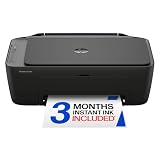
This is the entry point for anyone who prints a handful of pages per week and refuses to spend more than sixty dollars upfront. The three-month Instant Ink trial means you start printing immediately without thinking about cartridges, and the compact footprint slides under a shelf on a student desk.
- Pro: Lowest price in this roundup by a wide margin, making it a low-risk trial for a household that needs only occasional color prints.
- Pro: Instant Ink inclusion removes the first-quarter cost anxiety that plagues budget inkjets.
- Con: Print speed and monthly duty cycle are modest, so heavy use will feel sluggish and accelerate wear.
Skip it if you print more than twenty pages weekly or need duplex, ADF, or fax.
Canon PIXMA TS6520
Canons PIXMA line has a loyal following for photo-quality output, and the TS6520 delivers duplex printing at a mid-range price. If you send school paperwork, receipts, or two-sided drafts regularly, the auto duplex saves more time and paper than the extra twenty dollars over the DeskJet will cost you.
- Pro: Built-in duplex printing at under $81 is uncommon in this price band, reducing paper use without manual refeeding.
- Pro: Canon’s FINE print head technology has a consistent reputation for sharp text and vivid photos among owner reviews.
- Con: No Instant Ink partnership, so replacement cartridges are purchased at retail and can be pricier per page than HP’s subscription.
Skip it if you want a subscription ink model or need an automatic document feeder for scanning multi-page batches.
Canon PIXMA TS4320
The TS4320 is the smallest printer on this list physically, designed to fit on a narrow shelf or in a corner of a home-office desk. For students, renters, or anyone in a space-constrained situation, its compact design and wireless setup make it a genuinely low-commitment option.
- Pro: Tiny footprint and lightweight build make it easy to relocate or store when not in active use.
- Pro: At $69, it sits at the budget tier while still offering full print-copy-scan functionality.
- Con: Small paper capacity and no duplex mean frequent manual reloading for multi-page jobs.
Skip it if your household prints double-sided documents often or you need to scan stacks of pages without lifting the lid each time.
HP Envy 6155
The Envy 6155 is HP’s answer to the “I want everything but do not need pro-grade speed” buyer. Duplex printing, a three-month Instant Ink trial, and a design that HP markets specifically for home use put it at the center of the value spectrum in this group.
- Pro: Combines duplex and Instant Ink at $89.99, offering more convenience features per dollar than most competitors here.
- Pro: The Portobello finish adds a warmer aesthetic than the typical black or white office printer, suiting a living-room or study setup.
- Con: Owner feedback notes that the scanner quality is adequate but not ideal for archiving high-resolution photos.
Skip it if you need an ADF for multi-page document scanning or fax capability.
Canon PIXMA TR4720
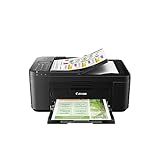
Fax is dying, but not dead—especially in small businesses, legal offices, and medical practices where a legacy workflow still demands it. The TR4720 is the only printer in this roundup with a built-in fax, paired with an ADF, mobile printing, and all-in-one functionality at $69.
- Pro: The ADF lets you scan or fax multi-page documents unattended, a feature absent from every other sub-$80 pick here.
- Pro: Full all-in-one with fax at this price point makes it a pragmatic pick for micro-businesses that still depend on fax transmissions.
- Con: The design is utilitarian and bulkier than the compact options, with a slower print engine that will frustrate anyone printing at high volume.
Skip it if you do not need fax and would prefer a slimmer device or faster print speeds.
Brother MFCJ1360DW
Brother’s Work Smart line targets the home office that needs reliability over novelty. At $99.98, the MFCJ1360DW bundles wireless all-in-one functionality with Brother’s reputation for durable mechanisms and straightforward cartridge economics, appealing to buyers who distrust subscription ink models.
- Pro: Brother cartridges are widely available from third-party manufacturers at lower prices, giving you more control over ink costs than subscription-bound alternatives.
- Pro: Owner feedback consistently highlights stable Wi-Fi connectivity and fewer dropped connections than many competitors at this tier.
- Con: The design feels dated compared to the newer HP models, and the setup process lacks the guided app simplicity that Instant Ink machines offer.
Skip it if you want a sleek aesthetic, cloud integration, or an included ink trial to ease you into ownership.
HP OfficeJet Pro 8125
This is the printer for someone running a two- or three-person home office that sends contracts, invoices, and scanned packets daily. The Pro branding signals a higher duty cycle, and the ADF plus duplex plus Instant Ink trial make it a complete package at $119.99.
- Pro: Purpose-built for heavier print loads than any other home-tier pick, with a faster engine and larger paper tray.
- Pro: AI-capable features streamline scanning and sharing workflows, reducing the need for separate document software.
- Con: The upfront price is the second-highest here, and the physical footprint demands more desk real estate than the compact options.
Skip it if your print volume is low and you would not justify the extra cost over the Envy 6155.
HP Smart Tank 5003
If you print constantly—weekly reports, creative projects, large volumes of school paperwork—the Smart Tank 5003 is the most cost-efficient option in this group over its lifetime. Up to three years of included ink on a cartridge-free refillable system means the $189.99 price is not a weakness; it is the upfront investment that pays for itself.
- Pro: Three years of included ink eliminates the recurring purchase anxiety that makes every cartridge-based printer expensive over time.
- Pro: Refillable tank design keeps per-page costs dramatically lower than any cartridge-based model here, a fact reflected in owner reports of months between refills.
- Con: The high sticker price is a real barrier for casual users who will not print enough to recoup the difference before the included ink runs out.
Skip it if you print fewer than ten pages per week; a $60-70 cartridge model with a trial will cost you less overall.
Buying Guide
Ink Cost: Subscription vs. Cartridge vs. Tank
Three pricing models dominate the home-printing market. HP’s Instant Ink charges a monthly fee based on pages printed, with tiers starting low enough that casual users often pay less than they would for cartridges. Cartridge-based printers (Canon, Brother) let you choose third-party inks at a discount but still carry per-page costs that add up. Tank systems (HP Smart Tank) require a larger upfront outlay but drive cost-per-page to fractions of a cent, making them unbeatable above roughly fifty pages per week.
Feature Requirements by Workload
Duplex printing matters if you routinely print two-sided documents; without it, you are manually reloading pages and wasting paper. An ADF is essential for anyone who scans or faxes multi-page documents weekly. Fax is a niche but non-negotiable need for certain small businesses. If you print only occasional single-sided documents, you can save money by choosing a model without ADF or fax rather than paying for capability you will never use.
Connectivity and Setup Friction
All eight machines here offer wireless connectivity, but setup experiences differ. HP’s Instant Ink models guide you through app-based configuration that includes the trial registration. Canon and Brother rely on their own apps, which work well but can require a few more steps. If you dislike troubleshooting network printers, favor a model whose ecosystem (HP Smart app, Canon PRINT) matches devices you already use.
Our Verdict
The HP Smart Tank 5003 is the top overall pick because it solves the actual problem this keyword targets: cheap ink over time. If you can commit $190 upfront, three years of included ink makes it the most economical choice for any household that prints more than ten pages weekly.
For the strict budget buyer, the HP DeskJet 2955 at $59.99 with a three-month Instant Ink trial offers the lowest total cost for the first quarter of ownership—ideal for testing whether a home printer is genuinely needed.
If you run a micro-office that still faxes documents or scans multi-page contracts, the Canon PIXMA TR4720 wins despite its bulk, because no other sub-$70 machine combines ADF and fax.
FAQ
Is a subscription ink service cheaper than buying cartridges?
For most home users printing under 50 pages per month, HP’s Instant Ink entry tiers cost less than equivalent cartridge replacements and include delivery, eliminating the scramble when ink runs out. Heavy print loads above 100 pages monthly can push subscription costs past what a tank system would charge, so the crossover point depends on volume.
How long do printer cartridges typically last?
A standard black cartridge in a home inkjet generally yields 150 to 200 pages, while color cartridges run out faster if you print photos or graphics. Owner reports consistently note that cartridges left unused for weeks can dry out, which is why subscription or tank systems reduce waste.
Do inkjet printers dry out if you do not use them regularly?
Yes—inkjet print heads can clog if the printer sits idle for more than two to three weeks. Tank-based models handle infrequent use slightly better because the larger ink reservoir maintains head moisture, but all inkjets benefit from a weekly test-page print to prevent dried-nozzle issues.
Is the AI-capable label on newer HP printers meaningful?
HP’s AI features automate tasks like cropping, rotating, and sending scans to cloud storage without manual configuration. For casual users, these shortcuts reduce the friction of going from a paper document to a digital file, though they are conveniences rather than necessities.