Key takeaways
- Battery cost: A tool-only price can be misleading if you don’t own a compatible battery and charger. Compare the cost of a complete kit and the price of an additional battery.
- Storage: Check the assembled length and whether the nozzle detaches. A wall hook or shelf may be more practical than a deep cabinet for a long handheld blower.
- Debris type: Blowers move leaves and clippings; they do not collect them. If you need to remove leaves from a small enclosed patio, plan where the pile will go or consider a blower-vac combination.
- Wet leaves: Even a powerful cordless blower can struggle when leaves are soaked or matted into grass. Clearing more often, before rain, can be more effective than buying solely for a higher peak rating.
- Warranty and service: Check warranty terms for both the tool and battery. Batteries are wear items, and replacement availability affects the long-term value of a platform.
The best cordless leaf blowers depend on where you’ll use them: a light 18–20V model is usually enough for a patio, a 40V blower suits routine lawn cleanup, and a higher-voltage backpack or handheld model makes more sense for a large property. Compare air volume as well as air speed, then check runtime, noise, and weight under load—not just the numbers printed on the box.
Our top picks
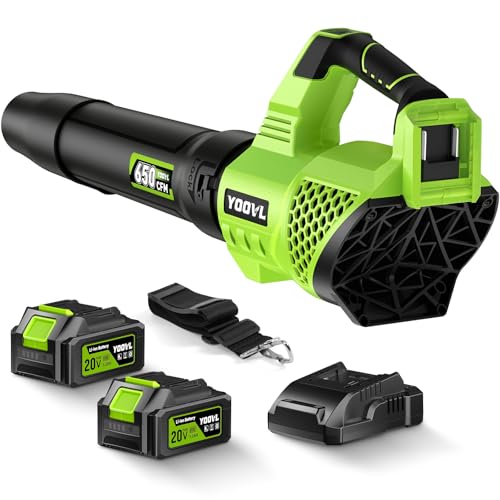


As an Amazon Associate we earn from qualifying purchases at no extra cost to you. Ratings are shown as listed on Amazon.
Choose by yard, not by the biggest number
Air speed (mph) describes how fast air exits the nozzle; air volume (CFM) describes how much air the blower moves. Speed helps loosen damp leaves and debris from corners, while volume helps push a broad pile across a lawn. Neither figure alone predicts performance: nozzle shape, battery charge, and the material being moved all matter.
Voltage is a rough guide to a battery platform’s power, not a direct measure of blowing force or runtime. Compare models using the same manufacturer’s published figures, and treat maximum air-speed and air-volume ratings as separate tests unless the maker specifies that they are measured together.
| Cleanup situation | Useful starting point | What to prioritize | Likely trade-off |
|---|---|---|---|
| Patio, steps, or small courtyard | 18–20V; about 300–450 CFM | Low weight, trigger control, compact nozzle | May need several passes on a lawn or wet leaves |
| Typical suburban lawn and driveway | 40V; about 450–650 CFM | Variable speed, practical runtime, replaceable battery | More weight and cost than a patio-focused tool |
| Large property or heavy seasonal debris | 56–80V handheld, or a backpack blower | High sustained airflow, larger battery capacity, harness support | More noise, bulk, and battery expense |
These ranges are shopping guidelines, not guarantees. A dry, thin layer of leaves is much easier to move than wet leaves packed into grass or gravel.
How the main options compare
Light-duty: patio and detail cleanup
A compact 18–20V blower is easy to carry between a porch, garage, and walkway. It’s a good fit for dust, grass clippings, and a small amount of dry leaf litter. Look for a variable-speed trigger or a low setting: full power can scatter mulch, push debris under outdoor furniture, or make careful cleanup harder.
Its limitation is sustained work. A small battery may run down quickly at maximum output, and a narrow stream may take longer to clear a broad lawn. Choose this class when storage space and low carrying weight matter more than clearing speed.
Midrange: the practical all-rounder
For many homes, a 40V handheld blower balances portability with enough airflow for paths, driveways, and routine lawn cleanup. A model with variable speed and a boost setting lets you use gentler airflow near flower beds and reserve maximum output for stubborn piles. Check whether the quoted runtime is measured on low; high or boost settings can use a battery much faster.
Battery-platform compatibility can matter as much as the blower itself. If you already own compatible tools from brands such as EGO, Greenworks, Ryobi, or DeWalt, a bare tool may cost less than a kit—provided the battery has enough capacity for the job.
Heavy-duty: big lots and frequent leaf fall
Higher-voltage handheld blowers and backpack models are designed for larger areas or repeated cleanup. A backpack spreads weight across the shoulders and back, which can feel more manageable during a long session, but the unit takes longer to put on and is less convenient for a quick sweep of the porch. For a large property, compare the battery capacity, availability of spare packs, and charging time alongside airflow.
Gas blowers may still appeal to people who need long, uninterrupted work, but they bring fuel, exhaust, and engine maintenance. A powerful cordless model avoids those chores, although a spare battery may be necessary to keep working without a charging break.
Check the numbers that affect a real cleanup
Runtime: estimate in work sessions
There is no reliable runtime figure without a stated battery size and power setting. A manufacturer’s maximum runtime usually reflects a lower setting, not nonstop use at full power. Ask whether the blower can clear your likely area on one charge, or plan to use a second battery for a large property.
As a planning habit, divide a job into zones—such as patio, driveway, and lawn—and start with low or medium power. Use short bursts for wet patches rather than holding boost continuously. This reduces battery drain and gives you better control over where debris goes.
Weight: account for battery and posture
Compare the listed tool weight with the ready-to-use weight, including battery and nozzle. Even a modest difference becomes noticeable when you hold a blower out in front of you. A well-placed battery and a comfortable handle can make a heavier tool easier to control, but they do not eliminate fatigue. If you have limited grip strength or shoulder discomfort, favor a lighter model and avoid choosing by peak airflow alone.
Noise: use hearing protection when appropriate
Look for a published decibel rating and note the measurement conditions; distance and test method affect the figure. Cordless does not mean quiet. A high-output blower can still be loud enough to disturb neighbors or require hearing protection during extended use. Check local rules on blower use, especially in dense neighborhoods.
A simple selection matrix
| Your priority | Best fit | Why | Check before buying |
|---|---|---|---|
| Fast cleanup of a small patio | Light 18–20V handheld | Easy to store and bring out for brief jobs | Low-speed control and battery included or available |
| One tool for lawn, driveway, and paths | Variable-speed 40V handheld | Useful balance of airflow and portability | Runtime at medium and high settings |
| Large lot with repeated heavy leaf fall | Higher-voltage or backpack model | Better suited to sustained, broad-area work | Ready-to-use weight, spare-battery cost, charging time |
| Flower beds, gravel, or tight corners | Variable-speed model with a narrow nozzle | More control reduces scattering and overshooting | Whether the nozzle is removable or adjustable |
Before buying: practical details that get overlooked
- Battery cost: A tool-only price can be misleading if you don’t own a compatible battery and charger. Compare the cost of a complete kit and the price of an additional battery.
- Storage: Check the assembled length and whether the nozzle detaches. A wall hook or shelf may be more practical than a deep cabinet for a long handheld blower.
- Debris type: Blowers move leaves and clippings; they do not collect them. If you need to remove leaves from a small enclosed patio, plan where the pile will go or consider a blower-vac combination.
- Wet leaves: Even a powerful cordless blower can struggle when leaves are soaked or matted into grass. Clearing more often, before rain, can be more effective than buying solely for a higher peak rating.
- Warranty and service: Check warranty terms for both the tool and battery. Batteries are wear items, and replacement availability affects the long-term value of a platform.
Bottom line
For a small patio, choose the lightest blower with controllable airflow. For a typical lawn and driveway, a variable-speed 40V handheld is a sensible starting point. For a large property, prioritize sustained airflow, battery capacity, and comfortable carrying support. The best cordless leaf blowers are the ones that match your debris and work area without forcing you to carry more weight—or buy more battery—than the job requires.